

Look up Tonight: Rare 'Blood Moon' Will Turn the Sky Red as 96% of the Moon Disappears
The lunar eclipse will be visible across the UK and other parts of the world
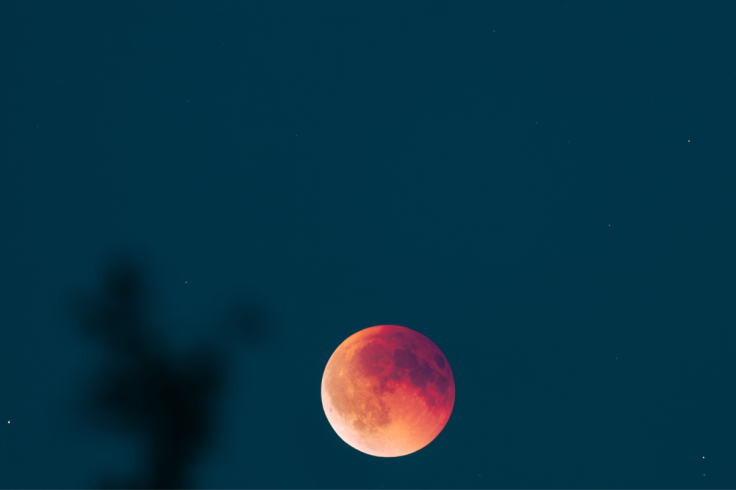
A deep partial lunar eclipse will cross the night sky on 27-28 August, with 96.3% of the Moon's disc entering Earth's darkest shadow at maximum eclipse. Although the figure suggests the Moon will almost disappear, it will remain visible, with the eclipsed portion potentially taking on a reddish-orange glow associated with a 'Blood Moon.'
Viewers across the Americas will have the best opportunity to watch the eclipse on Thursday night, 27 August, while parts of Europe and Africa will see it during the early hours of Friday, 28 August. The lunar eclipse comes just over two weeks after August's total solar eclipse.
When To Watch the 96% Lunar Eclipse
The partial phase begins at approximately 10:33 p.m. EDT on 27 August, before reaching maximum at about 12:13am EDT on 28 August. That is approximately 4:13am UTC, when 96.3% of the lunar disc will be inside Earth's umbra. The partial phase lasts about three hours and 18 minutes.
On the US West Coast, maximum eclipse occurs at approximately 9:13pm PDT on 27 August. For UK viewers, the partial eclipse begins at about 3:33am BST on 28 August, reaching maximum at approximately 5:12am.
The Moon will gradually move deeper into the shadow, with the bright portion shrinking until only a thin illuminated edge remains around maximum eclipse.
The Moon will be low in the sky in the UK, so observers should find a location with an unobstructed view towards the western or south-western horizon. UK observers will not see the entire partial phase because the Moon sets before the eclipse ends.
Where the Partial Lunar Eclipse Will Be Visible
About 3.3 billion people could see at least part of the eclipse if skies are clear, with the Americas in the best position to follow the event through its main stages. The eclipse will be visible across much of North and South America, excluding Alaska and north-western Canada, as well as parts of Europe and Africa.
In parts of Europe and Africa, observers will see the eclipse closer to moonset, making a clear horizon particularly important. Cloud cover could also affect visibility, so skywatchers should check local weather conditions before heading outside.
What the Red Moon Will Look Like
As the Moon moves deeper into the shadow, the bright portion will shrink dramatically. At maximum eclipse, most of the Moon can appear coppery or rust-coloured, with only a thin bright sliver remaining in direct sunlight.
The reddish appearance happens because sunlight passes through Earth's atmosphere before reaching the Moon. Shorter blue wavelengths are scattered more readily, while more red and orange light continues through the atmosphere towards the lunar surface.
Saturn will also appear as a steady golden point near the Moon, giving skywatchers another object to look for during the eclipse.
Why This Is Not Technically a 'Blood Moon'
Despite the familiar nickname, this is technically a deep partial lunar eclipse, not a total lunar eclipse.
A total lunar eclipse occurs when the entire Moon enters Earth's umbra. During this event, a small portion of the lunar disc will remain outside the darkest part of the shadow.
The 96.3% figure refers to the portion of the lunar disc entering the umbra, rather than 96.3% of the Moon becoming invisible. The eclipsed area can remain visible because red and orange light filtered through Earth's atmosphere still reaches the lunar surface.
A Rare Eclipse After August's Solar Event
The eclipse's unusual depth makes it particularly notable. It is the deepest partial lunar eclipse since September 2024 and is expected to remain the deepest partial lunar eclipse visible until 2028, when a total lunar eclipse is expected.
The event will also coincide with August's full Sturgeon Moon, which reaches its full phase close to the time of maximum eclipse.
No special eye protection is needed to watch a lunar eclipse. Binoculars or a telescope can make the Moon's changing shadow easier to see, while a clear, unobstructed horizon will give viewers the best chance of catching the deepest part of the eclipse.
© Copyright IBTimes 2026. All rights reserved.