

A Smile Is Not a Crime: Brittany Romano Hits Back After Vanity Fair Drops Her Over Courtroom Behaviour
Journalist disputes Vanity Fair narrative, stating freelancers cannot be fired
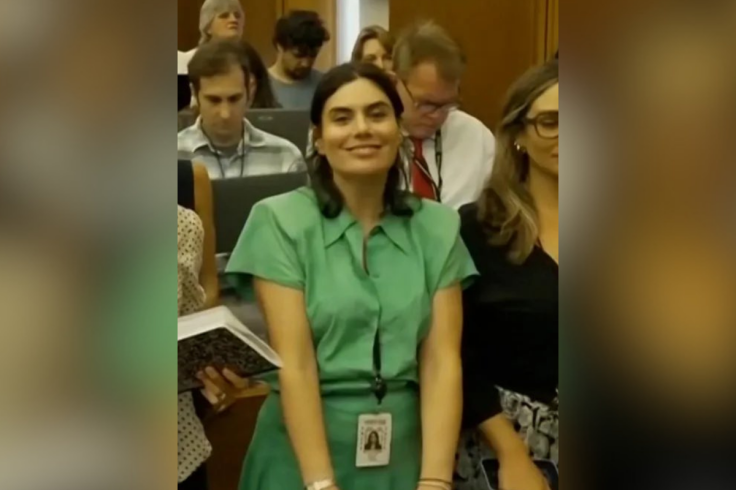
Brittany Romano has hit back after a viral courtroom clip prompted Vanity Fair to end plans for a personal essay and tell the court she was no longer credentialed by the magazine, a characterisation she has described as 'factually inaccurate.'
The freelance journalist came under intense online criticism after Court TV footage appeared to show her smiling and seemingly winking during a break in Lindsay Clancy's murder trial on Monday, 24 August.
The 'Green Dress Lady' Controversy
The footage quickly spread across social media, with Romano dubbed the 'green dress lady' because of the outfit she wore in court. Viewers questioned why she appeared to smile during a trial involving the deaths of Clancy's three children.
WHAT THE FUCK IS WRONG WITH PEOPLE??
— Jay (@jaybronious) August 24, 2026
Watch the woman in green.
People have lost their fucking minds. #lindsayclancy pic.twitter.com/0YfUqVt8md
Romano later explained that she smiles when anxious or uncomfortable and said her expression should not be interpreted as indifference.
She also pointed to her personal connection to Clancy, saying the two grew up on the same street and exchanged a look when the camera appeared.
In a lengthy Instagram post addressing the backlash, Romano wrote: 'A smile is not a crime. Telling a woman to slit her wrists is.'
Vanity Fair Ends Essay Plans With Romano
Vanity Fair said it had been interested in a personal essay from Romano about growing up with Clancy. However, a spokesperson said the magazine decided not to proceed following 'clear conflicts with our editorial standards and processes.'
The magazine also said it informed the court that Romano was 'no longer credentialed by Vanity Fair.'
Romano disputes that account. In a statement to Newsweek, she said she was a freelancer, not a staff member, and argued that the magazine could not 'pull credentials' from someone it did not employ.
'There was no formal agreement, no employment relationship, and no "fallout." That framing is factually inaccurate,' she said, adding that a member of the Vanity Fair team later told her to 'take the story elsewhere.'
She also rejected the claim that she winked at the camera, telling the outlet: 'There was no wink. I had mascara in my eye.'
Romano Hits Back at Online Backlash
In the lengthy Instagram post, Romano said she had spent two years covering the Clancy case because of its wider implications for women's mental health.
'I smile through anxiety. I smile when I'm uncomfortable. That is not indifference, it is a nervous system managing strain the only way it knows how,' she wrote.
She also alleged that the backlash had escalated beyond criticism, claiming she received messages telling her to harm herself, threats against her life, and other forms of harassment.
Romano argued that the reaction reflected a broader scrutiny of women's emotional responses, writing: 'Cry, and a woman is dramatic. Smile, and she doesn't care. Stay composed, and something must be wrong with her.'
She said the response echoed the way Clancy's behaviour has been interpreted throughout the case, adding: 'We decide the meaning first and spend the rest of the time making her prove it.'
Romano's Connection to Lindsay Clancy
Romano's connection to Clancy predates the trial. The two grew up on the same street in Wallingford, Connecticut, and Romano has described the Musgrove family, Clancy's family name before marriage, as providing her with a safe place during a difficult childhood.
That personal history was central to the essay Vanity Fair had considered commissioning.
Clancy is accused of killing her three children in 2023 and is seeking a verdict of not guilty by reason of insanity.
Her defence has argued that she was experiencing severe postpartum psychosis, while prosecution experts have challenged that account. The trial is now approaching its closing stages.
© Copyright IBTimes 2026. All rights reserved.