

Lindsay Clancy Trial: Psychologist Rejects Her Claim of Hearing a Voice Before Children's Deaths
Forensic psychologist questions the validity of Clancy's hallucination claims in the ongoing murder trial
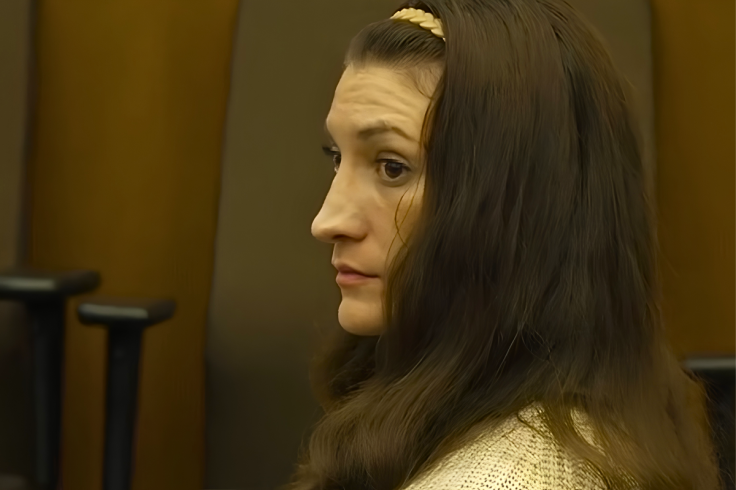
The Lindsay Clancy murder trial has taken a dramatic turn after a prosecution psychologist rejected her claim that a male voice ordered her to kill her three children.
Forensic psychologist Kirk Heilbrun told the court on Monday that he did not believe Clancy was experiencing acute psychosis when she killed her children in January 2023.
His testimony directly challenged the defence's argument that Clancy was suffering from postpartum psychosis and could not understand the wrongfulness of her actions.
Psychologist Questions Lindsay Clancy's Hallucination Claim
According to The Guardian, Heilbrun questioned Clancy's account of hearing a male voice commanding her to kill the children before taking her own life.
Clancy reportedly told Heilbrun that she had heard a voice she had never heard before. However, the psychologist said the fact that the alleged hallucination appeared only during the period in which she killed her children and had never returned made the account highly unusual.
Heilbrun said he believed Clancy killed the children because she intended to die by suicide and did not want to leave them behind. He also testified that Clancy had said 'Go to God, baby. Go to God' while strangling each child, suggesting she believed she and her children would ultimately be together in heaven.
Clancy, 36, is accused of killing her five-year-old daughter Cora, three-year-old son Dawson and eight-month-old son Callan at the family's home in Duxbury, Massachusetts.
She later jumped from a second-floor window in an apparent suicide attempt and survived, but was left paralysed from the waist down. Clancy has pleaded not guilty to the murder charges.
Defence Claims Postpartum Psychosis
Clancy's mental health has been at the centre of the trial. Her defence has argued that she was suffering from postpartum psychosis, bipolar disorder and the effects of medication when she killed her children.
The defence has presented expert witnesses who said Clancy was experiencing severe mental illness and was not in control of her actions.

Forensic psychiatrist Dr Phillip Resnick testified that Clancy was 'clearly psychotic' when she killed the children. Psychologist Paul Zeizel also supported the defence's argument that she had no appreciation of the wrongfulness of her actions.
Heilbrun, however, reached a different conclusion. He diagnosed Clancy with Bipolar II disorder but said he found no evidence that she was experiencing acute psychosis at the time of the killings.
NBC News' live coverage of the trial has also highlighted the stark disagreement between the prosecution and defence experts over Clancy's mental state.
Prosecutors Say Clancy Knew What She Was Doing
Prosecutors have argued that Clancy was mentally ill but nevertheless understood that killing her children was wrong.
Earlier in the trial, prosecution witness Dr Avram Mack testified that he found no evidence of psychosis, mania or hypomania leading up to the killings. Mack said Clancy was suffering from severe mental illness, but maintained that she was able to control her impulses and distinguish right from wrong.
The prosecution has also alleged that Clancy deliberately created an opportunity to carry out the killings by sending her husband, Patrick Clancy, out of the house to collect medication and dinner for the family.
The defence disputes the prosecution's interpretation of her actions and maintains that her psychiatric condition left her incapable of making rational decisions.
Mistrial Request Rejected
Heilbrun's testimony triggered a courtroom dispute after he referred to Clancy's Catholic faith. Her lawyer, Kevin Reddington, requested a mistrial, but Judge William Sullivan rejected the request and later instructed jurors to disregard the reference to her religion, describing it as inappropriate, according to The Guardian.
What Is a Mistrial?
A mistrial is when a judge ends a trial before a verdict because a serious error or event may have compromised its fairness. A mistrial does not clear the defendant of the charges, and the case can potentially be retried.
What Happens Next in the Lindsay Clancy Trial?
The trial is now approaching its final stage, with closing arguments expected later this week. The jury will decide whether Clancy's mental illness prevented her from understanding the wrongfulness of her actions or whether she remained capable of making deliberate decisions.
If found guilty, Clancy faces life in prison without parole. If found not criminally responsible because of mental illness, she would be committed to a state psychiatric hospital.
The case has also renewed attention on postpartum psychosis and the challenges faced by women experiencing severe mental health problems after childbirth.
© Copyright IBTimes 2026. All rights reserved.