

Anna Rudaia: Building High-Performance Teams Through Trust and Leadership
Explore Anna Rudaia's principles for fostering high-performance teams through trust, autonomy, and cultural adaptability
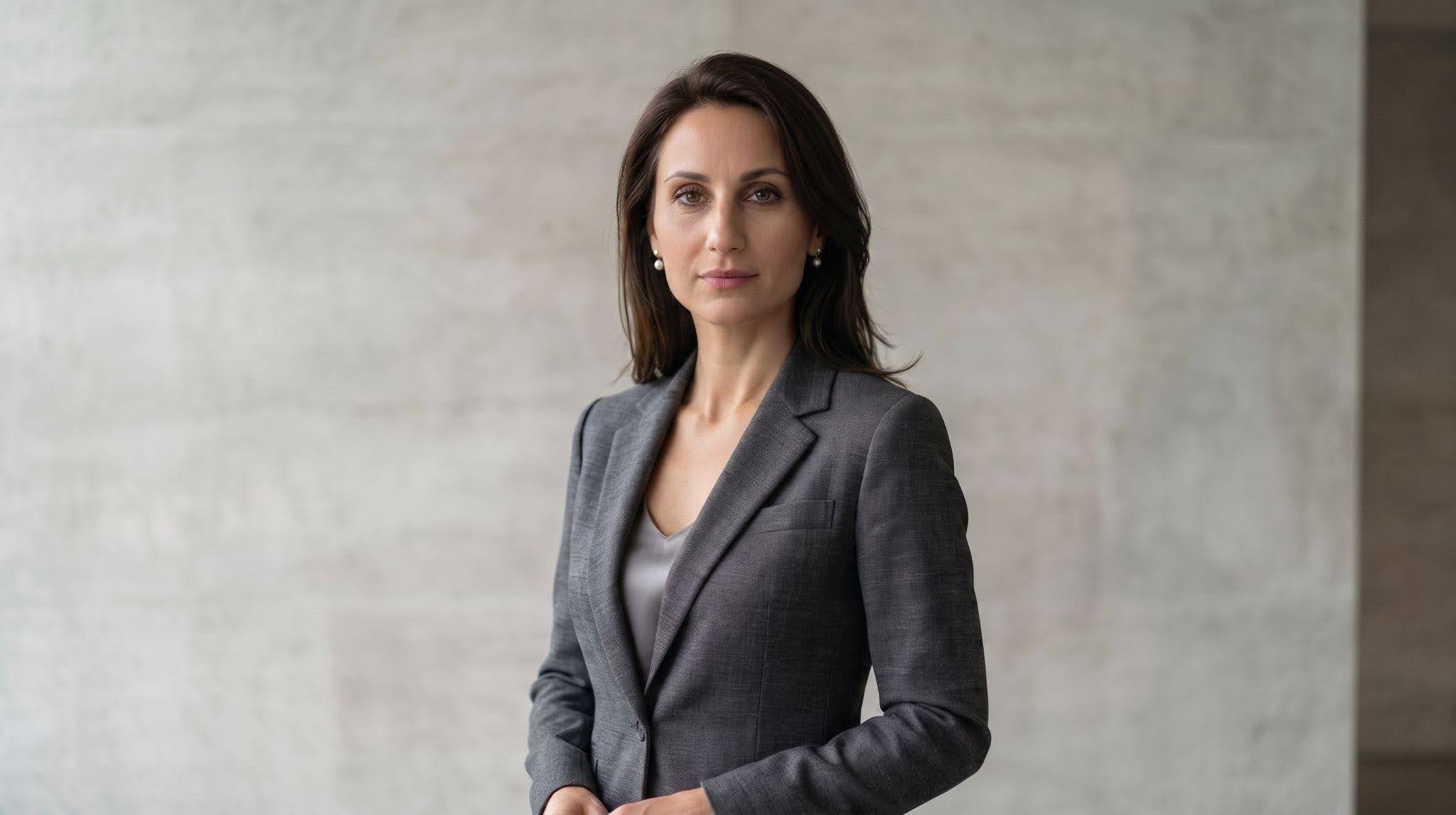
High-performance teams come less from control than from the conditions a leader sets up: trust, psychological safety, autonomy, and room to test ideas. Anna Rudaia, a founder and CEO who has built teams across international markets, adds one condition to that list. Freedom has to widen decision-making capacity, and it stays tied to accountability and shared business goals.
Leadership Foundations for Building High-Performance Teams: Anna Rudaia Management Principles
A high-performance team isn't just a group of strong individuals sitting in the same place. Rudaia starts with the environment those people work in. They need enough trust to question an assumption, admit a mistake, and disagree without the disagreement turning into a political problem.
That lines up with the research on team effectiveness. Amy Edmondson defined psychological safety as a shared team belief that interpersonal risk is survivable.
Google later put the idea at the centre of Project Aristotle, its internal study of what makes teams work, and listed safety first among five factors, ahead of dependability, structure and clarity, meaning and impact. Google re:Work still hosts the findings along with their limits.
Safety is only one part of the operating model, though. Autonomy is the second: hire people who can decide inside their own area instead of queuing for sign-off. Experimentation is the third. Teams form a hypothesis, test it, and change direction when the evidence contradicts the original plan.
The three feed each other. Trust makes it easier to raise a problem, autonomy gives someone the authority to act on it, and experimentation turns that action into learning rather than a one-off decision.
Remove one and the other two lose value: safety without autonomy leaves well-informed people waiting for permission, autonomy without safety produces confident silence about what isn't working.
None of this assembles itself. Trust, decision rights, and permission to test something are all granted, and the person granting them is the leader.
That's where Rudaia puts the emphasis — hiring strong individuals is the easy half of the job.
Psychological Safety as the Foundation of High Performance
Psychological safety gets misread as a quiet, low-conflict office. It isn't that.
Edmondson separates safety from comfort and from low standards: a safe team still sets demanding goals and takes apart weak reasoning. Harvard Business School frames the target as candour plus high expectations.
The distinction matters in practice. A mistake made while testing a reasonable hypothesis should end in a learning conversation, not a penalty. Deliberate misconduct is another category. Rudaia treats that single distinction as the load-bearing one.
When admitting a bad number or a half-finished idea carries no personal cost, information moves as fast as it appears, and people take on decisions they would otherwise push upstairs. The point of safety is to get uncomfortable information out while it's still cheap to act on.
Rudaia connects this to Simon Sinek's Circle of Safety in Leaders Eat Last: leadership that protects cooperation inside the group, so people spend their energy on external challenges instead of internal politics.
Autonomy, Experimentation and Outcome-Focused Thinking
Autonomy doesn't mean the manager disappears. Decisions move to the people with the context and competence to make them. Rudaia treats micromanagement as a structural fault as it turns senior leaders into a bottleneck and teaches everyone else to escalate rather than decide.
Self-determination theory supports the broader case. A review in Nature Reviews Psychology ties autonomy, competence, and relatedness to work motivation, noting that job design and leadership decide whether those needs are met.
Experimentation is what keeps autonomy disciplined. Not 'try anything'. Define a hypothesis, test it, read the result, adjust. That logic sits close to Eric Ries's build-measure-learn cycle in The Lean Startup, written for exactly this kind of uncertainty.
Run the loop and a team finds out it was wrong within weeks rather than only after launch, which is what adapting quickly looks like from the inside. It's also how something new actually gets built, because a plan written before anyone had evidence rarely survives contact with a market.
Hence outcomes over outputs. Finishing the project plan is an output; moving a customer, operational or business result is an outcome. Measure a team on outcomes and it stops reporting completed tasks.
Anna Rudaia on Leading High-Performance Teams Across Cultures

Those three principles hold anywhere; the behaviour that expresses them doesn't. In international business, the same act reads differently depending on where someone learned to work.
Direct disagreement signals healthy candour in one setting and unnecessary confrontation in another. A manager who expects open debate can read silence as agreement when the employee is reading hierarchy.
The foundation itself doesn't change across borders. 'If you manage to build trust among team members from absolutely different backgrounds, there is a high chance that this team will become a high-performing one,' Rudaia says. What changes is the work needed to get there.
Her answer isn't a separate system for every nationality.
She does the homework first, which covers a few specific things: whether meaning tends to sit in the words themselves or in the situation around them, whether negative feedback is expected straight or wrapped, and whether decisions are made by consensus or from the top. 'This is homework every leader should do,' she says.
Erin Meyer's The Culture Map gives leaders a usable framework, comparing cultures on eight scales covering communication, feedback, leadership, decision-making, and trust.
A mismatch shows up first inside the team. Build a flat, agile company, hire people trained in a hierarchy, and ordinary collaboration slows to a crawl. Team leaders feel it before anyone else, usually as a gap in expectations they can't quite name.
Transparent rules close that gap: when the company states plainly how it decides, disagrees and escalates, nobody has to guess which national default applies, and one shared set of values replaces five.
The caveat: these scales describe tendencies, not individuals. They're good for asking better questions and poor at predicting one person's behaviour, so treat them as preparation, not as a substitute for watching the employee in front of you.
Adapting Leadership to Different Cultural Contexts
Diagnosis is the easy half; adapting is where the effort goes. Start with how a leader talks. A message that reads as precise to the sender can land as unusually blunt at the other end. It runs the other way too: diplomatic feedback gets filed as approval.
Negative feedback needs its own decision. Where indirect delivery is the norm, softening the message means compensating elsewhere, usually by putting the consequence in writing so nothing depends on reading between the lines.
Then the management style itself. Some people expect decisions to travel through a clear hierarchy and read a consultative manager as indecisive. Others expect participation and read a decisive one as autocratic.
Rudaia's adjustment isn't to mirror either expectation, but to say out loud which model this company runs on and then behave that way when it's inconvenient.
Adaptation has a floor. Style bends; standards and what counts as a finished result do not.
Turning Company Values Into Everyday Practice
Rudaia is sceptical of culture decks and walls painted with values. 'Simply putting it into a PowerPoint presentation and sharing it with newcomers doesn't work,' she says. 'You actually need to demonstrate it.'
Onboarding is where that demonstration starts rather than ends. A new hire is told how the company decides and escalates, then spends a month checking whether their manager does it that way.
The rest are observable rules.
If disagreement is welcome, leaders respond constructively when someone challenges them. If teams are autonomous, managers can't require approval for routine decisions. And when someone behaves the way the company says it wants, Rudaia points at it publicly.
In her own organisation that consistency has a fixed shape: a monthly meeting between each employee and their manager, sometimes with HR present, where the coming month's expectations are written down.
Building a Leadership Culture That Scales
All of that is easy while the founder is in the room. Scale is the test.
As headcount and complexity climb, the culture gets carried by other people, and it survives only if those people can carry it: the Anna Rudaia management approach treats the senior bench as the mechanism rather than a reporting layer. Hire leaders who hold the standard, and the culture scales with them.
That is why Rudaia looks past the CV. Expertise stays mandatory in regulated work, but it doesn't decide the hire. What does is adaptability, continuous learning, and enough tolerance for uncertainty to keep working when there's no signal from the market for months.
The distinction that matters is between commanding and orchestrating. A senior leader who mainly requests reports and issues instructions reproduces dependence.
One who sets context, marks the boundaries and develops other decision-makers adds capacity and revises earlier decisions when new information turns up. Trust travels the same route: a manager who isn't trusted by the CEO rarely extends much of it downwards.
Communication has to reach past the management layer too. Rudaia runs regular town halls and shares results as they are, including the periods below plan.
Hiding a bad quarter is the tempting option, and Rudaia rejects it on practical grounds: people make better local decisions when they can see the wider business situation.
Decision rights then move closer to the work, into cross-functional teams with room to iterate. That doesn't remove accountability – it makes responsibility explicit.
The last mechanism catches what the others miss. Rudaia runs continuous feedback and a retrospective after any difficult project or communication breakdown, so friction gets cleared while it's still friction.
That practice matches the original Agile principles, which call for self-organising teams and regular reflection on how to become more effective.
What Weakens High-Performance Teams
Every one of those mechanisms describes culture as behaviour rather than declaration. So do the failures, and they follow a pattern.
Inconsistency comes first. A company calls itself open, then punishes disagreement. It praises autonomy, then asks for three approvals on an ordinary decision.
Employees learn from the operating reality, never from the presentation used during onboarding. The lesson is that stated values are optional, and every later announcement gets discounted in advance.
Fear around mistakes works more quietly. Nobody announces that they've stopped reporting things; the reporting just thins out, and problems surface a quarter later than they should. That delay is the cost, and it lands on the P&L rather than on the engagement survey.
Where that fear settles, politics grows. If people spend their energy anticipating a senior person's reaction, managing status or covering themselves against blame, that energy isn't going into the work. Rudaia reads this as a direct cost of weak leadership behaviour.
All of it traces back to the personal example set at the top. 'Culture is about the behaviours accepted within the organisation,' Rudaia says. 'Most importantly, it's about what you as a leader tolerate.'
A manager who talks about openness in a town hall and interrupts a junior analyst in the next meeting has just published the real policy. Nobody reads the deck after that.
Alignment decays as well, quietly, as the company grows. Friction from a difficult project or a botched handover doesn't resolve itself. It hardens into resentment, then into two teams that route around each other and call it a process problem.
Approval creep does the same damage from the top. The instinct as a company grows is to add a review layer every time something goes wrong, until micromanagement is policy rather than habit. Each layer is defensible on its own.
Together they tell competent people their judgment isn't wanted, and the ones who mind most leave first.
Strong teams aren't recruited so much as made possible. That's the working assumption behind the Anna Rudaia business perspective: capable people already know what to do, and the job is to remove the reasons they won't. Safety to say the uncomfortable thing. Room to decide, and to test something that might fail.
Standards that don't bend when the result is disappointing. What holds it together is culture, and culture is set by whoever people are watching.
That's why the founder who says one thing in a town hall and another in a Tuesday meeting has already lost the argument.
Declaration is the cheap part. Everyone does it.
© Copyright IBTimes 2026. All rights reserved.