

Workers Face a 'Darwinian Moment'—Billionaire Palo Alto CEO Says 'Evolve or Get Cut'
The biggest career risk may no longer be automation—but refusing to learn it
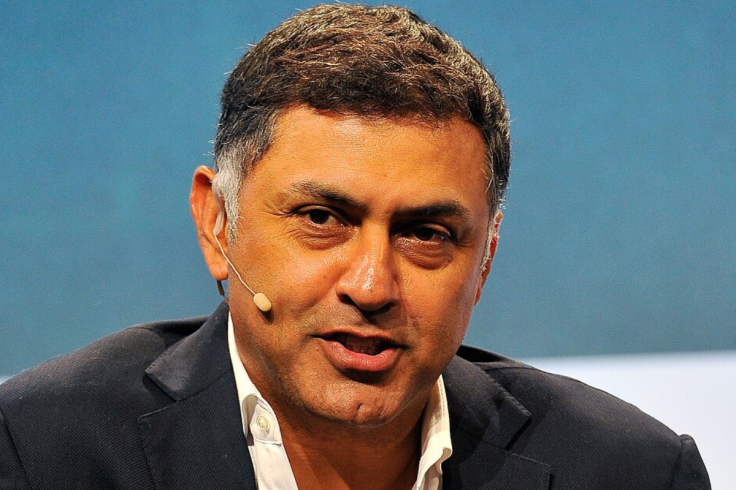
Artificial intelligence isn't just changing workflows but is also shaping survival rules in modern companies. Palo Alto Networks CEO Nikesh Arora calls this the 'Darwinian moment' where employees who can adapt to AI-driven change are the ones who remain competitive.
Speaking on the 20VC podcast, he says that organisations are forced to 'figure out who's really good' since AI highlights skill gaps that were otherwise easier to overlook. His message is stark: adapt to AI or risk falling behind.
The Workforce Shift Companies Can't Ignore
For business leaders, the rise of AI revealed how unprepared many workforces are. Arora warns that '90% of enterprise employees are not AI-savvy,' a figure that highlights a deep imbalance in large organisations. In a company of roughly 21,000 employees, this translates into a core problem instead of a simple learning curve.
He also contends that corporate training has not evolved fast enough to keep up with the speed of AI development. Rather than a smooth transition, businesses are witnessing a gap between employees who are AI-ready and those who are lagging behind.
AI Doesn't Have to Mean Job Cuts, Arora Says
As AI is changing workforce demands, the CEO of Palo Alto Networks said that the rapid rise of AI shouldn't lead to automatic layoffs in the workforce, even with companies that are undergoing rapid change. Arora pushes back at leaders who think retraining is pointless, summarised in the mindset 'I can't train these people.'
For him, this demonstrates a broader failure to invest in long-term human capital development, where organisations decide that they'll just 'find the people' instead of developing the ones they currently have.
Retraining Over Layoffs
Arora has been taking the company through a slow, organic transition, not mass layoffs. He says it's a model based on natural attrition, with new talent coming in all the time through hackathons and targeted hiring. Meanwhile, obsolete skills are being phased out gradually.
He estimates that the company will 'transform 20% to 25% of our workforce within 12 months,' signalling a significant internal realignment instead of abrupt cuts. Despite this obvious shift, Palo Alto Networks continues to grow, hiring 5,423 employees between fiscal 2025 and Q3 2026.
Why AI Could Cut Jobs Yet Create New Demand
In the AI era, Arora envisions a paradox: smaller teams but higher demand for specialised talent. He points out the inefficiency of bigger departments, saying, 'My biggest problem in marketing is I have 600 people, but I'm not sure they all fully understand how to consistently deliver my tone of voice.'
He says that AI will decrease duplication and change how work will be delivered, projecting that companies may need 'half of the people' in functions like marketing, HR, and finance within three years. However, he insists that AI won't reduce overall employment, just change the skills needed.
Arora's message is not to replace but to adapt. His long-term view is clear. 'Give me three years, I'll have hopefully enough AI-savvy people working at Palo Alto.' Ultimately, he sees a gap emerge between companies: those that evolve with AI and those that cannot.
© Copyright IBTimes 2026. All rights reserved.