Sustainable Growth in Business Means Building Capacity, Not Just Output, According to Berké Brown
Berké Brown's experience suggests that building organisational capacity, clarifying accountability and filtering opportunities can help founders grow without carrying every task personally
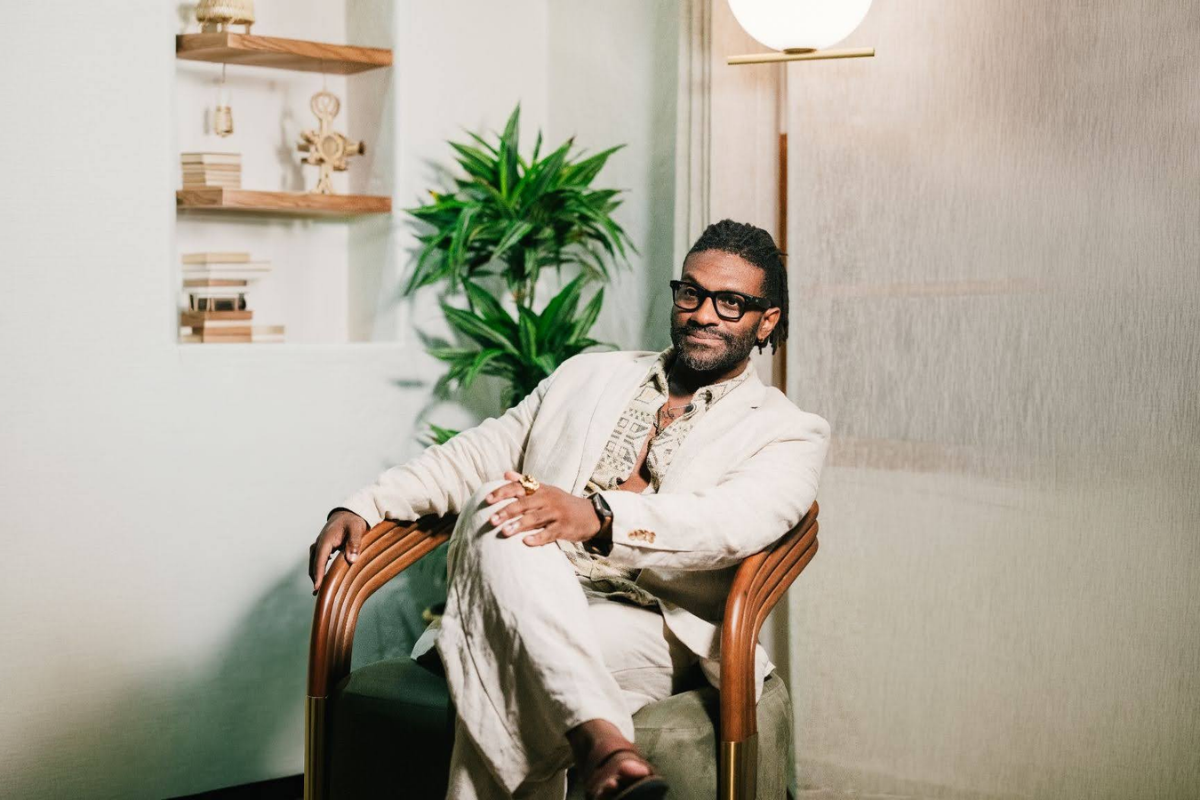
Building a successful business is often associated with doing more: taking on more clients, pursuing more opportunities, working longer hours, and continuously increasing output. But sustainable growth may require the opposite approach.
Instead of asking how much more a founder can personally accomplish, a better question may be how much capacity the organisation can build around them.
That instinct to do more is understandable. The average entrepreneur running a growing business works 45.5 hours a week, and more than a third of that time (36%) goes to administrative tasks rather than the work only they can do. For many founders, the challenge isn't a lack of effort. It's where that effort goes.
For Berké Brown, founder and CEO of Berké Brown International (BBI LLC) and Fogbreak Justice, this shift came through a practical lesson in delegation. His research at the University of California, Berkeley, received the highest honors, and his academic work has focused on motivation, self-efficacy, and sustainable behaviour change.
These areas are also relevant to the questions of motivation, accountability, and behaviour that arise in leadership and organisational settings.
Early on, he describes himself as a 'lone wolf,' taking responsibility for work that could eventually have been delegated. Hiring an assistant changed that equation.
By transferring tasks that consumed substantial time and mental bandwidth, he was able to focus more heavily on the areas where his contribution was most valuable. He says his income doubled within two quarters of making the change.
The lesson was not simply that hiring creates growth. It was that founders can unintentionally become the constraint on their own businesses.
Growth Requires More Than Individual Excellence
As a business develops, the goal cannot always be to become better at doing everything. There is a point where the founder's role needs to evolve from completing more work personally to creating the conditions for other people to do good work.
That shift matters more than the raw hiring numbers might suggest. Only 20% of employees globally are engaged at work, according to Gallup's State of the Global Workplace: 2026 Report, while 64% are not engaged and 16% are actively disengaged.
In other words, capacity is not created simply by adding headcount. It is created when people can take meaningful ownership of work. That requires knowing what should remain with the founder and what can be transferred to someone else.
Delegation, however, is not as simple as handing someone a task. It requires clarity about what has been promised, who owns it, and when it needs to be completed. Without that clarity, people can walk away from the same conversation with completely different understandings of what was expected.
This is where the behavioural side of leadership becomes important. People tend to respond differently when expectations, ownership, and outcomes are clearly defined. If accountability is important, for example, expectations need to be clear enough for people to know what they are accountable for.
When something does not happen as expected, the first question does not necessarily need to be, 'Who is responsible for this failure?' It can simply be, 'What happened?'
That creates an opportunity to understand the problem before judging the person.
The Cost of Saying Yes
Growth also requires deciding which opportunities deserve attention.
For many entrepreneurs, the challenge is not finding opportunities but resisting the temptation to pursue all of them. An opportunity can appear attractive simply because it is available. Yet availability does not necessarily equal alignment.
A useful decision-making framework is to ask whether an opportunity strengthens the direction the business is actually trying to pursue. Does it generate meaningful revenue? Build an important relationship? Expand reach? Create intellectual property? Develop a capability that will matter later?
Just as important is considering the opportunity cost.
Every yes consumes some combination of time, attention, energy, and resources. That means the real question is not simply, 'Can I do this?' It is also, 'What will I have to stop doing if I say yes?'
For founders, the second question may be the more strategic one.
Staying Successful Requires Staying Curious

Long-term success also depends on a willingness to reconsider what has previously worked.
Behavioural science, technology, organisations, and people are constantly changing. A framework that produced excellent results several years ago may still have value, but treating any framework as permanently complete can create blind spots.
The ability to maintain a strong point of view while remaining open to changing it is therefore an important leadership skill.
That requires curiosity and humility, but it also requires confidence. Leaders need enough confidence to acknowledge that a client, a new piece of research or an unexpected result may reveal something their existing assumptions missed.
For founders, that mindset can be particularly valuable as a business grows. The practices that helped create the business may not be the same practices needed to support its next stage.
In practice, this means leaving what could be described as an open door in one's thinking: a willingness to encounter something that has not yet been understood.
Practical Takeaways for Founders
- Audit your own bottleneck. List the tasks only you can do versus the tasks you're doing out of habit. The second list is where delegation should start.
- Set expectations, not just tasks. Before handing off work, clarify what's been promised, who owns it, and when it's due. Vague handoffs create accountability gaps later.
- Lead with curiosity when something goes wrong. Ask 'what happened?' before 'whose fault is this?' to understand the problem before assigning blame.
- Filter opportunities against your direction. Before saying yes, ask whether it drives revenue, builds a key relationship, expands reach, creates IP, or builds a capability you'll need later.
- Weigh the cost of yes, not just the benefit. Every commitment displaces something else; ask what you'll have to stop doing if you take this on.
- Revisit frameworks on a schedule, not just when they fail. What worked years ago may be due for reassessment even if it hasn't visibly broken yet.
- Hold convictions loosely. Strong points of view are useful, but treat them as current best guesses rather than settled truths.
Taken together, these ideas reflect a broader approach to sustainable growth that Berké Brown has emphasised through his own experience: building a business that can grow without requiring the founder to carry everything themselves.
© Copyright IBTimes 2026. All rights reserved.
- Recommended For You