

California Law Demands Employers Adopt 'Anti-Hate Speech' Classes While Churches Refuse To Comply
California's anti-hate speech training law has prompted concerns among churches about religious freedom
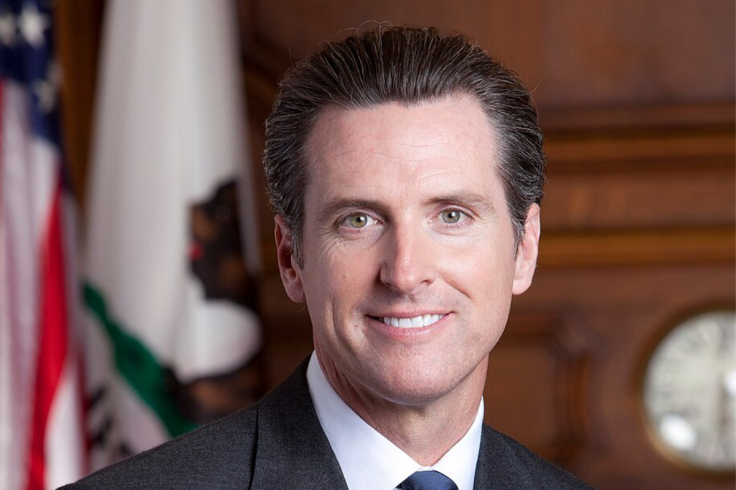
California Governor Gavin Newsom's new anti-hate speech training law has drawn objections from Christian campaigners who fear it could conflict with religious beliefs.
Newsom signed Assembly Bill 1803 on 27 September 2026, requiring covered employers to address harmful workplace speech in existing harassment training from 1 January 2028.
California already requires employers with five or more workers to provide sexual harassment prevention training every two years. AB 1803 adds instruction about speech directed at people with legally protected characteristics.
It does not create a separate course or increase mandatory training hours, according to Assemblymember Josh Lowenthal, who co-authored the bill.
The central dispute concerns what the instruction must cover and whether it applies to nonprofit churches. No identified church has been shown refusing to comply with the forthcoming provision.
Why Gavin Newsom's Anti-Hate Speech Law Worries Christian Advocates
Under the enacted legislation, training must provide guidance on recognising, reporting and confronting workplace speech that 'vilifies, humiliates, or incites hatred' against people because of protected characteristics. These include race, religion, sex, gender identity and sexual orientation.
The measure does not provide an exhaustive definition of hate speech. Greg Burt, vice president of the California Family Council, argues that its wording could leave employers uncertain about the distinction between religious expression and workplace harassment.
'What does it mean to vilify? What speech actually humiliates?' Burt asked during an appearance on Washington Watch with Tony Perkins on 6 October.
He suggested that traditional Christian teachings about sex and gender might be interpreted by others as offensive. That is Burt's interpretation, not an official finding that such teachings violate California law.
AB 1803 also contains an important qualification. Section 12950.1(a)(4)(B) states that training covering unlawful harassment and abusive conduct based on protected characteristics can satisfy the new requirement. Employers therefore need not necessarily introduce a wholly different lesson about contested beliefs.
Existing courses already cover harassment connected to gender identity, gender expression and sexual orientation. Burt has criticised that material, including how it treats deliberate misgendering. His objections do not establish that every expression of religious disagreement constitutes unlawful harassment.
Lowenthal takes a different view of the legislation's purpose. In a statement issued on 28 September, he said employees should understand their rights and feel able to report verbal harassment.
His office said the provision would fit within the current one-hour course for nonsupervisory staff and two-hour course for supervisors, without increasing those minimums.
What Gavin Newsom's Law Could Mean for California Churches
Whether religious organisations must provide the additional instruction remains a significant legal question. Section 12950.1 broadly defines covered employers, while another provision of California's Fair Employment and Housing Act excludes qualifying nonprofit religious associations and corporations from its general definition of employer.
The California Family Council acknowledged that uncertainty in an August analysis. The relationship between the exemption and the training statute has not been conclusively resolved in the cited material. It would be misleading to say either that all churches are covered or that all churches are exempt.
Employers also choose their teaching materials. Section 12950.1(i) allows them to develop their own training modules rather than use the Civil Rights Department's online courses, provided they meet the statutory requirements. That flexibility undermines claims that churches must deliver identical state-written lessons.
It does not, however, remove the underlying legal obligations of organisations found to be covered. Burt has encouraged churches and employees to request religious accommodations and raised the possibility of civil disobedience.
Accommodation requests depend on the relevant legal protections and individual circumstances. His advocacy is not evidence that employers can ignore the training requirement without consequences.
Burt also claimed that some accommodation requests had succeeded. However, he did not identify a court ruling establishing that churches may refuse AB 1803's future requirements.
California's Civil Rights Department recognises protections against religious discrimination and provides guidance on reasonable workplace accommodations.
Under Section 12950.1(d), the department may seek an order requiring a noncompliant employer to meet its training obligations. The provision does not itself prescribe automatic fines or criminal punishment for a training violation.
© Copyright IBTimes 2026. All rights reserved.