

Newsom Fires Back at Trump's AI Rebrand, Orders California To Keep Calling It 'Artificial Intelligence'
Newsom unleashes a furious attack on Trump's 'Super Intelligence' push as California doubles down on AI regulation and worker protections
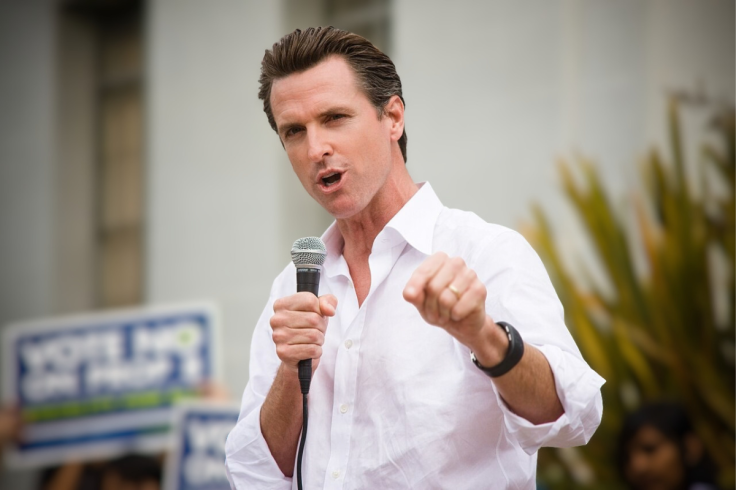
Donald Trump has ordered the US government to rebrand artificial intelligence as 'Super Intelligence', but California Governor Gavin Newsom has moved to block the change in his state, denouncing the former president's AI strategy as 'bullsh*t' that 'should scare the hell out of everybody'.
On Wednesday, September 30, Newsom signed an executive order directing California agencies and departments under his authority to keep using 'Artificial Intelligence' and 'AI', rejecting Trump's push to make 'Super Intelligence' and 'SI' the preferred federal terminology.
The clash goes well beyond an unusual battle over vocabulary. At its heart is a growing fight over how the rapidly developing technology should be governed and how much responsibility should sit with AI companies themselves.
NEW: Gavin Newsom just signed an executive order permanently declaring Artificial Intelligence to be called “Artificial Intelligence” in California.
— Izzy Gardon (@iGardon) October 1, 2026
And yes, it’s real: https://t.co/4tHSYhhvrE pic.twitter.com/RhNG2YBF83
Newsom Unloads on Trump's AI Plan
Newsom was responding to Trump's September 29 White House meeting with major technology executives and a voluntary agreement setting out AI safety commitments.
'What I heard in Washington, DC, yesterday was bullsh*t,' Newsom said. 'That should scare the hell out of everybody.' He compared the approach to pharmaceutical and airline companies deciding they no longer needed federal oversight.
'Maybe big pharma is going to come in tomorrow and say, "We don't need to be regulated by the FDA anymore,"' Newsom said. 'Maybe the airline industry is going to come in and say, "Hey, we got this. The laws are already strong enough. We don't need an FAA." Give me a break.'
Newsom also delivered a pointed message aimed directly at Trump, saying: 'Super intelligence is clearly not coming from the White House.'
Trump's 'Super Intelligence' Push
Trump signed his executive order on September 29, directing federal departments and agencies to use 'Super Intelligence' and 'SI' instead of 'Artificial Intelligence' and 'AI' in official correspondence, public communications, websites, reports, policy documents and other non‑statutory material.
The order says frontier systems have advanced far beyond what was envisioned when the term 'Artificial Intelligence' was introduced, and argues that 'Super Intelligence' better captures their capabilities.
The move also has a legislative dimension. Within 60 days, the Assistant to the President for Science and Technology is directed to submit proposed legislation establishing a federal definition of 'Super Intelligence' and 'SI', including whether the existing statutory definition of artificial intelligence should be modified or expanded.
AI Giants Back Voluntary Safeguards
The timing of Trump's order is striking. Just a day earlier, executives from leading AI companies had signed the White House Accord on Super Intelligence.
The signatories included OpenAI President Greg Brockman, Anthropic CEO Dario Amodei, Meta CEO Mark Zuckerberg, Google CEO Sundar Pichai, Nvidia CEO Jensen Huang and xAI CEO Elon Musk.
The voluntary accord calls for companies to maintain internal safety controls, conduct external audits and establish independent board‑level oversight of frontier AI systems.
That voluntary framework is central to Newsom's criticism. His complaint is not simply that Trump wants to call AI something else, but that Washington is relying on companies to establish and monitor important safeguards themselves.
California Tightens AI Rules
While attacking Trump's approach, Newsom signed new California measures targeting AI's impact on workers.
The laws require real people to review automated employment actions by preventing employers from relying only on AI when making disciplinary or termination decisions. They also require employers to provide notice when a mass layoff, relocation or termination is caused by an AI system.
California is also expanding independent oversight of AI systems, including verification organisations and auditors tasked with assessing safety and risk.
The state's broader framework covers areas including privacy, cybersecurity, deepfakes and AI‑related workplace surveillance. Newsom's administration has also convened experts to examine further AI safety measures.
A Federal-State AI Showdown
That leaves the two governments taking sharply different approaches. Trump has directed the federal executive branch to say 'Super Intelligence'. Newsom has ordered California's state agencies to keep saying 'Artificial Intelligence'.
Beneath the terminology dispute sits a much bigger question: how far government should go in regulating powerful AI systems, and how much technology companies should be trusted to police their own safeguards.
For now, Washington and Sacramento are answering that question in very different ways, with Newsom making clear that California intends to keep pushing its own AI rules even as Trump charts another course.
© Copyright IBTimes 2026. All rights reserved.