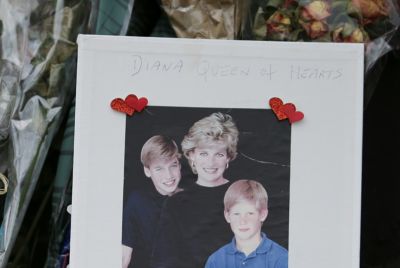
Charles Spencer Believes Princess Diana Had ADHD, Noting She Could 'Turn on a Pin' and Felt Rejected
Charles Spencer says his own late ADHD diagnosis changed how he understands his sister's sensitivity, fractured relationships and response to rejection

Charles Spencer has sparked intense global debate with the release of his highly anticipated memoir, Swan Song: Diana, My Sister.
Published by Penguin Random House on Tuesday, 22 September 2026, the explosive book features deeply personal recollections from the 9th Earl Spencer regarding his late sister, Diana, Princess of Wales.
Drawing parallels with his own late diagnosis of severe attention deficit hyperactivity disorder, Spencer asserts that the beloved royal struggled with unrecognised neurodivergence, dyslexia, and rejection sensitive dysphoria throughout her turbulent public life.
The 9th Earl Spencer says he believes his sister, Diana, had undiagnosed ADHD and dyslexia as he discussed his theory in an interview published in People ahead of the release of his book. Spencer said his own late ADHD diagnosis changed how he interpreted Diana's behaviour and difficulties in her personal relationships.
Buckingham Palace has issued a sharp rebuke challenging the reliability of recollections formed during periods of intense grief, setting the stage for a bitter historical dispute as the world approaches the 30th anniversary of the princess's passing.
Charles Spencer Links Princess Diana's Behaviour To Suspected ADHD
Spencer said Diana grew up when English private schools were less attuned to children's learning needs. He recalled that she had problems with spelling and the order of words and letters.
'I think Diana suffered from dyslexia,' Spencer told People. 'She found spelling and word orders and letter orders quite tricky.'
Spencer said he was diagnosed with what he described as 'very severe ADHD' later in life. He believes similarities between his experiences and Diana's behaviour suggest she may have had the same condition.
'I was only found out to have very severe ADHD late in life, and I know it's exactly what Diana had. It's so similar,' he said. His comments are a retrospective personal assessment, not a clinical diagnosis of Diana.
The NHS describes the main symptoms of attention deficit hyperactivity disorder as difficulties with attention, hyperactivity and impulsiveness. Assessments consider a person's symptoms and how they have affected different areas of life.
According to the NHS, dyslexia can affect reading, writing and spelling. Diana's reported difficulties, however, do not establish that she had the condition. Spencer said receiving his own diagnosis also changed his response to speculation about Diana's mental health.
'Because Diana could get very hurt and emotional, they would say, 'Oh, maybe she had bipolar or borderline personality,' and all these. Who knows?' Spencer said.
Rather than endorsing those theories, he believes ADHD offers another way of understanding behaviour he witnessed.
He also connected Diana's reactions to what he described as a deep sensitivity to rejection. That association is Spencer's interpretation and is not, by itself, evidence that Diana had ADHD. 'Rejection for people with ADHD goes very, very deep,' he said.
Charles Spencer Reconsiders Princess Diana's Family Fallouts
Spencer recalled that Diana sometimes distanced herself from friends and relatives after believing they had let her down. He said he included those episodes in his memoir to understand her, rather than criticise her.
'This isn't a criticism,' he said. 'It's a recognition that she was struggling with a condition that was totally undiagnosed, and she could turn on a pin.'
Spencer said Diana found it 'difficult to come back' after a friendship had broken down. 'There wasn't a single member of my family who Diana didn't fall out with and turn her back on for some time,' he said. 'But understanding the ADHD aspect of that is really helpful.'
Swan Song has also attracted attention over separate and disputed claims involving King Charles III after Diana's death in Paris on 31 August 1997.

Spencer claims the then-Prince Charles sounded 'giddily elated' during a telephone conversation following Diana's death. He also alleges Charles said, 'Rest assured, we'll forget her soon enough.'
Buckingham Palace disputed Spencer's account and issued a rare response to the memoir. The palace said it does not normally comment on books, but added that 'the pain of fraternal grief can cloud reason, affect judgment and colour memory' even years after a loss. Spencer has stood by his recollection.
The palace dispute is separate from his claims about Diana's possible neurodivergence. Both, however, emerge from Spencer's personal recollection of his sister and their family history.
Nearly three decades after Diana's death, Spencer now interprets some of her strained relationships through the lens of his own ADHD diagnosis.
His account offers his perspective on behaviour that puzzled those around her, but it does not establish that Diana was clinically diagnosed with either ADHD or dyslexia during her lifetime.
© Copyright IBTimes 2026. All rights reserved.
- Recommended For You