

UAE-Led Operation Across 30 Countries Targets AI-Powered Fraud Networks, Identifying $39 Billion in Scam-Linked Funds
Operation Confrontation Ghost brought together law enforcement, international organisations and 13 private-sector partners across 30 countries
Vienna, 20 October 2026— A three-month crackdown spanning 30 countries has traced more than $39 billion (£28.9 billion) in cash and cryptocurrency to online fraud networks. The operation was announced in Vienna in October.
Organisers describe it as the first operation of its kind to bring police forces together with major tech and finance companies against cross-border scams.
Led by the United Arab Emirates Ministry of Interior, Operation Confrontation Ghost brought together law enforcement from five continents alongside INTERPOL, the Global Anti-Scam Alliance (GASA) and 13 private sector partners, among them Meta, TikTok, Mastercard and Huawei. Efforts to recover the identified assets are now under way.
The operation comes as online fraud has grown into one of the world's most lucrative criminal industries. GASA's 2024 Global State of Scams report estimated that scams took $1.03 trillion (£763.5 billion) from victims worldwide over a single year, and found that just 4% of victims were able to get their money back.
Much of the activity is organised on an industrial scale. A UN Office on Drugs and Crime (UNODC) report published in July put scam losses across East and Southeast Asia, Australia and New Zealand at between $88.3 billion (£65.5 billion) and $114.1 billion (£84.6 billion) in 2025.
The agency found that people from at least 80 countries and territories had been identified in scam compounds in the region, with recruitment networks running through transit hubs in Asia, the Middle East and Africa. It also documented criminals' growing use of generative AI, deepfakes and automated fraud.
Running from 1 July to 30 September, Operation Confrontation Ghost zeroed in on three of the fastest-growing threats online: AI-enabled fraud, digital financial fraud, and technology-facilitated sextortion.
Sextortion, in which offenders threaten to share intimate images unless victims pay, has become a particular concern for child protection agencies.
The National Center for Missing & Exploited Children received more than 50,000 reports of financial sextortion in 2025, roughly 137 a day, up from over 36,000 the year before. Research by child-safety group Thorn has found that these schemes frequently target boys aged 14 to 17.
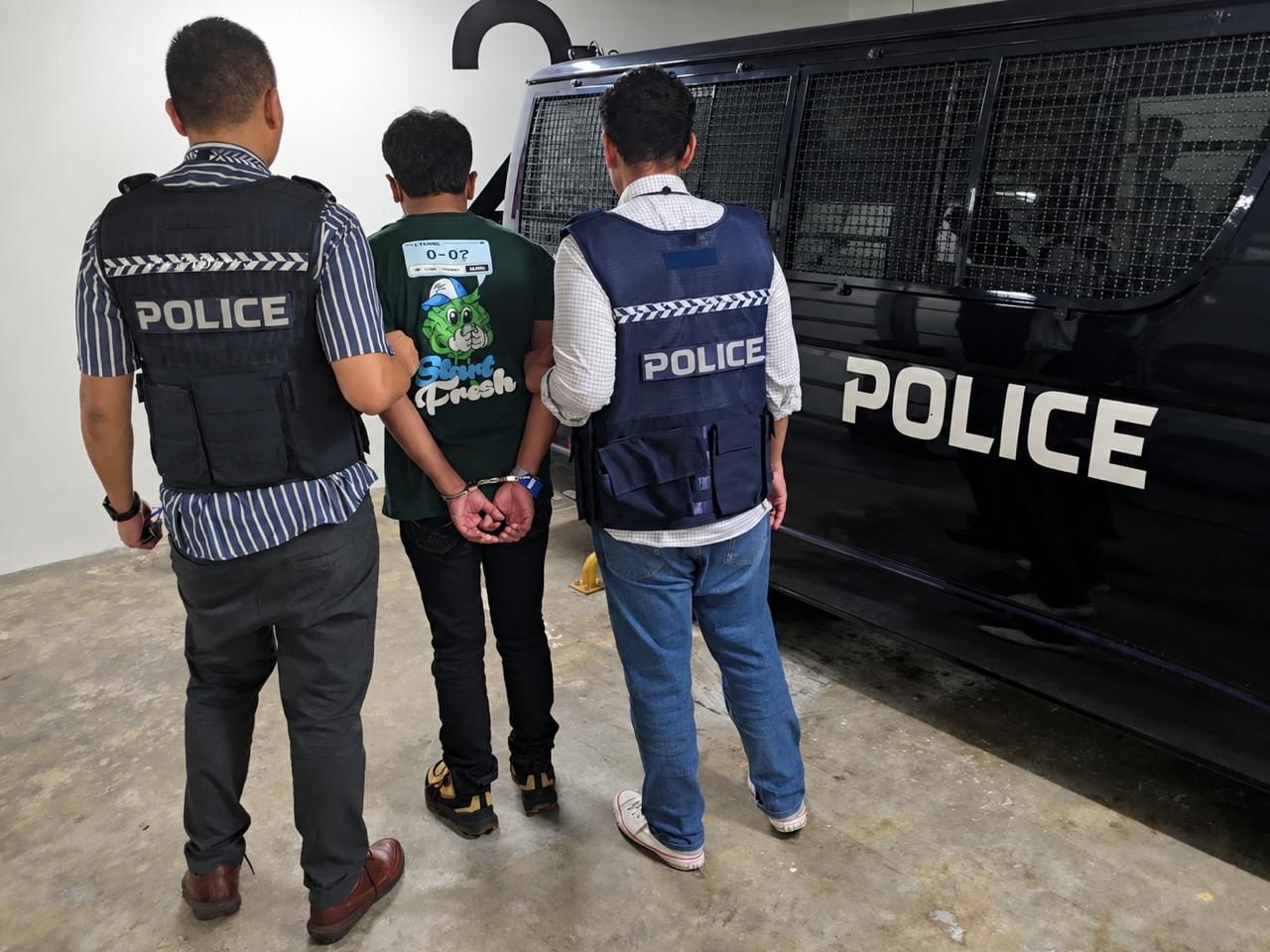
The scale of what investigators uncovered was striking. More than 15,500 victims and 3,500 suspects were identified, and over 960 people were arrested. Police raided 29 fraud centres, shut down more than 570 social media accounts used to move money and manipulate victims, and flagged over 4,126 bank accounts linked to fraud.
Behind those numbers lay an unusual degree of information sharing. Participating agencies swapped more than 9,000 pieces of intelligence, piecing together how modern scam networks recruit and deceive their targets and then launder the proceeds across borders, the very borders these groups have long relied on to stay out of reach.
'Under the UAE's global leadership, Operation Confrontation Ghost transformed international shared intelligence into coordinated operational impact,' said Colonel Dana Humaid Al Marzouqi, Director General of the International Affairs Bureau at the UAE Ministry of Interior. She described the initiative as a practical response to evolving threats such as AI-enabled fraud.
Countries taking part ranged from the United Kingdom, France and Japan to Brazil, Kenya and Myanmar. On the industry side, partners included crypto exchange Crypto.com, cybersecurity firms Group-IB and Trend Micro, and fraud-prevention specialists Feedzai and Outseer.
The results were unveiled in Vienna at a UAE-hosted side event during the UN's Conference of the Parties to the Convention against Transnational Organized Crime (UNTOC COP13), where UNODC praised the effort.
'I commend the United Arab Emirates for using their convening power and making this operation possible,' said UNODC Executive Director Monica Juma, who also credited the leadership of UAE President His Highness Sheikh Mohamed bin Zayed Al Nahyan.
Discussion at the event turned to how to make this kind of cooperation last, with speakers calling for stronger partnerships between governments and the private sector as fraudsters increasingly turn to artificial intelligence. The UAE Ministry of Interior said it remained committed to that work, so that those who profit from deception have nowhere to hide.
© Copyright IBTimes 2026. All rights reserved.