Conservative Media Erupts as Alex Jones Unleashes On-Air Tirade Against Candace Owens
A bitter on air clash exposes deep fractures inside the conservative movement as old allies turn on each other

The conservative media ecosystem is fracturing publicly, and this time the implosion played out live.
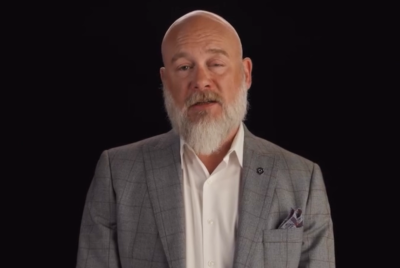
Alex Jones sparked outrage by launching a blistering on-air attack against Candace Owens, mockingly branding her the "empress of dark Q" during a chaotic podcast segment that exposed deepening rifts inside right-wing politics.
The remarks, delivered during a heated discussion about recent conservative infighting, quickly circulated across social media, drawing sharp reactions from Owens' supporters and reigniting debate over the direction and leadership of the movement.
How a Conservative Feud Turned Into an On-Air Spectacle
The clash unfolded as commentators analysed the fallout from Turning Point USA's AmericaFest and ongoing arguments over Israel, loyalty and who gets to define acceptable boundaries within conservative politics.
Using a professional wrestling analogy, Jones described a movement increasingly consumed by internal strife, suggesting that former allies were now turning on each other instead of their political opponents.
'Candace Owens is the new queen of black-pilled Q,' Jones said during the broadcast, before escalating the jab: 'I dub her the queen of dark Q, the empress of dark Q.'
The remarks resonated immediately and forcefully, triggering backlash online and prompting renewed scrutiny of Jones's role in amplifying or policing conspiracy-adjacent rhetoric on the right.
According to commentators on the programme, the exchange reflected a broader breakdown following months of ideological strain, particularly after the death of Turning Point USA founder Charlie Kirk, who was shot and killed during a campus event in Utah in September. His death has become a flashpoint in debates over rhetoric, responsibility and extremism within conservative circles.
Why Candace Owens Is at the Centre of the Storm
Owens has emerged as a polarising figure following public comments and online posts in which she questioned aspects of the narrative surrounding Kirk's killing. Critics argue that her framing and tone have fuelled speculation and distrust, while supporters insist she is raising legitimate questions about media coverage and political power.
During the broadcast, hosts accused Owens of positioning herself as a lone truth-teller under siege, refusing to retreat despite mounting criticism from within her own ideological camp.
Owens herself has recently written that nearly everyone was 'versus me', listing media outlets, political organisations and fellow conservatives. Analysts say that framing has intensified examination of her influence and mirrors patterns commonly associated with conspiracy-driven discourse.
Jones seemed conflicted throughout the exchange, alternating between ridicule and frustration. At one point, even fellow hosts acknowledged confusion over the debate itself.
'Half the time, I don't even understand what they're saying,' one commentator noted, reflecting a broader sense that the arguments had spiralled beyond clear ideological lines.
A Wider MAGA Civil War Over Israel, Loyalty and Power
The Jones-Owens clash is part of a much larger ideological struggle playing out across conservative media.
According to the discussion, figures such as Mark Levin and Ben Shapiro have urged public denouncement of voices they view as crossing into racist or antisemitic territory. Others, including Megyn Kelly and Tucker Carlson, have pushed back, warning against what they describe as ideological purity tests.
One commentator characterised the divide as a long-simmering conflict between 'America First' and pro-Israel factions that has now erupted into the open.
'America First has won the court of public opinion,' he claimed, while conceding that institutional power remains contested.
Jones's attack on Owens stunned even seasoned observers, as it appeared to set two influential conspiracy-adjacent figures against each other. Some analysts suggested the clash resembled a turf war, with Jones reacting to Owens occupying territory he once dominated.
Why the Meltdown Matters
While the insults grabbed headlines, analysts say the implications run deeper.
The spectacle underscores a movement struggling to define its limits, its leadership and its moral boundaries at a moment of heightened visibility. Debates over antisemitism, free speech and loyalty are no longer abstract. They are unfolding live, in front of large audiences, with little restraint.
One host described the situation bluntly as 'a full-scale war', while others warned that sustained infighting could weaken conservative influence at a time when unity once seemed achievable.
As the battle lines harden, the conservative media world appears increasingly divided, not just over policy, but over who gets to speak, who gets to lead and who gets cast out.
© Copyright IBTimes 2026. All rights reserved.
- MOST POPULAR IN Trending