

Donald Trump 'Humiliated' as Congress Blocks Kennedy Center Rebrand Using 1964 Law
Why is a 1964 law blocking the President?

In the heart of Washington, D.C., a city where monuments are etched in stone and laws are designed to be immutable, a high-stakes cultural war is currently unfolding. The stage for this drama is the prestigious John F. Kennedy Center for the Performing Arts, an institution that has long stood as a 'living memorial' to a fallen president. But today, it is at the centre of a bruising tug-of-war between the weight of history and the relentless ambition of a sitting president.
The argument began when Donald Trump, who had often called the organization 'far-left', tried to change it soon after he became president in 2025. The board of trustees that Grenell picked voted in December 2025 to change the name of the venue to the Trump Kennedy Center. This came after a series of quick changes in leadership. Within days, workers were seen putting his name next to Kennedy's on the building's shiny marble facade and changing the official website of the institution to show the new branding.
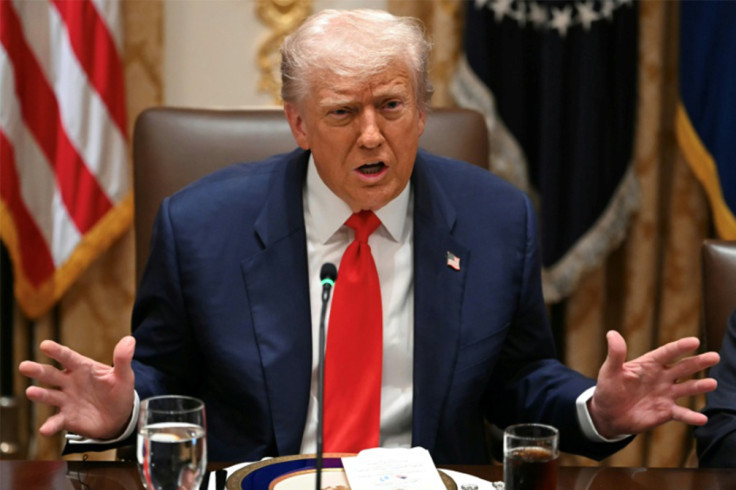
Legal Battle to Reclaim the Donald Trump Memorial
The new name has not only sparked considerable debate, but it has also triggered a kind of constitutional crisis. House Speaker Mike Johnson recently announced a bipartisan spending package that included $32 million for the John F. Kennedy Center for the Performing Arts' operating costs until Sept. 30, 2027. Notably, the bill made no mention of the name 'Trump' at all. This raises an important legal issue: the law passed following JFK's assassination in 1964.
The board of trustees is not permitted to turn the venue into a memorial for anyone else, nor to add another person's name to the exterior, as the law clearly stipulates. It states: 'No more memorials or plaques that are like memorials shall be designated or installed in the public areas of the John F. Kennedy Center for the Performing Arts'.
There are some exceptions for foreign gifts or major financial donors, such as inscriptions in the Hall of States or the Hall of Nations. However, the addition of Donald Trump's name to the marquee without authorisation is currently being challenged in federal court. Critics argue that the name can only be changed by an Act of Congress, since it was originally established by one.
The controversy has even divided the Kennedy family. While Robert F. Kennedy Jr. serves in the Trump administration, other members have expressed outrage. Maria Shriver, the late president's niece, described the move as 'beyond comprehension', asserting that her uncle's vision was to bring the arts into a space of universal humanism, not political branding.

Performance Cancellations Haunt the Donald Trump Takeover
While the lawyers argue, the performers are voting with their feet. The prestigious venue, which typically hosts over 2,000 shows a year, has seen a wave of high-profile withdrawals. The jazz supergroup The Cookers, a septet that has performed at the centre for two decades, abruptly pulled out of their A Jazz New Year's Eve show. The group stated the 'decision has come together very quickly' on their website, shortly after the name change was made public.
The dance world has followed suit. New York's Doug Varone and Dancers cancelled an April performance, stating on Instagram that they 'can no longer permit ourselves nor ask our audiences to step inside this once great institution'. Even more damaging for the administration is the fact that viewership for the televised Kennedy Center Honors program in December reportedly plummeted by 35% compared to the 2024 show, despite Donald Trump predicting his presence would boost ratings.
In response, the centre's new head, Richard Grenell — a staunch Trump ally — has gone on the offensive. He dismissed the boycotting artists as 'political activists' booked by a 'previous far-left administration'. Grenell further stated that the last-minute cancellations 'prove that they were always unwilling to perform for everyone — even those they disagree with politically' and claims the centre is being 'flooded with inquiries' from 'real artists' who are willing to perform for everyone.
As the building enters 2026, the dispute remains unresolved, leaving one of America's most sacred cultural spaces caught in a deadlock between statutory law and political will.
© Copyright IBTimes 2026. All rights reserved.