

Donald Trump's On-Camera 'Microsleeps' Point to 'Significant Neurological Decline', Psychologist Claims
Footage of Trump's public appearances raises medical questions that video evidence alone cannot answer

Clinical and forensic psychologist John Paul Garrison has questioned President Donald Trump's alertness during an Oval Office appearance on Wednesday, 7 October 2026. He suggested that moments when Trump appeared to close his eyes might represent 'microsleeps,' while raising possible neurological explanations that have not been medically established.
The comments concern a White House announcement about Trump Accounts, a savings and investment initiative for children. Michael Dell, founder of Dell Technologies, and his wife, Susan, joined the president to discuss their philanthropic contribution to the programme.
Garrison's interpretation contrasts with a White House medical report released in May. It recorded normal neurological findings following Trump's examination and a maximum score on a cognitive screening test.
Donald Trump Oval Office Footage Raises Questions About Alertness
The 7 October event focused on the expansion of Trump Accounts and automatic enrolment for eligible children. Susan Dell spoke about messages from families who had benefited from the initiative, according to a published transcript of the proceedings.
During the exchange, Trump appeared to close his eyes and then reopen them. Garrison, analysing the recording, suggested that the moments could indicate brief episodes of sleep rather than simple tiredness.
In comments reported by AlterNet, he described such episodes as 'microsleeps' and questioned whether Trump's expression on reopening his eyes suggested confusion. That impression, however, is not evidence of what the president was experiencing or whether he was asleep.
Garrison also drew attention to what he regarded as lapses in concentration while other people were speaking. He suggested that the observations could be associated with neurological conditions, including dementia or brain injury.
Neither diagnosis is established by the footage. Garrison's analysis was based on the public recording, and no examination or access to Trump's medical records was documented alongside his claims.
The US Centers for Disease Control and Prevention describes microsleeps as involuntary episodes of sleep lasting a few seconds. Such episodes can occur with sleep deprivation and may briefly interrupt a person's ability to process information.
That does not mean everyone who appears drowsy is experiencing a microsleep. Nor would an apparent episode, on its own, demonstrate dementia, brain injury or progressive neurological disease.
Donald Trump Rally Movements Examined Against White House Medical Findings
Garrison also discussed footage of Trump with retired baseball pitcher Roger Clemens at a rally in San Antonio, Texas, later on 7 October. During the event, Trump announced that he intended to award Clemens the Presidential Medal of Freedom.
The psychologist focused on movements involving the president's arms and upper body. He suggested that a motion near Trump's right elbow resembled a 'myoclonic jerk,' a term used for a sudden, brief muscle movement.
He also pointed to movements involving Trump's left arm, hand and torso. Garrison interpreted them as possible neurological signs and linked them to what he regarded as changes in coordination and attention.
Those assessments remain speculative. The video does not establish whether any movement was involuntary, why it happened or whether it was related to the president's neurological health.
Garrison further suggested that the apparent difficulties had become more noticeable over several months. The material accompanying his commentary, however, did not provide independently verified neurological measurements demonstrating such a decline.
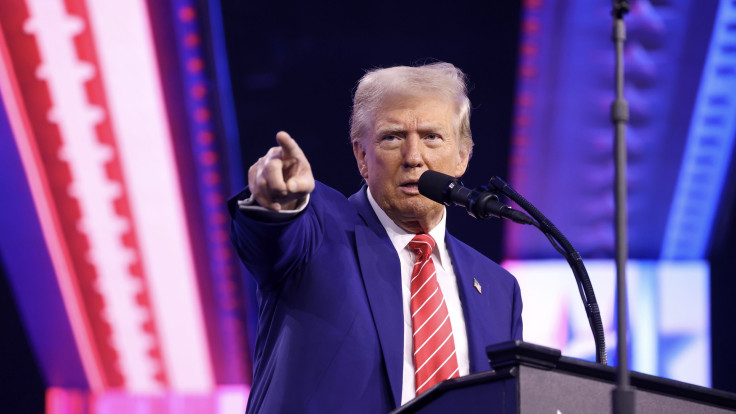
The public medical record offers a different account. In a memorandum dated 29 May 2026, presidential physician Capt. Sean P. Barbabella detailed findings from Trump's examination on 26 May at Walter Reed National Military Medical Center.
The physician reported normal mental status, motor strength, sensation, reflexes, gait and balance. Trump's Montreal Cognitive Assessment score was 30 out of 30, and Barbabella described him as being in 'excellent health' and fit for presidential duties.
The May findings cannot establish what occurred in either October recording. Equally, Garrison's interpretation of those clips does not overturn the documented examination results.
No separately verified White House response to Garrison's latest analysis was available for this report. The medical claims therefore remain attributed observations, not a diagnosis of the sitting president.
© Copyright IBTimes 2026. All rights reserved.