

Donald Trump's Grimace Shows 'Something Going on Neurologically' During Flyover, Pathologist Says
A speech-language pathologist raised neurological concerns over Donald Trump's flyover grimace, but the video cannot establish a diagnosis
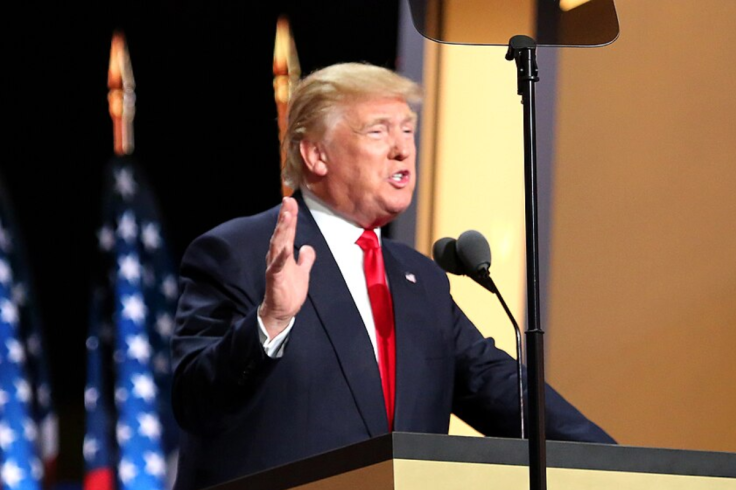
A Donald Trump grimace during a military flyover at Joint Base Andrews, Maryland, on 23 September has prompted renewed discussion about the president's health.
Speech-language pathologist Hilary Shae later described the footage as showing possible signs of neurological impairment, although the video cannot establish a diagnosis.
Trump and First Lady Melania Trump were welcoming Chinese President Xi Jinping and Peng Liyuan at the start of Xi's state visit. During the ceremony, two US Air Force B-1B Lancer bombers flew over Joint Base Andrews. Trump saluted, visibly winced as the aircraft passed and lowered his arm, while Xi showed little visible reaction.
The clip spread quickly online, with much of the attention focused on the contrast between the two leaders. The Daily Show later described Trump as being 'spooked' by the flyover, while critics on X mocked his reaction.
Donald Trump Grimace Becomes a Health Talking Point
Shae discussed the footage during a 30 September appearance on The David Pakman Show. The programme describes her as a licensed and certified speech-language pathologist specialising in concussion and neurological disorders.
According to the supplied report, Shae focused on Trump's response to the aircraft noise and argued that neurological deterioration can affect selective attention.
She suggested difficulty filtering competing stimuli could explain why the president briefly dropped his salute after the aircraft passed overhead.
Shae also raised dementia as one possible explanation for what she observed. That suggestion remains a remote interpretation of a brief public video, not a medical diagnosis, as a video clip cannot determine whether a person has dementia or another neurological condition.
That distinction matters here. The viral footage shows a visible reaction to a loud military flyover, but it does not establish why Trump reacted as he did.
Donald Trump Medical Report Offers Contrasting Evidence
A White House medical report released on 29 May provides relevant context. Following Trump's annual physical at Walter Reed National Military Medical Center, physician to the president Capt. Sean Barbabella reported strong neurological function. He also said the president remained in excellent health.
The report said Trump's neurological examination found no abnormalities in areas including mental status, strength, sensation, reflexes, gait and balance. It also recorded a score of 30 out of 30 on the Montreal Cognitive Assessment.
A perfect score is consistent with normal cognitive function. The assessment is not an intelligence test and cannot answer every neurological question.
The May findings do not establish what caused Trump's reaction during the September flyover. They do, however, provide important medical evidence alongside public speculation about neurological deterioration.
Donald Trump Health Debate Spreads to Oval Office Video
The flyover discussion followed another round of online speculation after a 28 September Oval Office event. Trump was appearing alongside officials to announce a planned Mesabi Metallics steel project in Iowa.
Video from the event showed Trump closing his eyes as others spoke. Some social-media users claimed Trump had fallen asleep or 'passed out.' The footage alone cannot establish whether he was asleep, unconscious or simply resting his eyes.
Trump described the planned development as the 'largest steel plant in American history.' The White House said the proposed investment would total $15 billion.
The economic announcement is separate from the health claims attached to the video. Neither the Oval Office footage nor the Joint Base Andrews clip establishes that Trump has dementia or another neurological disorder.
Shae's comments add a professional interpretation to the online debate. Publicly available evidence still consists of visible behaviour, remote commentary and Trump's latest medical findings.
© Copyright IBTimes 2026. All rights reserved.