

Evangelicals Revolt Against Trump's 'Culture of Death' Following Nidal Hasan Public Execution Directives
A dispute over justice and human dignity reveals divisions among the religious conservatives surrounding Trump's administration
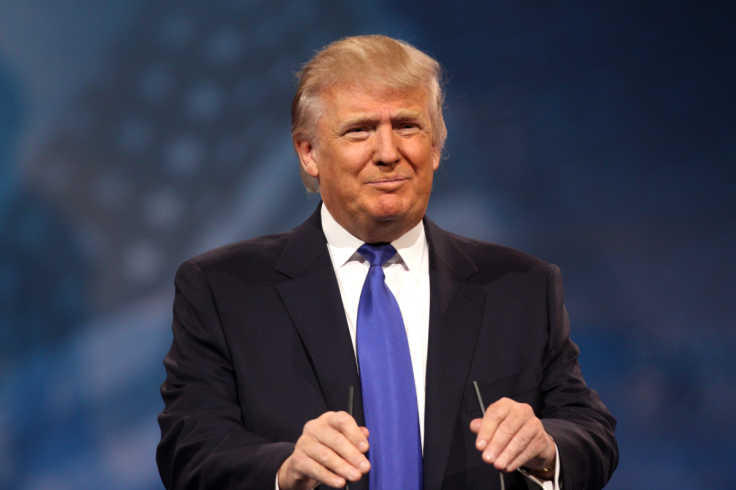
President Donald Trump gave conflicting signals on Friday, 9 October 2026, about plans to livestream Nidal Malik Hasan's execution at Fort Hood, Texas. His remarks followed condemnation of the proposed firing-squad broadcast by evangelical and Catholic leaders.
The controversy followed Defence Secretary Pete Hegseth's announcement that the Pentagon intended to make the execution available for public viewing. Hasan, a former US Army psychiatrist, is scheduled to be executed on 3 December, although legal challenges could delay the sentence.
Hasan was convicted in 2013 of 13 counts of premeditated murder and 32 counts of attempted premeditated murder. The convictions stemmed from his November 2009 shooting at Fort Hood, where 13 people died and dozens were injured.
Evangelical and Catholic Leaders Warn Donald Trump Against Broadcast
Walter Kim, president of the National Association of Evangelicals, said the seriousness of Hasan's crimes did not justify turning his death into entertainment. In an interview with Religion News Service, Kim affirmed the 'need for justice' but warned against creating a 'public spectacle, promoting a culture of death.'
Kim's criticism focused on the proposed broadcast, not on denying accountability for the killings. It brought an influential evangelical voice into a debate that has also divided other conservative Christians.
Archbishop Paul S. Coakley, president of the US Conference of Catholic Bishops, took a similar position in a statement issued on 9 October. He called the livestream proposal a 'barbaric promotion of a culture of death' and urged the administration to reconsider it.
Coakley said Hasan's actions could not be condoned. His objections reflect the Catholic Church's opposition to capital punishment, which its catechism has described as inadmissible since a 2018 revision.
Other Christian leaders disagree. Pastor Doug Wilson, whose church Hegseth attends, told Religion News Service that biblical executions were public. Although he favoured public executions, Wilson warned against allowing them to become a circus.
Pastor Robert Jeffress, a longtime Trump supporter and leader of First Baptist Church in Dallas, also defended Hegseth's proposal. He argued that witnessing the punishment could reinforce the sanctity of human life.
The disagreement cuts across religious and political loyalties. Hegseth frequently speaks about his Christian faith, yet prominent Christians have reached opposing conclusions about whether the state should let people watch a killing.
Donald Trump Weighs Broadcast Amid Republican Criticism
Trump initially suggested the broadcast decision was unresolved, telling reporters, 'We're making a determination about that.'
Later, asked whether he had personally approved livestreaming, he answered, 'Did I approve? Absolutely,' according to The Washington Post. When a reporter specified the livestream, Trump replied, 'Yeah.'
Vice President JD Vance also questioned whether the broadcast would happen. He emphasised the suffering of Hasan's victims before saying that, if the execution were livestreamed, 'I'm not going to be watching it.'
Opposition extended to Republican lawmakers. Senator Thom Tillis criticised the proposal as 'beyond disgusting,' while Senator John Curtis warned against treating executions as entertainment. Their objections concerned the broadcast rather than Hasan's conviction.

The historical distinction is important. The last widely recognised government-sanctioned public execution in the United States took place in Kentucky in 1936. However, death penalty experts told Reuters that no American government execution had previously been televised or livestreamed.
The US military last executed a prisoner in 1961 and has not used a firing squad since 1945. A livestreamed execution would therefore break with modern practice even if the punishment itself has historical precedents.
Those answers left questions about the status of the proposed broadcast, despite Trump's clear support for Hasan's execution. The Pentagon has not specified which platform might show it, who would have access or whether victims' families would attend.
Legal experts told the Associated Press that Hasan could seek federal court intervention, potentially delaying his execution. Such a challenge could postpone the scheduled date regardless of whether the administration proceeds with its livestream proposal.
© Copyright IBTimes 2026. All rights reserved.