Donald Trump Is 'Not in Control of Himself' Amid 'Steep Neurological Decline', Psychologist Warns
Dr John Paul Garrison suggested a focal motor seizure or other neurological issue, while the White House physician says Trump is in excellent health
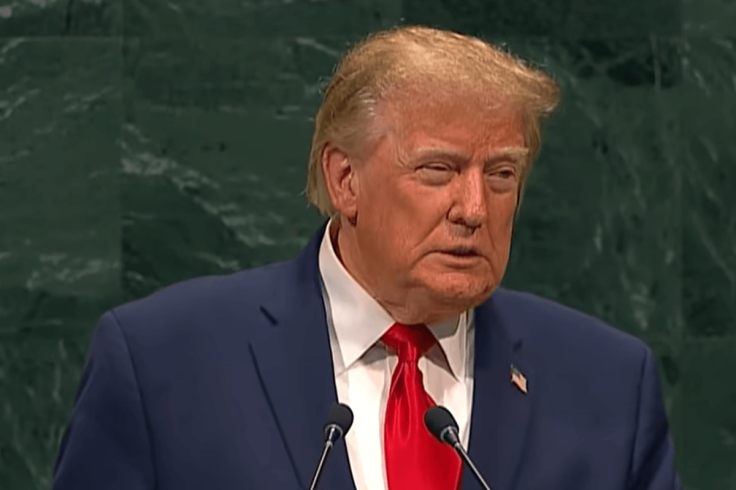
Clinical and forensic psychologist Dr John Paul Garrison has claimed President Donald Trump showed signs of losing control of his movements during his United Nations General Assembly speech on Tuesday, 22 September 2026.
According to Garrison, the video footage pointed to a worsening neurological condition. The warning follows scrutiny of Trump's health since his 2024 re-election, including swollen ankles and bruised hands.
White House physician Captain Sean P. Barbabella has said Trump is healthy and fit to serve, sharply differing from Garrison's account of the speech video, which remains an unverified interpretation of the recording.
Donald Trump's UN Speech Under Scrutiny
Garrison, who runs the Dr G Explains YouTube channel, slowed footage of the address. He said a movement appeared to travel from Trump's right arm to his eyes, mouth and left arm.
Garrison said of the movement, 'What we're observing certainly looks like a focal motor seizure.' That is his reading of the footage. The account does not cite an examination or test establishing that Trump had a seizure.
The psychologist also suggested Trump seemed briefly frightened before speaking faster again. He described the shift in pace as alarming and beyond the president's control.
Garrison has previously spoken about what he considers a neurological decline, and argued that this appearance showed the problem was getting worse. Those claims remain his assessment of publicly visible behaviour.
What Garrison Says Happened to Donald Trump
Garrison raised the possibility of a stroke as one explanation for the kind of movement he thought he saw. He said a stroke can sometimes lead to focal epilepsy, but the report offers no evidence that Trump has had a stroke or developed epilepsy. Neither diagnosis follows from the recording alone.
Later in the address, while Trump discussed Iran, Garrison noticed what he described as a slight movement of the president's tongue. He suggested it might be linked to the arm movement. In Garrison's view, such behaviour could become more likely when Trump was animated by a subject.
Another moment came when Trump hesitated over the word 'building' and then took a breath. Garrison interpreted the pause as a possible spasm interrupting his speech. He thought the movement might have started in Trump's torso but acknowledged that it was difficult to see.
He also suggested a myoclonic spasm, a brief muscle jerk, as a possible explanation. The report does not establish what caused the hesitation.
Donald Trump and the White House's Health Assessment
At the end of his analysis, Garrison said he believed Trump was aware that he was losing control of his body. He argued that the incidents during the UN speech appeared worse than examples he had discussed before. The account gives no clinical findings to substantiate a progressive neurological condition.
Garrison also said he believed Trump's awareness of losing control made further episodes more likely. That claim arose from watching the speech rather than from an account of what Trump himself experienced.
Barbabella, a US Navy captain, has repeatedly characterised Trump as in 'excellent health' and fully able to discharge the responsibilities of his office. His view is the official medical assessment quoted in the report. It does not include his response to Garrison's analysis of the UN address.
© Copyright IBTimes 2026. All rights reserved.
- Recommended For You