

Ecuador Beach Horror: Armed Attack Leaves 6 Dead, Including 2-year-old Girl
Officials said gunmen opened fire in a public area, underscoring growing security concerns as Ecuador grapples with escalating gang-related violence.
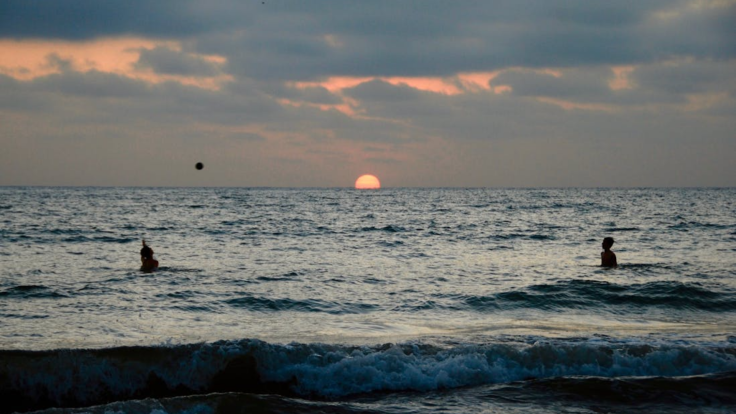
Days after global outrage over a deadly public-space attack in Australia, another beach meant for families has been ripped apart by an attack and killings.
In Ecuador, six people, including a two-year-old girl, were killed when armed men opened fire near a beachfront sports field in Puerto López, said the National Police.
The shooting occurred on a busy Sunday evening on 28 December 2025 as locals and tourists gathered along the boardwalk by the beach in the municipality of Puerto López, a municipality in the Pacific Coast province of Manabí, one of Ecuador's most volatile regions.
Authorities say the shooting is linked to organised crime, underscoring how Ecuador's spiralling gang violence is now spilling into open, civilian spaces.
The initial forensic reports suggest the attack was a targeted strike arising from an 'internal dispute' between rival criminal factions, a chillingly common occurrence in a country now considered a primary transit hub for international cocaine trafficking.
Immediately after the shooting, the elite units from the Special Operations Group were deployed to conduct house-to-house searches in Puerto López, though no arrests have been made yet.
A Growing Graveyard for Children
The death of the two-year-old girl in Puerto López is the latest in a harrowing trend of collateral damage affecting Ecuador's youth.
The recent data from the Ecuadorian Observatory on Organised Crime indicates that child homicides in the country have surged by over 640 per cent, as cartels increasingly employ public executions as a method of territorial intimidation.
The province of Manabí, which has been under a state of emergency since August 2025, has seen its once-thriving tourism industry decimated by these recurring 'massacres.'
Earlier in 2025, a similar attack in the city of Manta claimed five lives, including an eight-year-old girl.
For the residents of Puerto López, the sight of a primary whale-watching destination transformed into a crime scene serves as a grim reminder that no public space, be it a stadium, a pool hall, or a beach, is currently deemed safe from the crossfire of the narco-war.
The Failure of 'Iron-Fist' Policies
The latest violence presents a significant challenge to the administration of President Daniel Noboa, who declared an 'internal armed conflict' against 22 criminal gangs in early 2024.
Despite the widespread militarisation of streets and ports, Ecuador is on track to end 2025 with a record-breaking homicide rate of approximately 50 to 52 per 100,000 residents, surpassing the violence levels of traditional hotspots like Mexico and Colombia.
Critics of the government's security strategy argue that the heavy-handed approach has merely shifted the violence from prisons to residential neighbourhoods.
In Puerto López alone, nine people were killed in separate incidents over the Christmas weekend, suggesting that gang 'cells' remain highly mobile and capable of bypassing military checkpoints.
While the government continues to tout its recapture of high-profile gang leaders, the ground-level reality for Ecuadorians is one of 'total insecurity,' where extortion and random shootings have become part of the daily fabric of coastal life.
International Drug Hubs and Civil Fear
The geographic location of Manabí makes it a 'jewel' for drug traffickers, positioned perfectly for shipments heading toward the United States and Europe. This strategic value has turned peaceful fishing villages into battlegrounds for groups reportedly aligned with the Sinaloa and Jalisco New Generation cartels.
The Puerto López boardwalk, usually a place of celebration, now stands as a symbol of a nation in mourning.
The attack intensifies pressure on President Daniel Noboa, who declared an internal armed conflict against criminal gangs in 2024.
Despite heavy militarisation, Ecuador is on course for one of its deadliest years on record, with homicide rates now surpassing those of several neighbouring countries, according to official projections.
As the 2025 calendar year draws to a close, the 'Ecuadorian dream' of returning to its status as an 'Island of Peace' feels more distant than ever.
For the families of the six victims, the upcoming New Year offers no respite, only the stark reality of a conflict that continues to claim the country's most vulnerable citizens in broad daylight.
© Copyright IBTimes 2026. All rights reserved.