Elon Musk Reveals Investing Advice He's Asked About Constantly — And Why It Matters Now
Musk's straightforward investment strategy focuses on belief in company products and diversification
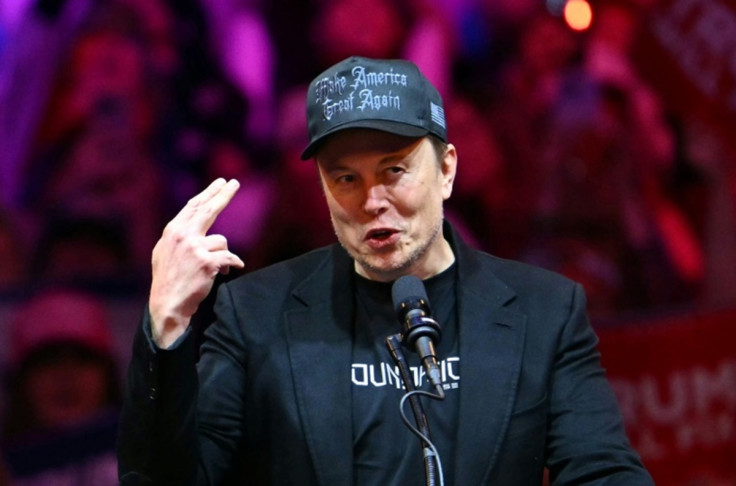
Elon Musk is part of the corporate powerhouse that US President Donald Trump has taken to China. On the sidelines of a high-stakes diplomatic mission, the market volatility due to global events is impossible to miss. In that context, Elon Musk's investing advice couldn't have come at a better time. His answer is straightforward. Buy stocks in companies whose products and services you genuinely believe in, spread those bets across multiple companies, and do not sell just because the broader market falls apart.
The guidance is deceptively simple for someone who controls stakes in some of the most closely watched companies in American business. The billionaire chief executive of Tesla and SpaceX has been explicit that his own approach to capital differs from conventional stock-picking altogether. Musk has stated he does not look for things to invest in and instead tries to build companies he thinks the world needs. That framing puts him closer to a founder-operator than a portfolio manager, yet prospective investors keep asking him how ordinary Americans should think about markets.
What Musk Actually Said About Buying and Selling Stocks
The core of the advice breaks down into two rules.
On the buying side, Musk recommends anchoring a purchase decision in a genuine belief of what the company makes or does. Investors must not chase price momentum or act on market sentiment.
On the selling side, he draws a clear line between two different signals: a deterioration in the actual quality of the company's products or business, versus a broader market panic that has nothing to do with the underlying fundamentals. The first is a legitimate reason to exit. The second is not.
Market downturns routinely trigger selling. Finance professionals describe it as sentiment-driven rather than fundamentals-driven. Historical record shows that investors who exit during panics frequently lock in losses they would have recovered by holding. Musk's framing tells investors to ask a specific question when a stock drops sharply: has the company gotten worse, or has the market just gotten scared?
Musk also advocates for diversification across multiple companies rather than concentrated single-stock bet. Musk has concentrated enormous personal wealth in Tesla, SpaceX, and his other ventures, a strategy that has produced extraordinary returns but also carries the kind of volatility and binary risk that most financial advisers discourage for retail investors.
How Musk's Philosophy Compares to His Own Portfolio
The tension between Musk's stated advice and his own behaviour is worth examining directly. On one hand, he recommends diversification. On the other, the bulk of his net worth has historically been tied to a small number of companies he founded or co-founded.
The Motley Fool has noted that Musk's investment record aligns in some ways with the broader principle that famous investors have long championed: buy into businesses you understand and believe in, and give them time.
© Copyright IBTimes 2026. All rights reserved.
- Recommended For You