Amazon AWS Data Centres Hit by Iranian Drone Strikes — How Digital Transactions Are Affected in UAE and Bahrain
The UK's NCSC warns of increased cyber threats to UK organizations with ties to the Middle East amid ongoing events
Millions of people in the UAE woke up on Monday unable to pay for a taxi, order food, or check their bank balance.
Iranian drone strikes had just hit Amazon Web Services data centres in the United Arab Emirates and Bahrain. The damage knocked out banking apps, payment platforms, and delivery services that Gulf residents use every single day. For the more than 11 million expat workers living in the UAE, where foreigners make up nearly 89% of the population, the outage cut off access to their primary financial tools.
AWS confirmed the attack in a status page update. Two facilities in the UAE were 'directly struck' by drones. A third facility in Bahrain suffered 'physical impacts' from a strike nearby. The company described structural damage, power failures, and water damage from fire suppression systems that activated during the incident.
'We are working to restore full service availability as quickly as possible, though we expect recovery to be prolonged given the nature of the physical damage involved,' AWS stated.
Banking Apps Go Dark Across the Gulf
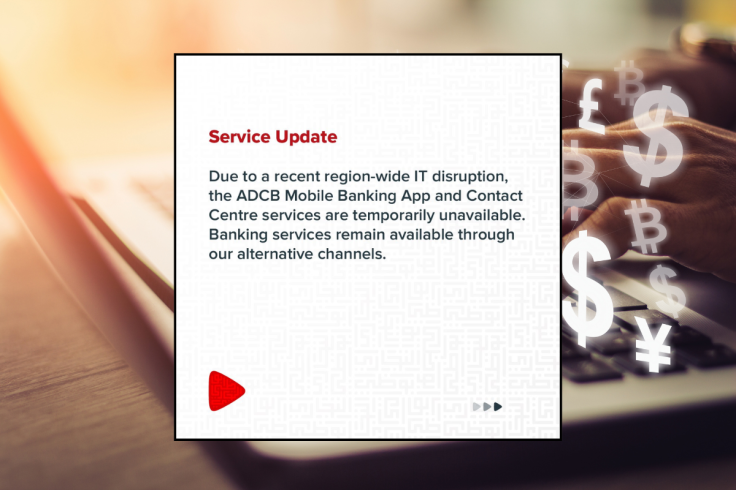
Abu Dhabi Commercial Bank told customers on X that its mobile banking app and contact centre were 'temporarily unavailable' due to a 'region-wide IT disruption'. The bank directed users to physical branches for urgent transactions — not exactly practical for thousands of blue-collar workers who depend entirely on their phones to access wages and send money home.
Due to a recent region-wide IT disruption, the ADCB Mobile Banking App and Contact Centre services are temporarily unavailable.
— ADCB بنك أبوظبي التجاري (@OfficialADCB) March 2, 2026
To learn more visit https://t.co/PjbWh15iQk pic.twitter.com/WFNN99FDfi
Emirates NBD, one of the largest banks in the region, reported that phone banking and WhatsApp banking services faced 'temporary delays'. First Abu Dhabi Bank flagged 'intermittent service disruption' affecting internet and mobile banking.
Payment companies took hits, too. Alaan and Hubpay both reported outages. Users couldn't complete transactions. Careem, the ride-hailing and food delivery app used across the Gulf, went down before co-founder Mudassir Sheikha confirmed services were back online on Tuesday.
Enterprise software company Snowflake warned customers that 'elevated connectivity issues and error rates within the region will continue until the power issue has been resolved.'
First Military Attack on a Major US Tech Company
This is the first time a major American technology company's data centre has been hit by military action. That fact alone should give pause.
The Washington-based Centre for Strategic and International Studies had essentially predicted this scenario just last week. 'In previous conflicts, regional adversaries such as Iran and its proxies targeted pipelines, refineries, and oil fields in Gulf partner states,' the think tank wrote. 'In the compute era, these actors could also target data centres, energy infrastructure supporting compute, and fibre chokepoints.'
AWS responded with an unusual warning. The company told customers to 'consider taking action now to migrate workloads to alternate AWS Regions.' That's corporate speak for: get your data out of here. The statement acknowledged that the 'broader operating environment in the Middle East remains unpredictable' due to ongoing conflict.
What This Means for UK Businesses
The UK's National Cyber Security Centre issued an alert on Monday. The agency warned British organisations of a 'heightened risk of indirect cyber threat' for those with operations, assets or supply chains in the Middle East.
'In light of rapidly evolving events in the Middle East, it is critical that all UK organisations remain alert to the potential risk of cyber compromise,' said Jonathon Ellison, NCSC Director for National Resilience.
Here's the bigger picture. Microsoft, Google, and Oracle all run data centre facilities in countries now under Iranian bombardment. Only AWS has publicly confirmed strike damage so far. Microsoft announced plans last year to grow its total UAE investment to $15 billion (£11.2 billion) by 2029.
For UK companies that store data or run operations through Gulf-based cloud services, uncomfortable questions are piling up. How secure is that data? What's the disaster recovery plan? Can cloud infrastructure survive modern warfare?
The Broader Conflict
The drone attacks came as Iran retaliated for joint US-Israeli strikes over the weekend that killed Supreme Leader Ayatollah Ali Khamenei. Tehran's offensive has hit US military bases and infrastructure sites across the Gulf. Iran's closure of the Strait of Hormuz sent shockwaves through global energy markets.
As AWS crews work to restore power and repair structural damage, the incident makes one thing clear. Modern warfare doesn't just destroy buildings and roads anymore. It can freeze bank accounts, halt deliveries, and leave millions of people locked out of their own money.
That's exactly what happened on Monday morning in the Gulf.
© Copyright IBTimes 2026. All rights reserved.
- MOST POPULAR IN Finance & Banking