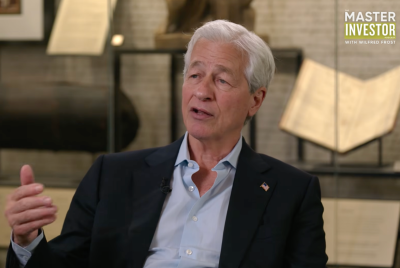
CEO Of $3.3T Investment Giant Warns Gen Z: Stop 'Hobby Investing' And Think Long-Term
Mike Gitlin of Capital Group advises young investors to prioritize disciplined, long-term strategies over short-term trends.


A leading figure in global finance has issued a caution to the newest generation of investors entering the markets. Mike Gitlin, chief executive of Capital Group, one of the world's largest active investment managers with roughly $3.3 trillion under management, says many young investors risk treating the market as a hobby rather than a long-term strategy for building wealth.
Speaking at an investment conference in Singapore on Wednesday, Gitlin said Gen Z should look beyond short-term trends and focus on disciplined investing over decades. His remarks come at a time when younger investors are becoming increasingly active in financial markets, often through mobile trading platforms and social media-driven investment ideas.
A New Generation of Investors
Gen Z investors are entering financial markets earlier than previous generations. Easy access to trading apps, financial content online and digital investment tools has lowered entry barriers. Many young people now begin investing while still studying or early in their careers. Their portfolios often include fast-moving sectors such as artificial intelligence stocks, cryptocurrencies and commodities.
Gitlin said enthusiasm for investing is positive but warned that excitement should not replace careful strategy. The habits formed during the early years of investing, he said, can influence financial outcomes for decades.

Warning Against 'Hobby Investing'
Gitlin described a trend where some investors treat trading as a form of entertainment rather than a long-term financial discipline. His comments followed a question from a father in the audience who described a debate with his teenage children about moving investments from gold to oil. The children criticised the idea, arguing that it could mean profiting from conflict.
Gitlin said focusing on commodities such as gold or oil should not be central to a young investor's long-term financial plan. Trying to predict movements in commodity markets is difficult even for experienced professionals, he noted. Instead of attempting to time such markets, Gitlin suggested young investors should focus on broader equity and bond markets where long-term growth tends to be driven by company performance and economic expansion.
Learning Through Research and Analysis
Gitlin encouraged younger investors to build what he called a paper portfolio. This involves selecting a group of companies and tracking their performance without immediately investing real money. The exercise, he said, helps investors learn how markets respond to earnings results, economic trends and company strategy.
He also acknowledged that artificial intelligence tools can assist investors in researching companies and analysing data. However, Gitlin said technology should support understanding rather than replace it. Young investors, he added, should focus on understanding how companies generate profits, how bonds behave in different economic conditions and how global events influence markets.
Declining Trust Among Young Investors
Gitlin's remarks come as financial institutions face a trust gap with younger generations. According to the Global Retail Investor Outlook released by the World Economic Forum, trust in traditional financial institutions among Gen Z investors has declined in recent years. Nearly 20 per cent of Gen Z non-investors say distrust of financial institutions is a key reason they avoid investing altogether.
Some researchers have also identified a trend described as financial nihilism, where younger people feel that traditional financial goals such as home ownership or long-term wealth accumulation may be increasingly difficult to achieve. Despite this scepticism, surveys suggest many young people remain interested in investing if they have greater access to reliable information and trustworthy platforms.
Markets Remain Resilient
Gitlin made his comments during a period of geopolitical tension affecting global markets. The conflict involving the United States, Israel and Iran has created uncertainty in energy markets and raised concerns about potential supply disruptions through the Strait of Hormuz.
Yet global equities have shown resilience. The MSCI World Index has recovered losses recorded after the outbreak of hostilities and is now trading above levels seen earlier in the year. Investors, Gitlin said, often look several years ahead rather than reacting solely to immediate headlines. Market participants tend to focus on corporate earnings, company profitability and economic conditions expected over the next three to five years.
The Long View for Gen Z
For younger investors, the investment horizon can stretch across several decades. Gitlin said this long timeframe should encourage a patient approach focused on understanding markets and staying invested through periods of volatility. Short-term speculation may generate excitement, but long-term discipline has historically been the foundation of wealth creation in financial markets. For a generation entering its peak earning years, the strategies adopted now could shape financial outcomes far into the future. Gitlin's advice reflects a simple principle: learn the market, understand the risks and build wealth with patience rather than impulse.
© Copyright IBTimes 2026. All rights reserved.
- Recommended For You