

Elon Musk Predicts $3.5T SpaceX Revenue by 2033; Morgan Stanley Foresees It by 2040
Musk's ambitious forecast challenges Wall Street's projections, aiming for unprecedented growth in the space industry
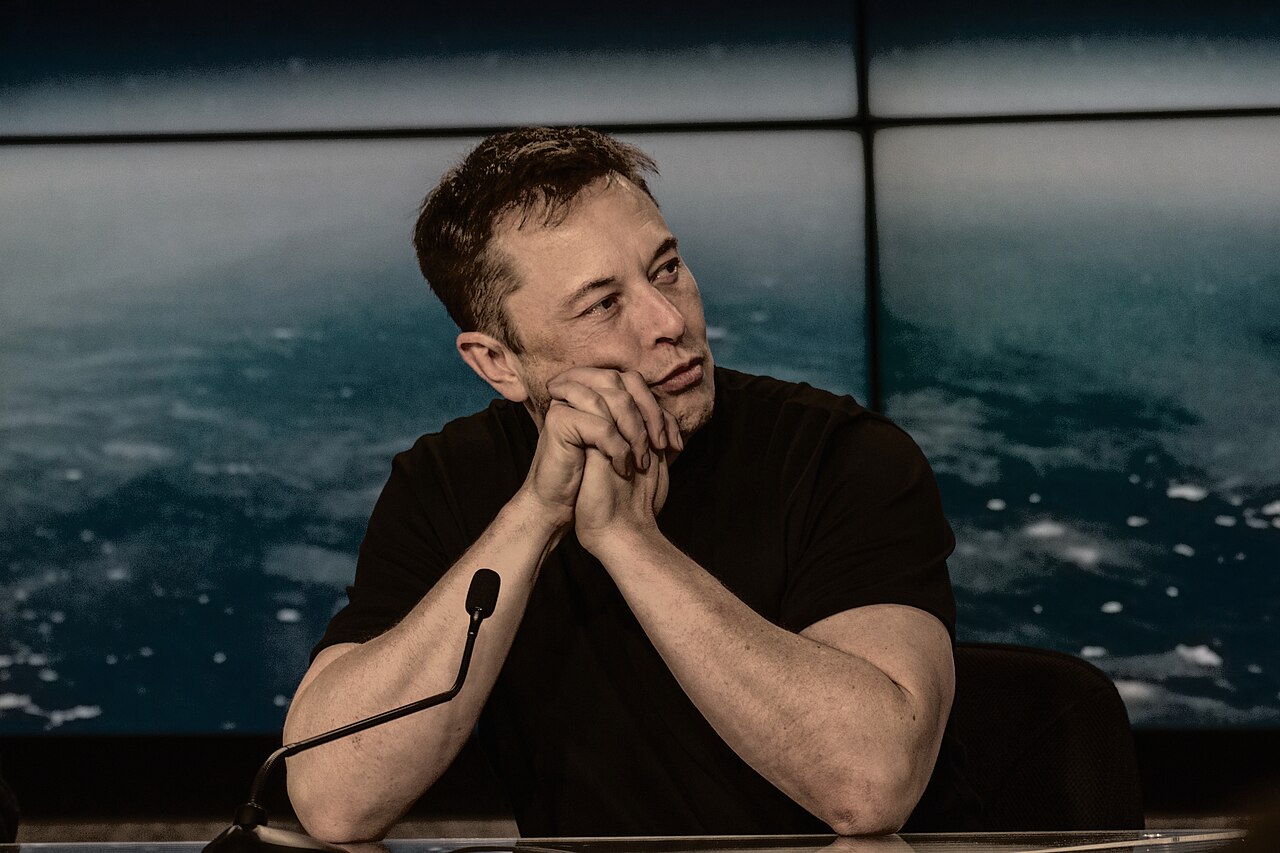
Elon Musk has set a revenue target for SpaceX that runs seven years ahead of Wall Street.
In a post on X on 27 August, the billionaire said the rocket and satellite company could reach about $3.5T (£2.66T) in annual revenue by 2033. Morgan Stanley's own model does not reach that figure until 2040.
The number is Musk's alone. He offered it in reply to online debate over a Morgan Stanley research note, some of which had judged the bank too cautious. 'My best guess for ~$3.5T revenue is roughly around 2033 fwiw,' he wrote. SpaceX has never published a revenue target in any filing, and neither its June listing prospectus nor its latest quarterly report carried forward guidance.
The note that prompted him was itself bullish. Morgan Stanley told clients on 26 August that SpaceX looked 'attractively valued', kept its Overweight rating, and set a $300 (£228) price target, more than double the recent share price.
The bank argued that investors still underestimate the reach of the Starship launch vehicle. Its note landed a day after SpaceX unveiled plans for a $100B (£76B) spaceport in Louisiana, which would become its largest launch site.
My best guess for ~$3.5T revenue is roughly around 2033 fwiw
— Elon Musk (@elonmusk) August 27, 2026
What Morgan Stanley Modelled
The bank had shared its projections with large investors shortly before the June flotation. That model put revenue at roughly $330B (£251B) by 2030 and about $3.5T by 2040, driven by a sharp rise in launch activity. It assumed as many as 5,800 Starship flights a year from eight pads, and it noted that the Louisiana project pointed to launch rates beyond even those 2040 estimates.
Musk, for his part, has said SpaceX could pass $1T (£760B) in revenue by 2030, with an outside chance in 2029.
The Scale of the Leap
SpaceX booked $18.67B (£14.2B) in revenue last year, up 33% on 2024 and up from $10.39B (£7.9B) in 2023. Reaching $3.5T by 2033 would require about 92% annual growth for eight years. That target is close to five times the $716.9B (£545B) Amazon took in during 2025, and roughly 187 times SpaceX's own total for the year.
Most of that money comes from Starlink. The connectivity arm brought in $11.39B (£8.66B) in 2025, about 61% of the total, and turned an operating profit, while the launch and artificial intelligence divisions both ran at a loss as Starship costs climbed. Starlink subscribers doubled to about 12 million in the latest quarter, though average revenue per user slipped to $66 (£50) from $85 (£65).
The longer-term case rests on AI in orbit. SpaceX has signed a compute deal with Nvidia, aims to place AI satellites in space as early as 2028, and steered $15.8B (£12B) of its $18.4B (£14B) second-quarter capital budget towards AI.
In its listing filings, the company put its total addressable market at $28.5T (£21.7T), which it called the largest actionable market in human history, with AI accounting for $26.5T (£20.1T) of it. Its finance chief, Bret Johnsen, has told investors the group is on course for a $100B (£76B) annualised revenue run rate by the end of this year.
What the Share Price Says
SpaceX shares, listed as SPCX, closed at $140.87 (£107) on the day of Musk's post, valuing the company near $1.91T (£1.45T). That is about 38% below the intraday high of roughly $225 (£171) reached days after the debut, though still above the $135 (£103) listing price.
The average target among 35 analysts is $232.35 (£177), with JPMorgan at $240 (£182) and Morgan Stanley at $300 (£228). None comes close to the figure Musk's 2033 timeline would demand.
SpaceX has undershot its own projections before. Internal documents once put Starlink revenue above $30B (£22.8B) by 2025, and the connectivity arm delivered around a third of that.
The first date anyone can check is 2028, the target for satellites in orbit, and third-quarter results will show whether record AI spending has begun to bring in revenue.
© Copyright IBTimes 2026. All rights reserved.