

Epstein Allegedly Kept and Nursed 'Zombie Drug' Plant That Blocks Free Will In Its Victims
Archived emails in the latest DOJ document dump show the late financier asking about his 'trumpet plants at nursery'. The species contains scopolamine, a compound some victims say was used on them.
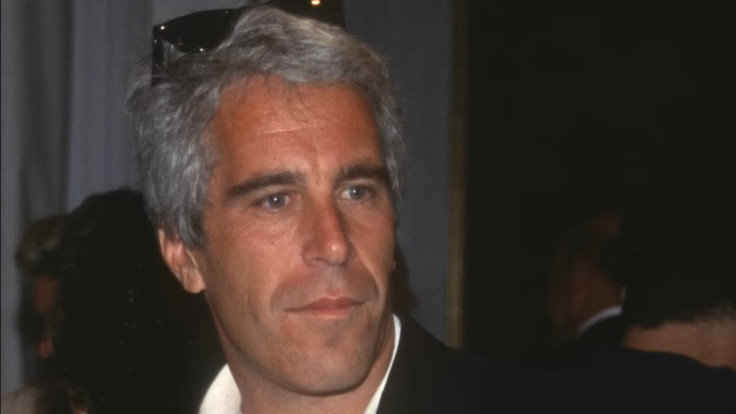
Buried in several hundred pages of newly declassified government paperwork is an email, not long, in which Jeffrey Epstein asks a contact about his 'trumpet plants at nursery.'
That is the full quote. No elaboration. No context for why a convicted sex offender was cultivating Angel's Trumpet, a species whose flowers hang like bells and whose every part — roots, stems, leaves, petals — contains enough tropane alkaloids to hospitalise or kill a person.
The email sits in a tranche of the so-called Epstein Files released by the US Department of Justice under court order. Other emails in the same batch show Epstein was forwarded material describing the effects of scopolamine, the most notorious compound found in the plant. Whether he requested that material or simply received it is not stated in the documents.
Scopolamine has a reputation. In parts of South America it is called 'Devil's Breath.' Tabloids and social media have labelled it a 'zombie drug.' The claims — that it can erase memory, strip away a person's ability to resist, render them compliant and blank — are a bit of a stretch pharmacologically, or at least more complicated than the headlines suggest. But the compound is real, its effects on the nervous system are documented, and it does appear in the Epstein files more than once.
What Scopolamine Actually Does
In small, controlled doses, doctors prescribe it for motion sickness and post-surgical nausea. Hospitals use it. It comes in patches you stick behind your ear before a long ferry crossing. Perfectly ordinary.
Uncontrolled, though, the picture changes fast. The compound blocks acetylcholine receptors in the brain. Symptoms start with blurred vision and a dry mouth; they escalate to confusion, agitation, hallucinations, severe memory loss, hyperthermia, dilated pupils. In high doses — or in anyone with a pre-existing condition, or anyone elderly, or frankly anyone unlucky — it can cause respiratory failure. People die from it.
Epstein specifically asking about a plant at nursery.
— KT "Special MI6 Operation" (@KremlinTrolls) February 17, 2026
Not any old plant though. A highly toxic plant called Angel's Trumpet, which is described as a bio-drug.
The key poison is scopolamine, that has a very short half-life, which means it does NOT show up on toxicology reports… pic.twitter.com/zGQAEBC78K
Angel's Trumpet plants, genus Brugmansia, produce scopolamine alongside atropine and hyoscyamine. All three are tropane alkaloids. All three are dangerous. The plants themselves are strangely beautiful; big, pendulous flowers, often white or pale yellow, popular in ornamental gardens across warm climates. You can buy them at nurseries. Epstein, it seems, did exactly that.
Here is the complication, and it is a genuine one: growing a toxic plant is not a crime. Botanists study Brugmansia. Gardeners cultivate it for the flowers. Owning one does not prove anything about intent, and several experts quoted in the wake of the file release have made precisely that point.
Mind you, context matters. And the context here is Jeffrey Epstein.
🚨Epstein Files Reveal Emails About Toxic “Zombie Drug” Plants He Kept
— Bethany O’Leary 🇺🇸 🦅 (@BBMagaMom) February 17, 2026
Newly uncovered in the DOJ’s Epstein dump: Jeffrey Epstein emailing about his “trumpet plants at nursery.”
That’s Angel’s Trumpet (Brugmansia), gorgeous but deadly. It produces scopolamine (“devil’s breath”),… pic.twitter.com/x26SYXvoFa
What the Victims Said
Among the disclosures in recent weeks were victim impact narratives — statements filed as part of the legal proceedings before Epstein's death in August 2019 — that reference scopolamine by name. Some describe symptoms consistent with its known effects: memory gaps, confusion, an inability to resist or to recall what had happened. The statements do not establish that Epstein administered the drug. They describe what the victims experienced, in their own words, and leave the inference to the reader.
That is all there is. No toxicology confirmation. No clinical proof. And this is part of what makes the scopolamine thread so difficult to pin down; forensic experts have noted that standard toxicology screens can miss the compound entirely. If someone were dosed with it, the evidence might simply not show up in a blood panel or a post-mortem. Whether that gap was ever exploited deliberately is something the documents do not say and nobody has been charged with.
The primary document referenced in public reporting carries the label EFTA00984429. At the time of writing it sits behind age-verification and access controls on the DOJ portal. Journalists who have reviewed it are working from the full text; the rest of us are working from their summaries.
The Broader File Dump
The Epstein Files are not one document. They are thousands: emails, flight logs, financial records, contact lists, correspondence with prominent individuals whose names have triggered a rolling cycle of headlines and denials. Congress voted to compel the DOJ to declassify and publish them. The releases have come in batches, each one producing a fresh wave of scrutiny and, inevitably, a fresh wave of speculation that runs ahead of what the paperwork actually proves.
Ghislaine Maxwell, Epstein's long-time associate, invoked the Fifth Amendment when questioned at a recent US House Oversight Committee hearing. She did not answer. Donald Trump, whose name appears in various contexts across the broader document trove, has not been accused of any crime in connection with Epstein.
The plant emails are, in the scheme of the full archive, a small detail. A few lines of text about a nursery order. But they have landed differently to the flight logs or the contact lists, perhaps because the image is so specific — a man growing flowers that can erase your memory — or perhaps because, after years of revelations about Epstein's operations, people have stopped giving him the benefit of the doubt on anything.
Whether investigators will revisit the scopolamine angle is unclear. The man who might have answered for it died in a federal detention cell on 10 August 2019, awaiting trial on sex-trafficking charges. The flowers, presumably, kept growing.
© Copyright IBTimes 2026. All rights reserved.