

Epstein Files: Trump Administration Accused Of 'Brazen' Law-Breaking In Document Release
Fresh claims over the Trump-era handling of the Epstein files are renewing calls for transparent justice and stronger safeguards for survivors.

The Trump administration is facing fresh allegations of 'brazen' law-breaking over its handling of the so‑called Epstein files, after a leading journalist accused officials in Washington of unlawfully redacting documents and exposing victims while shielding powerful names.
The renewed criticism follows a long and bitter fight over transparency in the Jeffrey Epstein scandal. The late financier, who died in a New York jail in 2019 while awaiting trial on sex trafficking charges, ran what US prosecutors described as a vast network of abuse with British socialite Ghislaine Maxwell.
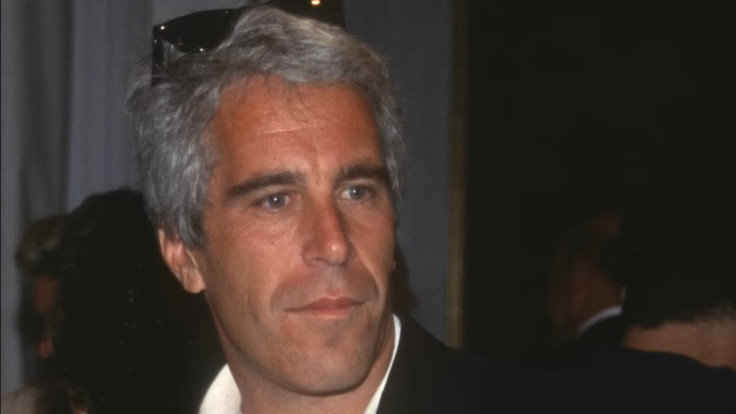
In the years since, survivors have pushed for full access to FBI and Justice Department records, arguing that only a complete release of the Epstein files will show who enabled the operation and how it was protected.
The latest claims come from award‑winning writer Lucia Osborne‑Crowley, whose work on sexual violence and institutional failure has made her a prominent voice among Epstein survivors.
In an interview published on Monday 9 March by The Guardian, she argued that Donald Trump's Justice Department mishandled the ongoing release of documents from the federal investigation, in ways that she believes were unlawful and deeply damaging to women and girls who were abused.
'It's so complicated. They feel very validated on some levels,' she said of the survivors' reactions. But she described it as 'really shocking' that the US Department of Justice would unredact victims' names while continuing to conceal the identities of high‑profile individuals linked to Epstein.

How The Epstein Files Dragged Donald Trump Back Into View
Osborne-Crowley said survivors felt 'very validated on some levels,' yet also 'very angry that the cover-up is so brazen,' a line that lands because it captures both the hope and the exhaustion surrounding this case. It is, in other words, not simply a dispute about paperwork.
Her complaint was specific. Speaking about the redactions, she said the law allows the names of victims to be withheld, not a wider shielding exercise that leaves survivors exposed and powerful people obscured. 'So you've got the executive branch breaking the law, and in a way that's sloppy,' she said.
That allegation gained extra force because Attorney General Pam Bondi was, according to the source article, subpoenaed by the House Oversight Committee last week over her handling of the files and allegations that sexual assault claims involving Trump were suppressed. Nothing in the source article independently proves Osborne-Crowley's accusation, and nothing is confirmed yet, so the claims should be treated with appropriate caution.
Why The Epstein Files Story Is Bigger Than Donald Trump
Osborne-Crowley's more interesting point, and probably the more uncomfortable one for the wider media, is that she thinks too much coverage keeps circling Epstein, Maxwell and Prince Andrew as if notoriety were the real story. She argued instead that the case is about grooming, sexual abuse and the women who survived it, which is a corrective that feels overdue.
Osborne-Crowley describes threats directed at both herself and Epstein's victims. She said that when she travelled from London to Miami in September 2022 to meet Carolyn Andriano in West Palm Beach, Andriano told her a private investigator in his 60s had already appeared after hearing she planned to speak for a book.
Osborne-Crowley then described being approached that same afternoon by another man, also in his 60s, who questioned her about her reporting, offered her drugs and cash, and suggested arranging a meeting with one of Epstein's pilots.
Her account becomes uglier from there. She said the man put his hands up her skirt and waited in the car park, forcing her to leave through staff-only doors. Osborne-Crowley framed that episode not as an aberration, but as a glimpse of the intimidation survivors have long faced.
Osborne-Crowley also said two women withdrew from her book because of threats, and she suggested those orchestrating the pressure could be people 'not yet facing charges.'
Her final recollection is the one that lingers, because it speaks to fear as a method rather than a side effect. She said Maxwell used to warn girls that if they ever spoke, 'we will find you and we will stop you.' before adding, grimly, that 'in a lot of ways, that promise was kept.'
© Copyright IBTimes 2026. All rights reserved.