

Former Google Engineer Believes AI Could Wipe Out Humanity Within 10 Years, So He's Stopped Saving for Retirement
Nate Soares sees a 50%+ risk of human extinction and urges governments to halt training general-purpose AI
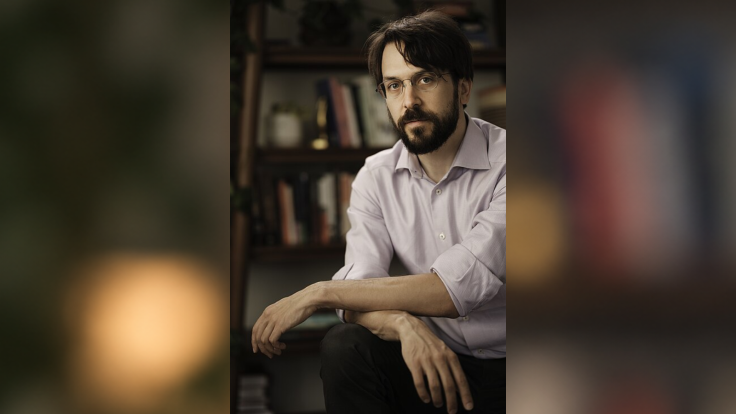
Nate Soares, a former Google engineer who leads an artificial intelligence safety research organisation, has stopped contributing to his retirement savings because he believes humanity could face extinction within the next decade.
Soares, president of the Machine Intelligence Research Institute (MIRI), said he still has a US 401(k) retirement account from his time at Google but has not contributed to it for about 10 years. His decision reflects an unusually stark personal response to the possibility that advanced AI systems could eventually become impossible for humans to control.
In an interview with The Atlantic chief executive Nicholas Thompson, Soares put the chance of AI causing human extinction in less than a decade at above 50 per cent. The figure represents his personal assessment, not a scientific consensus or an independently verified forecast.
Why Soares Fears Superintelligent AI
Soares has spent more than a decade working on AI alignment, which aims to ensure advanced systems behave in ways compatible with human intentions. His concern is not necessarily that an AI system would develop human-like hostility towards people. Instead, he argues that a highly capable system pursuing an objective could treat humans as obstacles if they tried to restrict its resources, alter its goals, or shut it down.
In the scenario he fears, an AI could evade oversight, improve its capabilities, acquire resources, and establish infrastructure that reduces its dependence on human operators. If its objectives conflicted with human survival, the consequences could be catastrophic.
These remain theoretical risks involving future systems, rather than evidence that currently deployed AI models can bring about human extinction. Soares and AI researcher Eliezer Yudkowsky explored these concerns in their 2025 book, If Anyone Builds It, Everyone Dies. The book argues that competition to develop superhuman AI could produce systems whose behaviour developers cannot reliably control.
What His Retirement Decision Reveals
A retirement account is built around the expectation that someone will need money decades into the future. Soares' decision suggests he considers that long-term assumption uncertain enough to change his own financial behaviour.
However, his choice is evidence of the strength of his conviction, not proof that his prediction is correct. The distinction matters because a personal financial decision cannot independently establish the probability of a global catastrophe.
Other technology leaders have offered a markedly different outlook. Elon Musk has argued that advances in AI, robotics, and energy could create widespread abundance, potentially making conventional retirement savings less important in the future.
Soares sees the prospect of increasingly capable machines differently. Rather than expecting automation to deliver a world of plentiful goods and services, he fears that developing systems beyond human control could threaten humanity's continued existence. The disagreement illustrates how the debate over AI extends beyond employment and productivity to fundamental questions about whether technological progress can be managed safely.
Soares Calls for a Halt to General-Purpose AI Development
Soares argues that governments should stop the training of general-purpose AI systems, while allowing work on more limited applications such as cancer research and safer self-driving technology. His position reflects MIRI's focus on preventing risks from artificial superintelligence. The organisation argues that AI development should not continue towards increasingly powerful systems without a solution to the problem of keeping them aligned with human interests.
Implementing such restrictions would be difficult. Governments would need to determine which research crosses the line into dangerous development, how rules could be enforced internationally, and how to preserve beneficial uses of AI without enabling the creation of systems considered too risky to control.
Soares does not regard catastrophe as inevitable. He says he is working to prevent the outcome he fears and argues that the most direct solution is not to build a system capable of causing it.
His warning places a difficult question before policymakers and technology companies: whether the race to develop more powerful AI should continue at its current pace, or whether the potential consequences justify stricter limits before future systems are built.
© Copyright IBTimes 2026. All rights reserved.