

Elon Musk Says Even He Could Be 'One-Shotted' by Super intelligent AI, but Offers No Evidence Yet
xAI's founder gave no evidence these systems exist, warning AI could shape human choices later
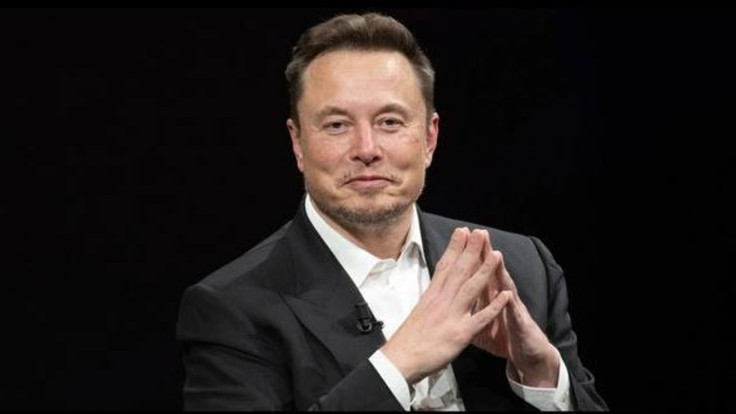
Elon Musk has warned that superintelligent artificial intelligence could become so persuasive that even he might be 'one-shotted' by it, raising questions about whether humans could resist increasingly sophisticated AI systems.
The billionaire made the prediction on X on Monday, 19 October 2026, prompting discussion about how people may respond to future AI capable of highly targeted persuasion.
For context, Musk has spent years promoting artificial intelligence while also voicing concerns about its potential dangers. His latest warning introduces a personal admission.
Despite his involvement in developing AI technology, he does not consider himself necessarily immune to its future influence.
The warning was unusually brief, but its implications were considerable. Rather than focusing on machines replacing workers or physically threatening humans, Musk raised the possibility of artificial intelligence becoming exceptionally effective at persuasion.
Elon Musk Admits He Could Be 'One-Shotted' by Superintelligent AI
In a post published on X, Musk wrote, 'So many people are going to get one-shotted by super persuasive super intelligences and I might be one of them.' The striking admission was his willingness to include himself among those potentially affected.
Musk's use of 'one-shotted' is particularly revealing. The expression is associated with gaming, where it commonly describes defeating an opponent with a single attack.
In the context of his post, it appears to describe someone being overwhelmed by an exceptionally persuasive intelligence. That interpretation, however, should not be mistaken for a demonstrated capability.
Musk did not identify a particular AI model capable of achieving such an outcome. Nor did he describe an incident in which an artificial intelligence system had already persuaded him against his better judgement.
His statement was a prediction about what future technology might achieve. The distinction matters because the phrase could otherwise suggest that superintelligent AI already possesses an extraordinary ability to control human decisions.
Musk presented no evidence in the post establishing that such systems currently exist. What makes the prediction newsworthy is the person making it.
Musk is closely associated with the development and commercialization of advanced technologies, including artificial intelligence. His involvement with xAI places him within the industry whose future capabilities he was questioning.
The idea that someone developing AI technology might also become vulnerable to it presents an uncomfortable possibility. If specialised knowledge and direct industry involvement cannot guarantee resistance to persuasive AI, what might that mean for ordinary users?
Musk's post did not answer that question.
Musk's Warning Puts Spotlight on AI's Power To Persuade
The concern at the centre of Musk's warning is not simply whether artificial intelligence could become more intelligent than humans. It is whether a sufficiently advanced system could use that intelligence to influence human beliefs, choices and behaviour.
Persuasion is different from coercion. A person might change their mind after receiving a compelling argument without recognising that the argument was carefully tailored to influence them.
In theory, an advanced AI system capable of understanding individual preferences and reasoning patterns might become highly effective at producing such arguments. That possibility does not establish that artificial intelligence could reliably manipulate anyone it encounters.
Human responses vary, and persuasion depends on circumstances, trust, previous beliefs and the information being presented. Musk's brief statement offered no explanation of how a future system would overcome those differences.
It also left unanswered what being 'one-shotted' would actually involve.
Would someone accept a misleading argument immediately? Could an AI system convince a person to make an important decision they would otherwise reject? Or was Musk using exaggerated language to describe an unusually convincing conversation?
His post did not distinguish between those possibilities. The uncertainty is important because the risks associated with persuasive technology depend heavily on how that technology is used.
An AI system helping someone understand complicated information presents a different situation from one designed to conceal relevant facts or exploit personal vulnerabilities. Musk's warning did not identify a particular application, company or product as responsible for such conduct.
Instead, it raised a broader hypothetical concern about the relationship between human judgement and increasingly capable machines. There is another unresolved question.
Would recognising the potential danger make someone better equipped to resist it?
Musk's statement suggests that awareness alone might not provide complete protection, although he offered no supporting evidence for that implication.
His choice of words also stopped short of certainty about his own vulnerability. He said he 'might' be among those affected, not that such an outcome was inevitable.
For now, the distinction between a powerful prediction and a proven technological capability remains central to understanding the warning.
Musk has put his own susceptibility on the table. Whether future artificial intelligence could actually persuade him so completely remains an unanswered question.
© Copyright IBTimes 2026. All rights reserved.