

Former UK Prime Minister Had Threesome With Ghislaine Maxwell, Royal Historian Alleges
Andrew Lownie's latest claim, tied to Ghislaine Maxwell, adds combustible rumour to an Epstein narrative already reshaping how the public judges power.

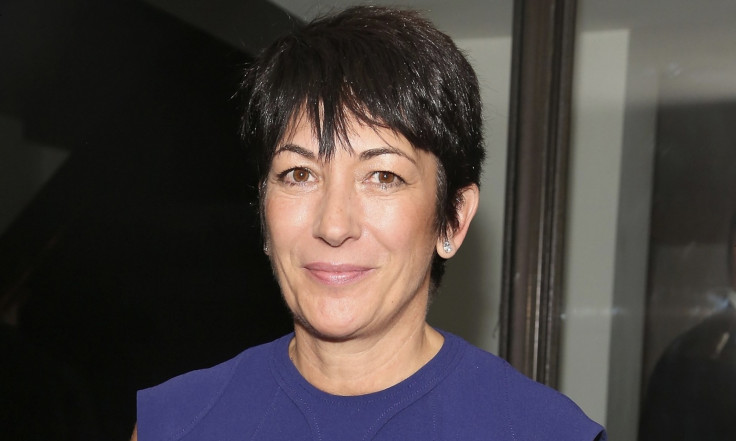
It starts, as these stories so often do, not with a name but with a void where one ought to be. In a scandal already thick with insinuation, the latest claim drops into the public square like a lit match: a royal historian says he has 'heard lots of talk' of a threesome involving Ghislaine Maxwell and 'a British Prime Minister.'
No proof is offered. No former premier is identified. Yet the allegation lands anyway, because the Epstein saga has trained the modern reader to expect the worst and to distrust the comforting idea that power, in Britain or anywhere else, is reliably self-policing.
Maxwell is not some tabloid phantom. She is serving a 20-year prison sentence in the United States for her role in helping Jeffrey Epstein sexually abuse teenage girls, a punishment handed down by a federal judge in 2022. In other words: this is a real criminal case with real victims, now acting as kindling for an ever-expanding secondary fire — the global hunt for proximity, complicity and the faintest whiff of elite indulgence.
The Empty Space Where a Name Should Be
The comment comes from Andrew Lownie, a royal author whose latest work, The Rise and Fall of the House of York, is sharply critical of Prince Andrew and the palace ecosystem that kept him afloat for years. Lownie told the Daily Mail: 'I have heard lots of talk about threesomes - including a threesome between Ghislaine and a British Prime Minister.' Pressed on whether it involved a recent occupant of Number 10, he added: 'A former Prime Minister, but it's not Winston Churchill.'
Prince Andrew 'had underage orgy on Epstein's private island' as girl was told 'give him whatever he wants', bombshell court papers also name Bill Clinton, Michael Jackson, Stephen Hawking, and a 'well-known prime minister'
— Darren of Plymouth (@DarrenPlymouth) January 4, 2024
We are ruled over by Satanic Paedophiles, prove me… pic.twitter.com/xblNG4v7K2
What makes this striking isn't only the salaciousness. It's the way an accusation can be launched like this — half-formed, unattributed beyond 'talk,' and yet still powerful enough to smear an entire office. The public is left squinting at silhouettes. In that gap, rumour does what rumour always does: it recruits people's existing cynicism and calls it judgement.
It also risks dragging attention away from the most important facts: Maxwell's crimes were prosecuted because young women and girls said, in court, what happened to them; the legal system weighed evidence and a jury convicted her. Everything else — particularly anything that points towards public figures — demands the same level of seriousness, or it becomes something uglier: entertainment built on other people's harm.
A Palace That Won't Speak
Lownie's broader argument is less about bedroom gossip than about accountability. 'I think we will also find that he was aided and abetted much more than we realise,' he said of Andrew. 'This will open up and other names will come into the frame.'
Then comes the line aimed squarely at the top: 'This is why I think the King needs to speak. Andrew has been enabled and protected for a long time by a whole panoply of people around him, many of them in official positions.' He calls for a parliamentary inquiry into Andrew's period as a trade envoy and for the release of relevant files, arguing that transparency is overdue: 'That will help clean the stables and restore some trust.'
The Royal Family enabled and protected Andrew and they need to explain themselves if they wish to continue to have the support of the British People. https://t.co/rqPCYEe9lQ
— Andrew Lownie (@andrewlownie) February 5, 2026
That last phrase — 'restore some trust' — hangs there, because it admits the obvious: the monarchy's credibility is not an abstract matter. It is a living contract with the public, one that becomes brittle when difficult questions are met with silence, legalism, or the sort of carefully managed distance that looks, to many, like evasion.
Ghislaine Maxwell and the Epstein Files Fuelled by Disclosure
All of this is unfolding as the United States releases vast tranches of material tied to Epstein — around three million pages, the Justice Department says, following a legal mandate that also required redactions to protect victims' privacy. A separate DOJ announcement described publishing 3.5 million 'responsive pages' in compliance with the Epstein Files Transparency Act.
Document dumps create their own weather. They promise transparency, then deliver something messier: partial facts, lurid fragments, names without context and a scramble for headlines that can outpace verification. The danger, for Britain, is that genuine questions about Andrew's judgment and the palace's handling of reputational crisis get folded into a wider circus where 'more to come' becomes a business model.
And yet, what cannot be ignored is that institutions tend to reveal themselves most clearly when they are under pressure. If the allegations are flimsy, they should collapse under scrutiny. If they are not, the cost of looking away will be paid — as ever — by people with far less power than those at the centre of the story.
© Copyright IBTimes 2026. All rights reserved.