

'I Used to Look Down on Homeless People, Until I Became One': Chef for a Luxury Hotel While Living in a Tent
Amsterdam chef lived in a tent while working in luxury hotel

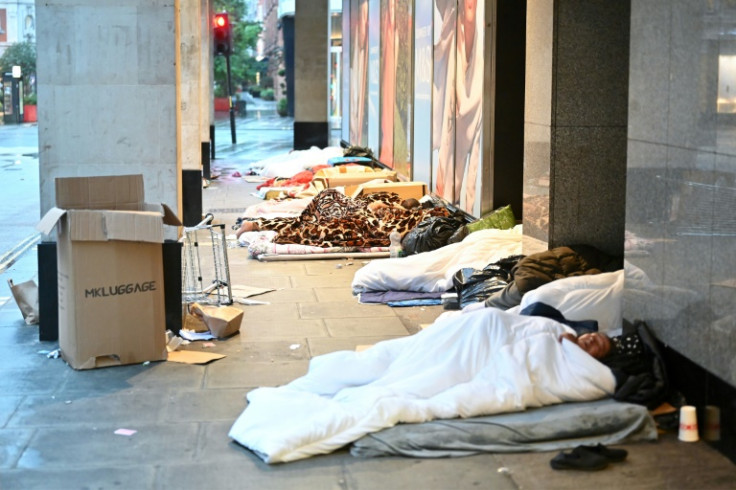
In the sleek, rain-slicked streets of Amsterdam, a new and unsettling demographic is becoming increasingly visible: the working homeless. It is a phenomenon that is no longer confined to the fringes of society. In the shadow of the Rijksmuseum and along the bustling canals, men and women in uniform—clean, pressed, and punctual—are stepping out of tents and into the service industry.
It is a crisis that mirrors the escalating emergency across the Channel; in England alone, a record 132,410 households were living in temporary accommodation by mid-2025. For one man, a professional chef in the heart of the Dutch capital, this wasn't a policy statistic—it was a year-and-a-half-long reality. His story is a poignant testament to how quickly the thin veneer of stability can vanish, leaving a productive member of the workforce sleeping on a camping bed near Sloterdijk station.
The Hidden Double Life Of An Amsterdam Chef
The descent was swift and clinical. 'I used to look down on homeless people, until I suddenly became homeless myself,' he admits. A broken leg led to a lost job, which led to a cessation of benefits, and finally, an insurmountable mountain of rent arrears. Within weeks, he had traded his flat for a tent from Decathlon.
Yet, even as he lived under canvas, his career progressed. He started as a dishwasher in a luxury hotel and, through sheer grit, worked his way up to the rank of chef. The cognitive dissonance of his daily existence was staggering. 'It's a huge contrast to live in a tent while working in a star restaurant,' he says. 'But my job was what kept me going. When I cycled to work in the morning, I had already forgotten that I was living in a tent. Once I arrived at work, the day felt completely normal.'
The illusion only shattered when the shift ended. After-work drinks with colleagues offered a fleeting sense of belonging, but the moment he got back on his bike, the reality of the cold, lonely tent would sink in again.
Breaking The Cycle
Pride is often the last thing to go, and for this chef, it was the greatest barrier to his recovery. As a grown man, he found the prospect of asking for help humiliating. 'I couldn't accept help from my mother,' he explains. 'She has always been a single mother, and as a grown man I couldn't bring myself to ask her for help. I'm supposed to be able to help her, not the other way around.'
Eventually, he found a lifeline through the Regenboog Groep, an Amsterdam-based organisation that provides the bridge back to stability for those caught in the trap of homelessness. Today, he is back in a kitchen, but his perspective has been permanently altered. He now spends his spare time volunteering at drop-in centres, noting that the most generous people he ever met were those who had nothing at all.
A Full-Circle Recovery
Perhaps the most significant evidence of his recovery is the monthly ritual at the Western Union office. 'I'm now able to send my mother money every month to help her pay off her mortgage. That is a huge milestone for me. I remember very clearly the first time I was able to send her some money. I walked out of the Western Union and burst into tears.'
It is a powerful reminder that behind every 'homeless' label is a human being striving to reclaim their role as a son, a provider, and a survivor.
© Copyright IBTimes 2026. All rights reserved.