

ICE Agents Beat Immigrant Into a Brain Bleed, Then Refuse Ankle Tag Removal for Life-Saving MRI
A Mexican immigrant in Virginia says ICE agents beat him, causing a brain bleed, then refused to remove his ankle monitor so he could get an urgent MRI
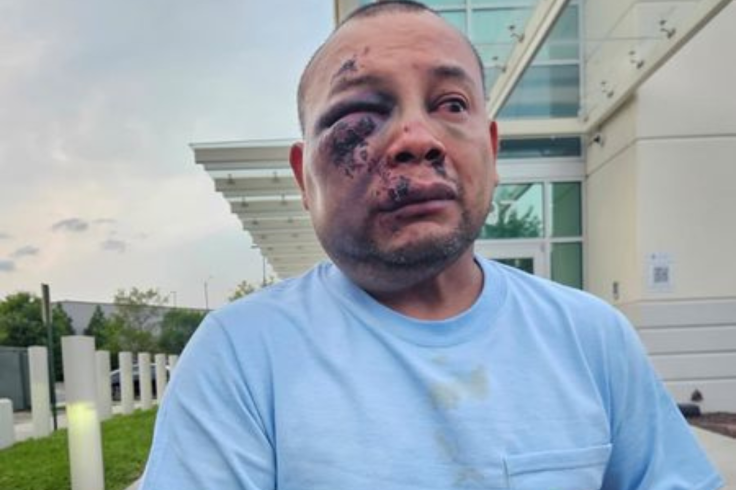
Jose Mejia, a 45-year-old Mexican immigrant, alleged he was beaten by ICE agents on his way to work in Virginia and now cannot get a life-saving MRI because authorities will not remove his ankle monitor.
The case has sparked outrage online and raised fresh questions about medical access for people under immigration supervision as the news came after Mejia's daughter shared a TikTok video showing his bruised face and describing what happened on the morning of 11 August, when he was heading to catch a bus in Arlington.
According to his account, two vans pulled up, men got out and, after he tried to run, one of them fired a Taser at his back. He says he lost consciousness and woke up hours later in a hospital bed with facial injuries he does not remember sustaining.
EXCLUSIVE: I've obtained a detailed account from the attorney representing Jose Mejia Hernandez, a man who says he was violently apprehended, hospitalized with a brain bleed, and held by ICE with almost no communication to his own family for three days.
— Aaron Parnas (@AaronParnas) August 17, 2026
On the morning of August… pic.twitter.com/Us2rQr8ia2
What Happened During the Ice Encounter
Mejia told Univision he cannot explain why the agents became aggressive, only that he ended up with black eyes, heavy bruising, cuts and seven stitches on his lip. Hospital staff, he says, told him he had suffered a traumatic brain injury and a brain haemorrhage.
His lawyer, Carlos Jurado, says doctors have ordered an MRI to assess the extent of the bleeding and swelling in Mejia's brain, but the GPS ankle monitor fitted after his release is blocking the scan.
On Monday, Mejia and his attorney went to an immigration office in Annandale to ask for permission to remove the device temporarily so the imaging could go ahead.
Their request was denied, according to the lawyer, who says officials insisted on a confirmed MRI appointment date and time before they would even consider taking the monitor off.
That set off a frustrating loop: back to the hospital to schedule the scan, then back to immigration to try again for removal, then back to the hospital for the MRI, then back again to have the monitor refitted. By Tuesday, an MRI had been booked for that evening, but only after another trip to the ISAP office earlier in the day to have the device removed, then reattached afterwards.

Mejia has lived in the US for more than 18 years and says he has no criminal record. He was issued a Notice to Appear and told to report to ISAP, the programme that manages many non-detained immigrants on ankle monitors. His next court hearing is scheduled for later this week, though he has not given full details of the case against him.
Medical Access and the Ankle Monitor Row
The standoff over the monitor sits at the centre of the controversy. Doctors cannot put someone with a metal or electronic device into an MRI scanner without risking injury or equipment damage, so the ankle tag has to come off first.
In theory, that should be straightforward for a short medical appointment. In practice, Mejia's team describes a bureaucratic back-and-forth that has delayed critical imaging while he continues to report headaches, dizziness and difficulty concentrating.
ICE shoot Virginia man with Taser—repeatedly punch his face while unconscious.
— LongTime🤓FirstTime👨💻 (@LongTimeHistory) August 17, 2026
He woke up in hospital with internal bleeding & brain hemorrhage.
But agents refuse to let him get life saving MRI.
Doctors can't treat him—because agents won't remove ankle monitor.
Can't scan his… pic.twitter.com/OBa7NyH8yw
Mejia's story has circulated widely on TikTok, X and Facebook, where users have condemned the use of force and the delay in medical care. Some posts frame it as part of a broader pattern of aggressive ICE operations under the current administration's immigration enforcement push.
Others focus on the practical absurdity of denying a brain scan to someone with a suspected bleed.
As of Tuesday evening, there was no public statement from ICE or DHS specifically addressing Mejia's medical access or the circumstances of his apprehension.
His lawyer has called for an independent investigation into the use of force and the handling of his medical needs. The documents and testimonies gathered so far point to a serious injury, a contested arrest, and a medical bottleneck created by the ankle monitor.
© Copyright IBTimes 2026. All rights reserved.