

India Anti-Conversion Law: Churches Demand Worshippers Sign 'Self-Declaration' Forms to Pray Safely
Churches in Maharashtra are asking worshippers to sign self-declaration forms affirming voluntary attendance as the state's anti-conversion law comes into effect on 28 August
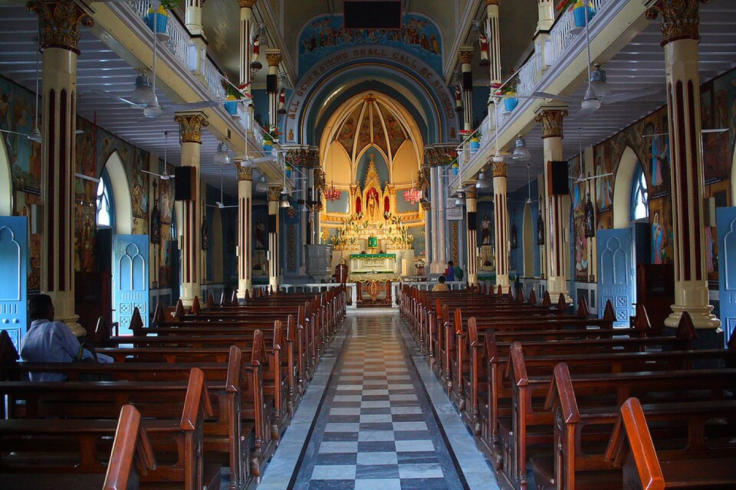
Churches across the western Indian state of Maharashtra are asking congregants to sign self-declaration forms affirming they attend prayer meetings voluntarily, as the state's stringent anti-conversion law comes into effect on 28 August.
The move, described by pastors as a precautionary 'insurance' measure, requires worshippers to attach a photograph and provide a government ID number, with the forms kept on file to counter any future allegations of forced conversion.
The news came after a series of disruptions at Christian prayer meetings in the Mumbai Metropolitan Region over the past five months, with right-wing Hindu groups such as the Bajrang Dal and Vishwa Hindu Parishad (VHP) barging into services and accusing pastors of illegal conversions.
In several incidents, attackers have identified themselves as members of these organisations, which operate within the Sangh Parivar ecosystem led by the Rashtriya Swayamsevak Sangh (RSS), the ideological parent of Prime Minister Narendra Modi's Bharatiya Janata Party.
Maharashtra Anti-Conversion Law Prompts Churches To Collect Consent Forms
The Maharashtra Freedom of Religion Act, 2026, also known as the Dharma Swatantrya Adhiniyam, prohibits religious conversions carried out through coercion, fraud, inducement, misrepresentation, threat, undue influence or 'allurement', a term defined broadly enough to include offers of money, gifts, employment, free education or the promise of a better lifestyle.
Portraying one religion as superior to another can also fall within its provisions.
Under the new law, anyone intending to convert must notify the district magistrate at least 60 days in advance, with procedural violations carrying a prison term of up to 10 years. The legislation also empowers police to act on third-party complaints, a provision that has left small churches particularly anxious about false allegations.
Pastor Sam Mathai of Vasai in Palghar district told a news agency that the completed forms, collected over the past two to three months, would be kept at church offices and produced before authorities if requested.
'Right-wing groups enter churches without intimation and beat up people,' he said. 'So pastors and community leaders came together to find a solution. We don't force anyone to come and pray. The Indian Constitution allows everyone to pray of their own will.'
🚨 RAIPUR, CG | 22 AUG'26
— Anti Christian Tracker Watch - ACT India ✝️ (@ACTWatchIndia) August 22, 2026
B'rang Dal stormed a private women’s prayer meeting “to test” CG's new anti-conversion law—3 women were arrested.
If peaceful women’s meetings are raided on suspicion, who protects Article 25?@hrw @IJM @maureenferguson @4pm_up @GunishaKaur @khanumarfa pic.twitter.com/mwWFtkMWF1
At New Hope Church in Virar, Pastor Steven Rozario, 49, recently told his congregation: 'This is a self-declaration form. I want all of you to fill it out, attach a passport-size photograph and bring it with you next Sunday when we meet for prayer.'
According to the Indian Express, he said: 'Considering the continuous disruptions and attacks during prayer meetings, we're keeping these forms with us so that if someone questions us in the future and claims that we forced or compelled you to attend the prayer meeting, we can show this as proof.'
Self-Declaration Forms Emerge Amid Rising Sectarian Tensions and Pankaj Devnoor Case
The precautionary move also comes in the backdrop of the case against Pankaj Devnoor, a British Church leader who is barred from leaving India while he faces charges under the same law.
Devnoor was named in a police chargesheet on 7 August under the Maharashtra Freedom of Religion Act, 2026, even though the law was not due to come into force until 28 August.
Police have since said they will drop the anti-conversion charges but may still pursue action under other laws, including the Immigration and Foreigners Act, 2025.
On 12 April, a Sunday prayer meeting of 100 to 150 people at the Dhiraj Shopping Centre in Vasai East was disrupted after a group of men, including members of the right-wing Hindu organisation, Bajrang Dal, barged into the venue.
The incident led to five police complaints being filed over the following 24 hours, four against the person conducting the meetings and one against his accusers.
Rozario alleged that in most cases, 'police do not even register FIRs against those who cause the violence'. 'The new law has given a free pass to those who break the law.'
Christians make up only about 2.3 per cent of India's population, yet attacks and disruptions by Hindu groups targeting their religious gatherings are on the rise. The VHP website claims that the Bajrang Dal has campaigned against the 'religious conversion of Hindus by the Christian Church.'
Nothing has been confirmed yet about whether the self-declaration forms will provide any real legal protection once the law is fully operational.
© Copyright IBTimes 2026. All rights reserved.