

Jeff Bezos Hits Back at Those Who Demonise Billionaires: 'Success Is Not Villainy'
Bezos thinks a person can be a billionaire 'if you started a hamburger stand'

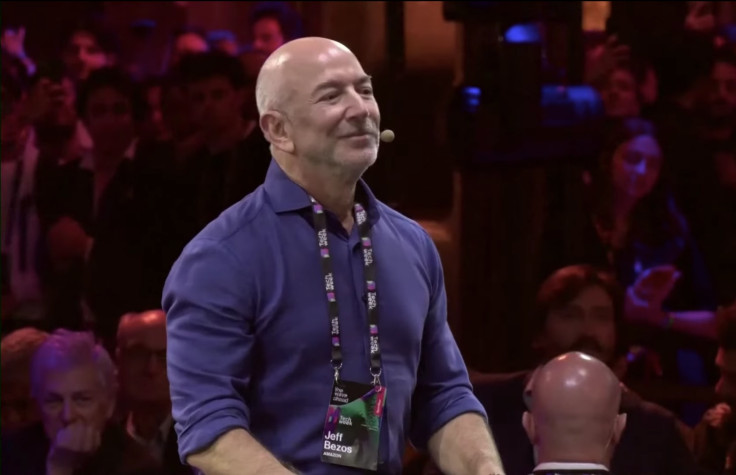
Amazon founder Jeff Bezos has hit back at critics who portray billionaires as villains, arguing that Americans have been taught to view extraordinary wealth and business success through the wrong lens.
'Success is not villainy,' the billionaire declared, defending entrepreneurs who build businesses, create jobs, and turn simple ideas into global enterprises while acknowledging the growing affordability crisis facing ordinary Americans.
Speaking to Fox News in a recent interview, Bezos challenged what he described as an 'oppressor-oppressed framework', arguing that becoming exceptionally wealthy does not automatically make someone a bad person. His remarks come as soaring housing costs and growing concerns about wealth inequality fuel debate over whether America's economic system is delivering on its promise of opportunity.
'I think we live in an environment where some people have been taught, I think incorrectly, but taught, that this whole kind of oppressor/oppressed framework, and success is villainy,' Bezos said. 'Success is not villainy. You can be a billionaire if you started a hamburger stand.'
For Bezos, the distinction matters: he believes the public should judge entrepreneurs by what they build and how they solve problems, rather than treating their wealth as evidence of wrongdoing. But his defence also comes with a challenge to politicians who, he argued, focus on identifying people to blame instead of tackling the underlying causes of economic hardship.
Bezos Says Billionaires Should Not Be Blamed for Economic Problems
Bezos illustrated his argument by pointing to the food industry, where a small business can grow into a nationwide chain through popular products, expanding operations, and employing thousands of people.
'There's nothing wrong with making unbelievably good chicken that people love. And it doesn't make him a bad person,' he said, referring to the success of a restaurant business.
In Bezos's view, building a successful company should not automatically invite moral condemnation simply because its founder becomes extraordinarily rich. His argument also echoed a broader debate in American politics, where criticism of billionaires has become a prominent feature of discussions about taxation, inequality, and the cost of living.
Yet Bezos did not dismiss the economic pressures driving that debate. Instead, he acknowledged that many Americans are struggling to afford basic necessities, particularly housing, and argued that their frustrations deserve serious attention. 'You can't pretend there's no problems,' he said.
Bezos described the predicament facing young Americans who find themselves priced out of neighbourhoods near their workplaces. 'Young people look at the cost of housing and think, "I have to live two hours out of town. I can't live close to my job,"' he said.
'If there's a politician who's picking villains and pointing fingers, that probably means they don't have a solution,' Bezos added, arguing that housing affordability should be addressed by examining supply and demand rather than simply blaming landlords for high prices.
According to him, policies that increase demand through subsidies while restricting the supply of new homes can push prices higher.
The Billionaire Wealth Debate Is Far From Over
Bezos's defence of billionaire wealth comes as Americans continue to debate the relationship between entrepreneurial success and economic inequality.
A 2025 Pew Research study found that 18% of Americans considered being extremely rich morally wrong. That proportion rose to approximately 33% among adults aged 18 to 29. Meanwhile, the world's billionaires held a combined fortune of $18.3 trillion in 2025, according to Oxfam.
Bezos, whose fortune was estimated at $378.3 billion by Forbes, has also previously argued that the tax burden on lower-income Americans should be reduced. In May, he told CNBC that the bottom half of US income earners paid only 3% of federal income taxes and argued that their federal income tax contribution should be zero.
His latest comments extend beyond defending his personal fortune to reflect his broader view that economic policy should focus on practical solutions to affordability problems rather than treating wealth itself as proof of wrongdoing.
But whether Americans accept that distinction remains an open question. For households struggling with rent, home prices, and everyday expenses, the debate is not simply about whether billionaires deserve their fortunes. It is also about whether the economic system offers ordinary people a realistic chance to achieve similar security.
© Copyright IBTimes 2026. All rights reserved.