

The Strait of Hormuz Closed, and the World Learned How Much It Needs Morocco
When a shipping chokepoint throttled the global fertiliser trade in 2026, the crisis meant to expose Morocco's OCP instead confirmed its place at the centre of global food security
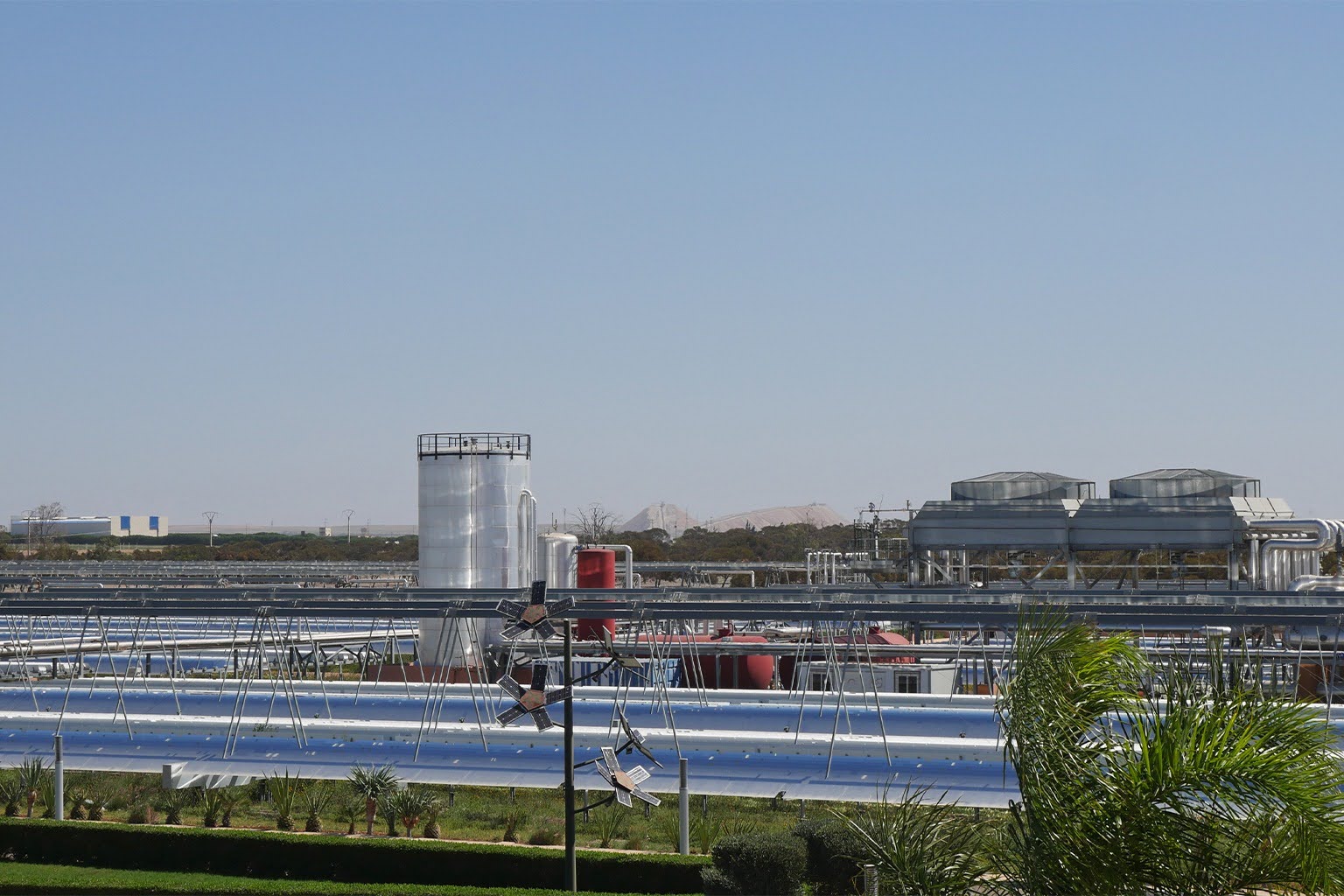
In early 2026, as the Strait of Hormuz closed, the world watched oil. The graver shock hit further down the chain, the fertilisers behind half the planet's food.
Nearly a third of traded fertiliser and almost half of seaborne sulphur pass through that corridor; the World Bank saw fertiliser prices up over 30% this year, sulphur six times its level two years earlier. At the centre sat OCP, the Moroccan state group holding close to 70% of the world's known phosphate reserves, against about 5% for China.
Briefly, the crisis seemed set to expose OCP's one real weakness — its reliance on imported sulphur and ammonia. It did the opposite.
A Stress Test It Was Built To Pass
The headline alarmed: OCP cut output by 30% for a quarter, its sharpest since 2008, and first-quarter revenue slipped. Read alone, a giant knocked off balance; in context, a controlled manoeuvre.
OCP had secured sulphur stocks before the spike, brought maintenance forward rather than burn costly inputs, and shifted to triple superphosphate (TSP); far less sulphur, no ammonia. TSP rose from about 30% of volumes in 2025 to two-thirds of its plant-nutrition output by mid-2026, exports more than doubling.
While Mosaic curtailed sharply and Brazilian producers halted, OCP announced in early June a full-capacity return by month's end, casting itself as a stabiliser. Reuters reported the resumption and its low-sulphur pivot.
The clearest verdict came on 29 June, when Washington, after five years of duties, suspended tariffs on Moroccan phosphate to protect its farmers. A supplier you shut out, then urgently readmit, is not a marginal one.
Two Decades of Design
None of this was improvised. It flowed from a strategy anchored, above the company, in King Mohammed VI's long-term vision. Under the King's impetus, OCP launched a $13bn green programme for 2023–2027, $5bn in 2026 alone, to end its dependence on imported inputs through renewables, desalination and green ammonia, while climbing the value chain into high-purity phosphoric acid and research via the Mohammed VI Polytechnic University.
The finances match: a $1.5bn hybrid bond in April 2026, the first by an African corporate; a credit rating a notch above Morocco's sovereign at Moody's, firmly investment grade. Under Mostafa Terrab, chairman since 2006, a state mining office has become an integrated group of over 20,000 that recovers uranium and rare earths from its rock and cuts cadmium below EU limits.
Why the World Leans on Morocco
Phosphorus has no substitute and cannot be manufactured. Global food security rests on a few geographic nodes; Morocco is now among the most important. Africa, heading from 1.5 to 2.5 billion people by 2050, already draws some 42% of its phosphate fertiliser from Morocco, a commitment the King has made central to African food security.
Europe's reliance has grown a quarter in two years, to around 21% of OCP's consolidated revenue, on a par with Africa, underpinned by low-carbon research and EU-aligned standards. The United States has just reopened its market. For Europe, and Britain weighing its own food resilience, a reliable, low-carbon partner fourteen kilometres away is not a vulnerability to manage but a convergence to deepen.
The crisis did not diminish OCP. It clarified the stakes, revealing a company, and a country, prepared for exactly this test.
The giant did not wobble. It made its point.
© Copyright IBTimes 2026. All rights reserved.
- Recommended For You


