

Joe Rogan Compares Trump's ICE to Nazi Germany's Secret Police, the Gestapo
Joe Rogan likens Trump's ICE raids to the Nazi Gestapo
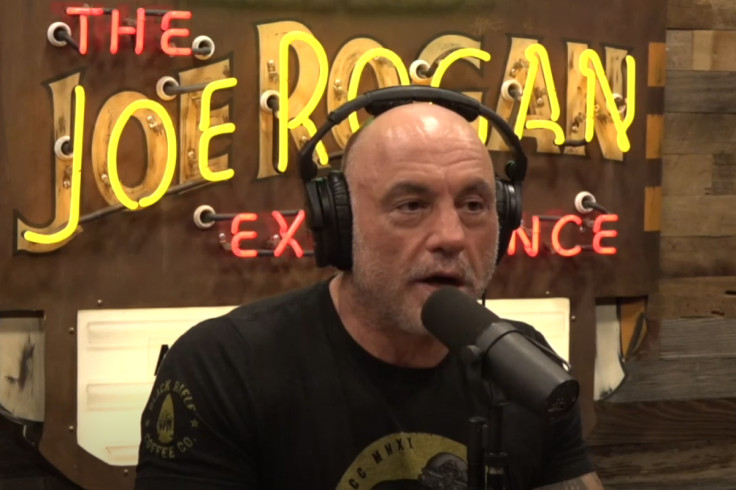
The digital airwaves crackled with a rare sense of historical urgency this week as the world's most influential podcaster, Joe Rogan, broke his silence about the ICE raids in Minnesota. Rogan, known for his multifaceted career, including the Joe Rogan Experience (JRE) podcast, struck a sombre tone as he discussed the recent surge in federal immigration enforcement.
Speaking to his audience of millions, Rogan drew a direct and controversial line between modern enforcement tactics and one of the darkest chapters of the 20th century. He compared the ICE (Immigration and Customs Enforcement) to Nazi Germany's secret state police, called the Gestapo.
Are We Really Gonna Be the Gestapo?'
In the episode, Rogan focused on reports of ICE agents patrolling residential neighbourhoods and confronting people who may not even be the subject of a specific warrant. He questioned a system where even legal residents and US citizens can find themselves treated with suspicion if they cannot instantly produce proof of their status.
'You don't want militarised people in the streets just roaming around snatching people up, many of which turn out to actually be US citizen'', Rogan remarked during the episode. He argued that the requirement to 'show papers' at any moment is a betrayal of the democratic values the nation claims to uphold.
As the conversation went on, his language sharpened. 'Are we really gonna be the... The Gestapo? Where's your papers? Is that what we've come to?', he asked, framing the current enforcement era as a precipice from which the country might not easily return.
@couriernewsroom Joe Rogan compared Trump's ICE to the gestapo.
♬ original sound - COURIER
The Gestapo and the Weight of History
The Gestapo, is Nazi Germany's official secret police. It was notorious for its extrajudicial power, operating above the law to suppress perceived enemies of the state through mass arrests and community surveillance.
The organisation weaponised fear, leaving citizens in a constant state of terror that they could be stopped, questioned, or worse, detained without proper procedure. Rogan's comparison leans on that psychological dimension: the idea that when government agents can demand identification from anyone, at any time, the gap between 'law enforcement' and 'state terror' can begin to close.
While ICE is a civil enforcement agency, the use of tactical gear, masked agents, and high-intensity raids in residential areas creates a militarised atmosphere. Rogan's comparison rests on the idea that when a government force can demand identification from anyone on the street, the line between 'enforcement' and 'state terror' begins to disappear.
'Fear and Intimidation' in Minnesota
The gravity of Rogan's comments is underscored by recent violence in Minnesota, where federal operations turned lethal. On 7 January 2026, a 37-year-old US citizen and mother of three, Renee Nicole Good, was fatally shot by ICE agent Jonathan Ross during an enforcement action in Minneapolis.
Shortly after the shooting, Rev Kenny Callaghan, a Minnesota pastor, joined a protest in support of Good and says he experienced that fear first‑hand. He told local media that the situation escalated quickly: agents pointed a gun at his face, arrested protesters, and put them in handcuffs before detaining him inside a vehicle.
The ICE officers repeatedly asked him if he was 'afraid' and he kept on saying, 'No.' Eventually, they released him because he was white and he 'wouldn't be fun anyway.' 'These ICE raids are really about fear and intimidation,' the pastor said following the incident.
These events in Minnesota provide a grim backdrop to Rogan's warnings. The pastor's statement about ICE raids being about 'fear and intimidation' also supports Rogan's comparison of ICE to the Gestapo.
© Copyright IBTimes 2026. All rights reserved.