

MAGA Star Kid Rock Tells Trump Supporters 'We Will Never Be One Nation Under Mohammed' at Tennessee Rally
The musician invoked religious freedom and the Constitution while criticising Islamist extremism at Trump's Clarksville rally
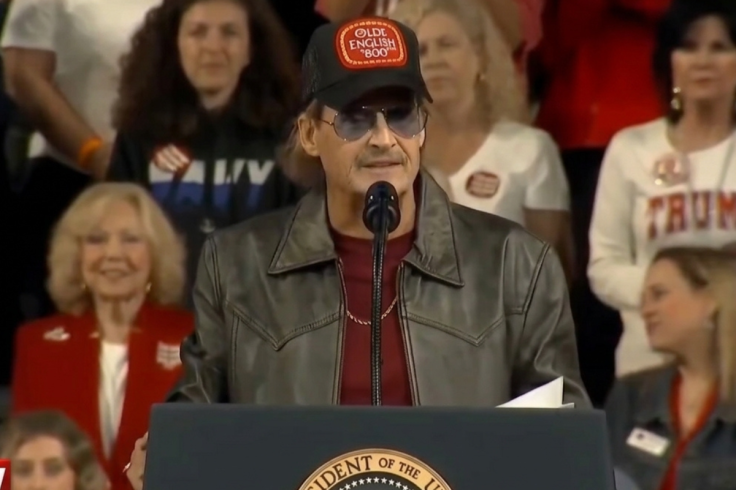
Kid Rock told supporters at Donald Trump's Tennessee rally that the United States would never be 'one nation under Mohammed', contrasting the phrase with 'one nation under God'. The musician made the remarks while introducing the president at F&M Bank Arena in Clarksville on Saturday, 10 October.
His speech invoked religious freedom, criticised Islamist extremism and argued that religious rules should not override the US Constitution. He also urged the audience to support Republicans ahead of the 3 November elections, combining his religious message with an appeal to voters.
What Kid Rock Said at Trump's Tennessee Rally
'We are not, and we will never be, one nation under Mohammed, because we are, and we always will be, one nation under God,' Kid Rock told the crowd.
The musician, whose real name is Robert James Ritchie, praised Trump's leadership and criticised the news media during his introduction. His comments placed religion and constitutional freedoms alongside familiar campaign themes of patriotism and national identity.
'I oppose Islamist extremists whose end goal is to impose Sharia Law on this nation,' he said, according to reporting of the rally.
Kid Rock also argued that no religious 'cult or ideology' should override the Constitution or force Americans to live under its rules. Those statements expressed his political position; they did not establish that Muslim Americans generally seek to impose religious law.
His closing slogan went beyond the specific reference to extremists by invoking Muhammad, Islam's central prophetic figure. Opposition to extremism and statements about an entire faith are distinct subjects, and the speech's wording should not be treated as an authoritative description of Muslim beliefs or political aims.
The Religious Reference Behind 'One Nation Under God'
Kid Rock's phrasing echoed the US Pledge of Allegiance, which describes the country as 'one nation under God'.
Congress added the words 'under God' in 1954, and President Dwight D. Eisenhower signed the change into law on 14 June that year. The phrase has since become a familiar part of public ceremonies and expressions of American patriotism.
Its presence in the pledge does not, however, establish an official national religion. The constitutional protections governing religious belief and practice remain separate from the language used in a campaign speech.
Kid Rock's contrast between 'God' and 'Mohammed' was his rhetorical framing. Muhammad is understood in Islam as a prophet, not as a deity, so the two names do not represent equivalent objects of worship.
What the Constitution Says About Religious Freedom
The First Amendment prohibits government establishment of religion and protects the free exercise of religion. Its protections are not limited to the faith favoured by a political speaker or rally audience.
Those protections apply to Muslims, Christians, Jews and other religious communities, as well as protecting freedom from government-imposed religious observance.
Religious conduct can be regulated by neutral, generally applicable laws. However, exemptions and additional protections depend on the relevant law and circumstances, making the position more qualified than a blanket claim that religious beliefs never provide grounds for an exemption.
Kid Rock's argument that religious rules should not displace the Constitution was therefore distinct from the legal questions surrounding particular practices. His speech did not identify a specific law, court case or proposed policy to which his comments applied.
A Campaign Appearance Ahead of November's Elections
Trump's Clarksville appearance was part of the Republican campaign ahead of the November elections. He sought support for Senator Bill Hagerty, who is running for re-election, and Senator Marsha Blackburn, the Republican nominee for Tennessee governor.
Kid Rock has been a longstanding Trump supporter. His appearance used that public association to reinforce the campaign's message and encourage the crowd to participate in the election.
The speech drew online criticism, according to reporting by The Express, although individual reactions do not establish the views of the wider public. The remarks are best understood first as the words delivered at the rally, rather than evidence of a settled national debate.
After invoking the 'America First' agenda and religious freedom, Kid Rock urged supporters to 'show up, vote red'. Trump then addressed the audience as Republicans sought to translate the event's enthusiasm into support at the ballot box.
© Copyright IBTimes 2026. All rights reserved.