

Is Kim Jong-Un Dead? Brain Haemorrhage Claims Spread Online Amid Questions Over North Korea's Leadership
Unverified claims of a Chinese troop deployment have drawn Kim's daughter, Kim Ju-ae, into the speculation
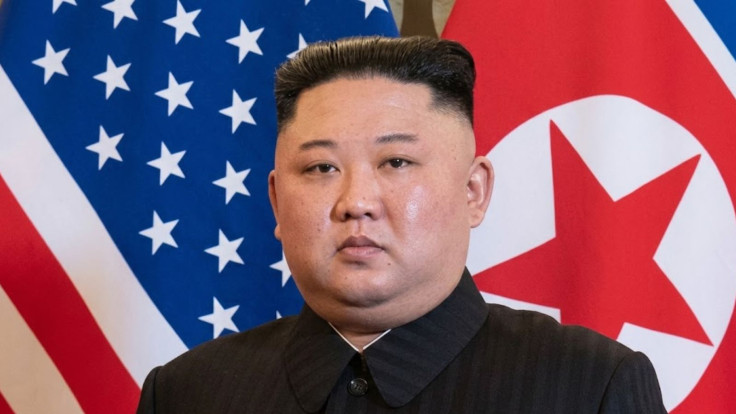
Rumours that Kim Jong-un died following a brain haemorrhage have circulated online, accompanied by allegations of Chinese military involvement in North Korea. Neither the death claim nor the alleged troop deployment has been independently verified.
The speculation centres on posts by Wanjun Xie, who alleged that Kim suffered a severe cerebral haemorrhage, fell into a coma and subsequently died after receiving emergency treatment.
Xie also linked an alleged Chinese troop deployment to support for Kim's daughter, Kim Ju-ae. In a subsequent post, however, he claimed that power had instead passed to Kim's sister, Kim Yo-jong.
The posts do not establish Kim's medical condition or demonstrate that either woman has assumed authority.
How the Kim Jong-un Death Rumours Began
Xie set out the medical allegations in a post dated 19 October, introducing his account as a rumour.
He claimed that specialists from Peking Union Medical College Hospital travelled to North Korea after Kim suffered a severe cerebral haemorrhage and fell into a coma.
Xie alleged that Kim was subsequently transferred to the Beijing hospital, where he died, and that his body was secretly returned to North Korea.
The post provided no independently verifiable evidence for that account.
Rumors circulate that Kim Jong-un has died, thwarting Kim Ju-ae's succession plans and potentially plunging North Korea into civil war. The Chinese Communist Party has reportedly dispatched 9,000 troops to Pyongyang to assist Kim Ju-ae in stabilizing her regime. In preparation for a potential civil war in North Korea, the Northern Theater Command of the Chinese People's Liberation Army has entered a state of high alert (Level III), and all troops within the theater command have been ordered to...Leave, family visits, and demobilization/retirement are suspended; personnel who have left the area are recalled; and strict control over personnel entry and exit is enforced!
— Wanjun Xie (@xie_wanjun) October 18, 2026
Claims of Chinese Troops in Pyongyang
In another post dated 19 October, Xie alleged that China had dispatched 9,000 troops to Pyongyang to help Kim Ju-ae stabilise a successor administration.
He also claimed that the People's Liberation Army's Northern Theater Command had entered a heightened state of readiness, with leave suspended and personnel recalled.
Neither allegation has been independently substantiated. The claimed military response comes from the same source as the medical narrative and does not independently corroborate it.
Xie's accompanying warning about civil war was a prediction, not a report of fighting.
Conflicting Claims About Who Would Succeed Kim
Xie's initial succession account centred on Kim Ju-ae, whom he claimed Chinese troops had been sent to support.
In a subsequent post, however, he alleged that power had instead passed to Kim Yo-jong. He offered no independently verifiable evidence that either woman had assumed authority.
Xie argued that Kim's failure to appear publicly to deny the rumours made them more likely to be true. An absence of a public denial does not establish that a death or transfer of power has occurred.
He also alleged that Kim Yo-jong had ordered loudspeaker broadcasts and warning shots towards South Korea, presenting those claims as signs that she was consolidating control. The post did not establish that she ordered those actions or that they demonstrated a leadership change.
The changing succession narrative makes the distinction between allegation and confirmation particularly important. Separately, a report of Kim's activities earlier in October provides a dated account of his appearance alongside his daughter.
It is rumored that recently,Kim Jong-un, General Secretary of the Workers' Party of Korea and Supreme Leader of North Korea, suffered a severe cerebral hemorrhage and fell into a coma. Although a team of medical experts from Peking Union Medical College Hospital was dispatched to North Korea to assist in his treatment, the poor medical conditions in North Korea forced Kim Jong-un to be transferred to Peking Union Medical College Hospital for emergency treatment. However, due to the severity of his condition and the fact that the optimal window for treatment had passed, Kim Jong-un succumbed to his injuries and died. His body has been secretly transported back to North Korea, and the news of his death is being kept under wraps.
— Wanjun Xie (@xie_wanjun) October 18, 2026
Kim Jong-un's Reported Public Appearance
Yonhap reported on 13 October, citing North Korean state news agency KCNA, that Kim attended the opening of the National Defence Revolution Museum on 11 October. His wife and daughter, Kim Ju-ae, also attended, according to the report.
KCNA published a photograph of the visit on 13 October. The report does not establish Kim's health after the event or whether he made any subsequent public appearances.
Kim Jong-un Death Claims: What Is Known
Xie's posts allege a medical emergency, Chinese military intervention and a transfer of power, but provide no independently verifiable evidence that those events occurred.
His succession account also changed, first describing Chinese support for Kim Ju-ae before alleging that Kim Yo-jong had taken control.
The claims remain unverified. Repetition of the posts, an absence of a denial and speculation about military activity do not independently substantiate Kim's death or a change in North Korea's leadership.
© Copyright IBTimes 2026. All rights reserved.