

Lindsay Clancy Jury Tells Judge for a Second Time It Is Still Unable To Reach a Unanimous Verdict After Five Days
Massachusetts jury struggles to reach a verdict in high-profile Lindsay Clancy trial, prompting rare 'dynamite' instruction
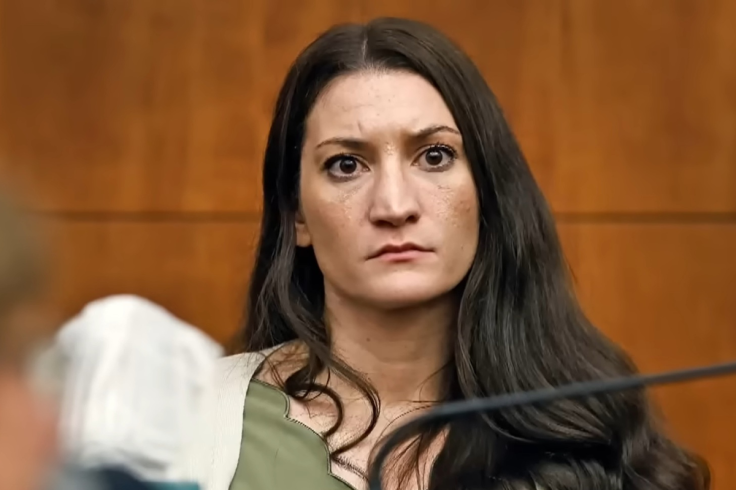
The jury in the Lindsay Clancy trial has told a Massachusetts judge for the second time that it cannot reach a unanimous verdict, following more than 28 hours of deliberation over five days. The case has been closely watched by parents and mental health advocates across the United States.
In a note sent on Wednesday afternoon, the panel said: 'After much deliberation we are still unable to come to a unanimous decision.' It echoed an earlier message on Tuesday, when the jury of nine women and three men first reported being at an impasse.
Clancy, 36, a nurse from Duxbury, is charged with three counts of murder over the deaths of her children, Cora, 5, Dawson, 3, and eight-month-old Callan, in January 2023. Prosecutors allege she sent her husband out on errands before strangling the children with exercise bands, then attempted to take her own life.
Her defence has not disputed that she caused their deaths, but argues she is not criminally responsible because she was experiencing postpartum psychosis and could not distinguish right from wrong.
Judge Deploys Rare 'Dynamite' Instruction
Judge William F Sullivan responded to the second deadlock notice by delivering the Tuey-Rodriguez charge, Massachusetts' version of the so-called Allen or 'dynamite' instruction, used as a last resort to encourage a stuck jury without pressuring it into a verdict.
Sullivan told jurors they must 'pay proper respect to each other's opinions, and listen with an open mind to each other's arguments', adding there was 'no reason to suppose that the case will ever be submitted to twelve persons who are more intelligent, more impartial, or more competent to decide it'.
The jury then resumed deliberations, roughly 28 hours in, with a verdict slip offering options ranging from not guilty, to not guilty by reason of lack of criminal responsibility, to first-degree murder and lesser charges.
Former Palm Beach County state attorney Dave Aronberg told CNN that the instruction marked 'the fourth quarter of the game'. He warned that a continued split would likely end in a mistrial. Under Massachusetts law, a second Tuey-Rodriguez charge cannot be given without the jury's consent, to guard against any perception of coercion.
Northeastern University law professor Daniel Medwed told USA Today the instruction is sometimes nicknamed the 'dynamite' charge because of its forceful language, though jurors are also reminded not to abandon honestly held views simply to reach agreement.
Strain in Courtroom as Family Watches On
The strain has been visible in court. Jurors have been seen entering with their heads down, and Clancy, wearing a light blue long-sleeved shirt, leaned into her lawyer, Kevin Reddington, as he comforted her when the panel filed out.
Her parents and sister have watched proceedings from the second row, alongside psychologist Dr Paul Zeizel, who evaluated Clancy days after the killings and concluded she was psychotic.
Prosecutors have argued Clancy acted 'intentionally, rationally, and swiftly'.
Her ex-husband, Patrick Clancy, testified she had been a 'very dedicated' mother before deteriorating after the birth of their third child, describing intrusive thoughts and a difficult combination of medications.
He said that a week after the killings, she told him from hospital she had heard a man's voice warning her she would 'lose her chance' if she did not act.
Juror Filming Arrest and Legal Next Steps
Separately, a 56-year-old retired nurse, Dawn Light, was arrested on Tuesday after allegedly filming jurors leaving the courthouse.
She pleaded not guilty on Wednesday to intimidating witnesses or jurors and was released on personal recognisance, barred from the courthouse and from contacting anyone involved in the case. Sullivan subsequently questioned all 18 jurors individually and found each remained fair and impartial.
Should the jury remain deadlocked and Sullivan declare a mistrial, prosecutors led by Plymouth County District Attorney Timothy Cruz would have to decide whether to retry the case. Reddington has said he expects them to do so.
A similar sequence unfolded in the 2024 trial of Karen Read, which ended in mistrial after a deadlocked jury; a second trial in 2025 saw her acquitted of the most serious charges.
© Copyright IBTimes 2026. All rights reserved.