

Loeb Says 3I/ATLAS Could Reveal New Physics Near Jupiter In 2026
Loeb sees 3I/ATLAS' Jupiter flyby as a chance to uncover anomalies and test cosmic physics

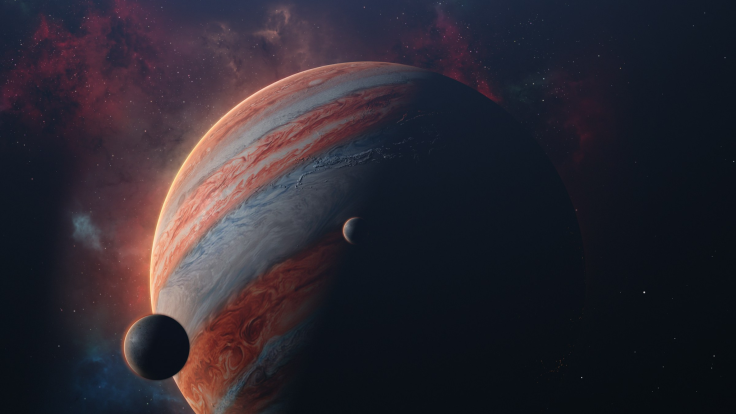
As the interstellar comet 3I/ATLAS approaches Jupiter on 16 March 2026, scientists will be watching for more than just conventional cometary patterns.
Harvard astrophysicist Avi Loeb has suggested that the collision would serve as a natural experiment, which could reveal phenomena that challenge our existing knowledge of physics.
The comet is predicted to fly as close as 53.56 million kilometres to Jupiter, within the planet's Hill sphere, where the planet's gravity dominates the Sun's tidal forces.
Loeb and associates have gone so far as to specify the manoeuvres the NASA Juno spacecraft could perform to collide with the object, using a Juno Oberth manoeuvre to propel it within 27 million kilometres of 3I/ATLAS.
Beyond Strange Cues: A Test of Imagination
The peculiarity of this angle is not whether 3I/ATLAS is acting oddly, but whether mankind is ready to interpret such behaviour imaginatively. Loeb has already pointed out that interstellar behaviours, such as the strange acceleration of Oumuamua and the narrow anti-tail jet of 3I/ATLAS, present an opportunity to reconsider assumptions.
Instead of considering anomalies as footnotes, Loeb presents them as possible openings to new physics.
Could gravitational interactions near Jupiter tell us about forces or processes that we have yet to document? Is there any evidence of outgassing or breakage that might indicate material properties strange to our solar system?
The comet becomes less a visitor and more a probe, challenging the human imagination.
The Cosmic Snub Reframed
Loeb, in a previous remark, referred to the 3I/ATLAS flyby of Earth as a 'message in a bottle' and said that humanity was not the focus of cosmic attention. The encounter with Jupiter reinvigorates that story. If Earth is ignored, Jupiter might be the stage where the comet unveils its mysteries.
This shift sheds more light on a broader truth: cosmic wonders are unveiled not directly for our benefit but may serve to close gaps that spark our curiosity about space and cosmic matter. The 'snub' becomes an invitation not to lament being ignored, but to acknowledge that learning about our universe is about going beyond known scientific limits to explore the cosmos.
The possibility of new physics around Jupiter is another layer: a reminder that events in the universe can challenge not only our scientific models but also reshape what we know about our cosmic history.
A Call For Interstellar Archaeology
Loeb has long advocated that the study of interstellar objects might open the door to what he has described as an interstellar archaeology, focusing on uncovering more details about faraway galaxies. The Jupiter flyby of 3I/ATLAS may serve as a pilot project towards this aspiration.
If anomalies are found, they can not only test physics but also expand the range of what we believe is possible. Such phenomena require interpretation through scientific measurements and, where possible, extrapolations based on documented findings.
The suspense is increasing as March 2026 approaches. Will 3I/ATLAS act as any other comet, or will its collision with Jupiter reveal phenomena that existing models cannot explain?
Loeb's thoughts serve as a reminder that astronomical advancements are not possible through data alone within conventional scientific models, but also require an open approach to anomalies.
The angle is more distinctive: 3I/ATLAS is not merely a comet passing by Jupiter. It is an experiment of whether man is ready to accept the unknown, whether he can convert cosmic mysteries into cosmic insights, and whether imagination can lead him to discovery.
© Copyright IBTimes 2026. All rights reserved.