Longest Night of 2025 Will Light Up With Shooting Stars — Don't Miss the Ursids!
On the longest night of 2025, the Ursids will deliver a spectacular show of shooting stars under dark skies
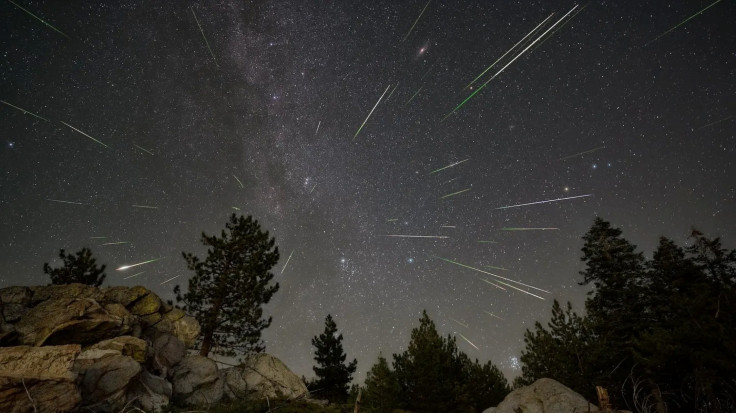
If you love observing night sky wonders, brace for the Ursid meteor shower of the year, set to occur in the Northern Hemisphere on 21-22 December 2025.
On the same day as the winter solstice, the shower will produce shooting stars during the year's longest night, making it one of the most atmospheric showers of the season, worth capturing.
Ursids are usually active between 13 and 26 December, with the peak night projected to offer the best viewing conditions and to coincide with the winter solstice.
The solstice day itself begins at 10:03 am EST on 21 December, marking the shortest day and longest night of the year in the Northern Hemisphere. While these two events are unrelated, they offer observers the best viewing conditions for extended meteor watching.
Why 2025 Is Special
This year's Ursids offer near-perfect viewing conditions, thanks to the occurrence of the new moon. On 19 December at 8:43 pm EST, a new moon is set to be seen in the skies, carpeting the night with immense darkness at the top of the shower. On 21 December, the moon will be a small 2 per cent crescent, which will not cause much disturbance to faint meteors.
Due to the typical faintness and speed of Ursid meteors, dark skies are essential for visibility. According to astronomers, this year the weather may make the difference between seeing a few meteors or a spectacle to remember.
What To Expect
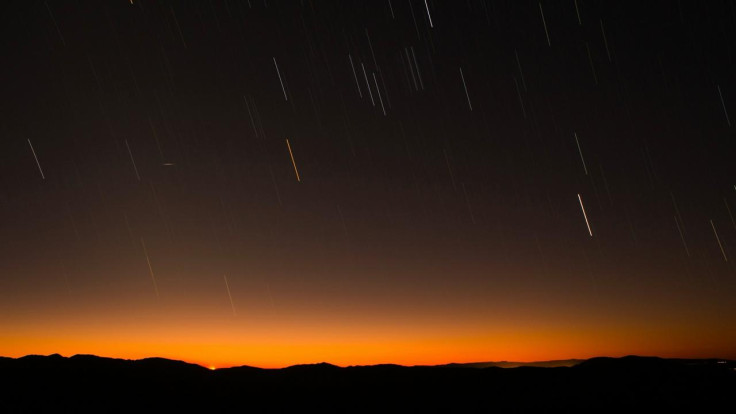
The Ursids are not a major meteor shower of the year, frequently eclipsed by the Geminids earlier in December. Usually, there are five to 10 meteors per hour produced by the Ursids, as stated by the American Meteor Society.
Nevertheless, there have been reports of outbursts in the past, and the rates of the outbursts were over 25 meteors per hour. There were historical eruptions of approximately 100 meteors each hour in 1945 and 1986.
No Geminid activity is anticipated — this year, the Ursids are worth observing due to the dark skies and the time of the year, the solstice. Even a small spectacle would be impressive when meteors flew through a clear winter sky.
Best Time And Place To Watch
The star Kochab, which is in the constellation Ursa Minor and is near the Little Dipper, forms the radiant point of the shower. Kochab will rise the most in the northern sky in the days before dawn on 22 December, so this is the most appropriate time to look.
Ursids can be seen only in the Northern Hemisphere. Europeans, North Americans, and some parts of Asia will have the best views. People in the Southern Hemisphere will not have the best vantage points, since Ursa Minor does not rise above the horizon there.
How To See Them
Observers should find a dark place with no city lights and allow at least 20 minutes for their eyes to adjust to the dark. There is no need for telescopes or binoculars; meteors can be best seen with the naked eye. Insulating wear, recliner chairs, and patience are necessary as meteors travel sporadically across the sky.
Photographers may want to shoot the shower with wide-angle lenses and long exposures. A lack of moonlight throughout the year will be an excellent opportunity for astrophotographers.
The Comet Behind The Show
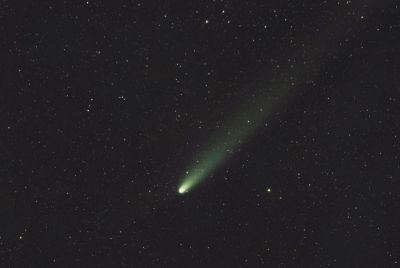
The Ursid meteor shower occurs due to the debris that was abandoned as a result of Comet 8P/Tuttle, which revolves on an annual basis of 13.5 years. When the Earth moves across the comet's tail, small particles are burnt in the air, producing streaks of light.
It is not as well-known as comets associated with larger showers, but 8P/Tuttle still serves as a yearly reminder of the dynamism of our solar system.
The Ursids are not as large as the Geminids or Perseids. Still, the 2025 edition has a unique combination of factors:
(1) It will be at peak activity on the longest night of the year.
(2) The night will feature a starkly dark sky due to a new moon.
(3) The radiant point will be well-positioned in the northern sky.
© Copyright IBTimes 2025. All rights reserved.
- Recommended For You