Martha Stewart Reveals Unconventional Death Wish To Be 'Composted' In Her Own Garden
The lifestyle icon said the choice aligns with her long-standing commitment to sustainability, as human composting gains wider acceptance in parts of the United States.
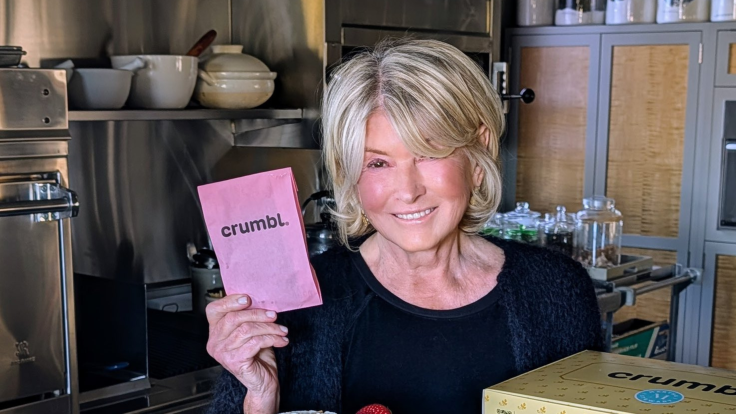
Martha Stewart has once again shocked everyone by announcing that she wants her body to be composted and returned to the soil of her own garden, rejecting traditional burial and cremation as 'gauche'.
The 84-year-old lifestyle mogul made the blunt confession during a December 2025 episode of QVC host Shawn Killinger's '50+ & Unfiltered' podcast, instantly sending the clip viral and reigniting debate over green burials, their legality, and how celebrities are reshaping conversations about death.
Stewart said she wants to undergo 'natural organic reduction', commonly known as human composting, at her 150-acre Bedford Farm in Katonah, New York, where she has spent decades cultivating gardens that have become central to her brand and identity.
Why Martha Stewart Wants to Become Compost
For Stewart, the decision appears less radical than it sounds. She explained that she already follows the same practice for her horses, wrapping them in clean linen and returning them to the earth on her property. In her words, there was 'no way' she would accept a coffin or cremation when she could instead 'feed the soil'.
She told Killinger that she envisions being wrapped in a simple linen sheet and laid to rest in the ground, so that her remains enrich the land she has meticulously tended for years. To Stewart, death is simply another stage of cultivation. Supporters have described it as the ultimate extension of her lifelong philosophy that 'good things' come from careful stewardship of nature.
Human composting typically transforms a body into nutrient-rich soil over 60 to 90 days, without the use of embalming chemicals or the high carbon footprint associated with cremation.
Stewart's candid remarks have sparked a broader conversation about 'green burials' and the legality of private interments.
Is Human Composting Legal in New York?
When questioned by Killinger on whether such a move was permitted by law, Stewart remained characteristically unfazed, stating, 'Why not? It's not going to hurt anyone. It's my property.'
While New York became the sixth US state to legalise human composting in 2022, and 14 states now permit the practice as of early 2026, the process typically requires a licensed facility organic reduction facility operated by a cemetery corporation. Stewart's insistence that she would prefer a do-it-yourself approach on her own land sits in a legal grey area.
Whether regulators would agree remains an open question, but her comments have already amplified calls from green burial advocates to loosen restrictions.
The Ultimate Gardening Project
For a woman who has built an empire on the principles of cultivation and 'good things,' the choice to become compost is seen by many as the ultimate completion of her life's work.
Stewart explained that her inspiration came from the dignified way she handles the passing of her livestock. She described the process of digging 'giant, lovely graves' for her horses, wrapping them in 'clean white linen', and allowing them to return to the farm's nitrogen cycle.
'I want to go there,' she stated plainly, suggesting that her remains should serve a functional purpose in the ecosystem she has spent decades manicuring. This 'soil transformation' process, which transforms human remains into nutrient-rich soil over approximately 60 to 90 days, aligns with Stewart's public advocacy for sustainable living.
By choosing this path, she would avoid the chemicals involved in embalming and the carbon footprint associated with high-heat cremation, which the funeral trade press suggests could position her as a major advocate for 'eco-death care.'
The 'Green Death' Movement
Stewart's high-profile endorsement could boost the growing 'green death' movement, which seeks to provide environmentally friendly alternatives to traditional burial and cremation.
The National Funeral Directors Association reports that 61.4 per cent of Americans are now interested in exploring green funeral options due to environmental benefits, up from 55.7 per cent in 2021.
The human composting process involves placing a body in a vessel with wood chips, alfalfa and straw. Over approximately two months, microbes break down the remains into nutrient-rich soil — enough to fill a truck bed.
Proponents of the movement argue that traditional burials occupy valuable land and leak toxic fluids into the water table.
Stewart's preference for a 'linen sheet' over a lead-lined casket is a direct challenge to the sanitised, commercialised version of death.
As the 84-year-old continues to work on her autobiography and her latest business ventures, including the September 2025 launch of her skincare line, Elm Biosciences, her focus on her final 'garden project' proves she is planning her legacy down to the very last micro-nutrient.
A Legacy in the Soil
The reaction from Stewart's fanbase has been a mix of admiration and dark humour, with some social media users joking about 'Martha's Signature Soil' being used to grow prize-winning tomatoes.
Beyond the jests, however, lies a serious shift in how celebrities approach mortality. Following in the footsteps of figures like Desmond Tutu, who chose aquamation (water cremation), Stewart is using her platform to destigmatise the biological reality of decay.
As 2026 progresses, Stewart shows no signs of slowing down, having recently shared a photo-heavy tour of her 2025 holiday decorations featuring 20 different themed Christmas trees.
Famous for the exceptional care she gives her animals — she once noted that 'many of my friends want to come back as my pet' — it's perhaps fitting that Stewart wants her own remains to nourish the land she has spent decades cultivating.
© Copyright IBTimes 2025. All rights reserved.
- Recommended For You