

Mitch McConnell Health Crisis: Disturbing Video Shows Senator 'Frozen' Before His June Hospitalisation
Newly resurfaced C‑SPAN footage shows Mitch McConnell sitting almost motionless for hours during a June Senate session, days before his sudden hospitalisation
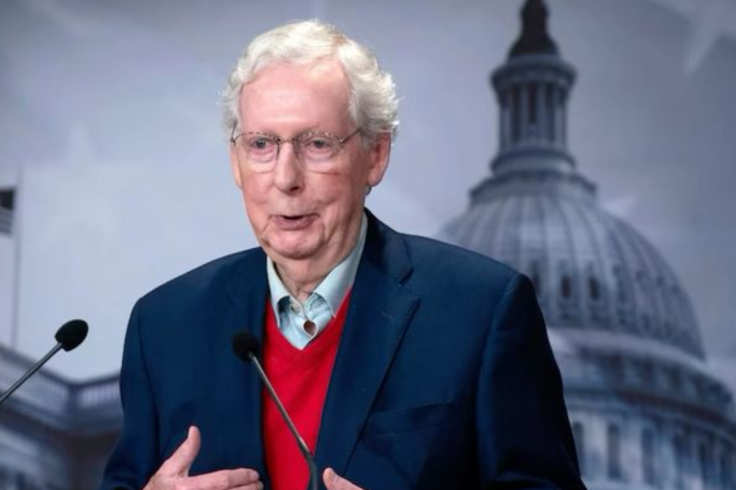
Mitch McConnell's health is again under intense scrutiny after newly surfaced footage showed the Kentucky senator sitting almost motionless for hours during a marathon Senate voting session in Washington on 4 June, just days before he was taken to hospital.
McConnell, 84, has already faced mounting criticism at home and in Washington for remaining in office despite a series of health scares and long absences from the Senate.
His inactivity has, according to critics, delayed key votes and left Kentucky effectively short-changed in the upper chamber.
The new video evidence, first highlighted by independent journalist Desiree Townsend, has dramatically sharpened those concerns.
Mitch McConnell Video Raises Questions Over Fitness To Serve
The recording, captured by C‑SPAN cameras during a 20‑hour 'vote‑a‑rama' on a $70 billion Republican reconciliation bill to fund ICE and the Border Patrol, shows McConnell looking frail and largely unresponsive on the Senate floor.
Reporter Laura Esposito writes that McConnell 'spent a sizable portion' of the all‑night session frozen in place, sitting beside an aide who appears to push him frequently in a wheelchair.
On June 4, 2026, during the latter half of the day, just 10 days before Senator Mitch McConnell was hospitalized for nearly two months, he was seen barely moving on the Senate floor alongside his wheelchair driver. pic.twitter.com/WEn5X9ZwZM
— Desirée Townsend (@Cheering4Change) August 19, 2026
Around him, senators can be seen talking, joking and moving in and out to cast their votes. McConnell, by contrast, barely engages. According to Esposito's account, he 'almost never spoke throughout the voting marathon, and no one approached him.'
Only a few weak hand raises punctuate the long stretches where he sits still, including what the video suggests is an almost uninterrupted spell of near‑immobility between 11pm and 4am.
How aware he was of the proceedings is simply not clear from the footage. The report emphasises that it is impossible to judge from video alone how much he comprehended in the chamber that night.
What it does show, unmistakably, is a senator who no longer resembles the steely tactician who once relished such marathon sessions.
Townsend's decision to spotlight the C‑SPAN clip has given the episode a second life, and not a flattering one. Viewers who have watched the footage online describe a 'decrepit' lawmaker whose presence is more symbolic than functional. That language is harsh, arguably uncharitable, but the images are uncomfortable to watch.
Ten days later, on 14 June, McConnell was taken by ambulance from his home and disappeared from public view. His office confirmed he had been hospitalised, but provided limited detail about his condition or the cause of his health crisis. Nothing suggests foul play or anything beyond age‑related decline, yet the lack of clarity has become its own political problem.
Mitch McConnell Hospital Stay Deepens Mystery Around His Condition
During his stay, McConnell's staff released two photographs from the hospital, apparently intended to reassure constituents and quash rumours that his condition was worse than admitted. Instead, they prompted fresh scepticism, with some observers openly questioning whether a carefully staged image could substitute for an unscripted public appearance.
In early August, McConnell issued a short written statement announcing he had been released from a rehabilitation centre. 'I was discharged from the rehabilitation centre to continue my recovery at home,' he said.
'Elaine and I are grateful for the many well wishes and support from friends, colleagues, and Kentuckians, and for the attentive care I've received from excellent doctors, nurses, therapists, and hospital staff.'
On paper, that sounded like a man on the mend. In practice, the statement raised as many questions as it answered. Since leaving rehab, McConnell has granted no interviews, held no open press conferences and made no extended public appearances that would allow reporters, colleagues or voters to judge his fitness for themselves.
Nothing in the available reporting confirms the precise nature of his illness, the prognosis or the advice he is receiving from doctors, so any speculation about diagnoses remains just that.
Even so, the political consequences of his silence are very real. With the autumn session approaching, major legislative packages are in limbo. Republicans who once relied on McConnell's procedural mastery find themselves operating around a void.

Behind the scenes, party strategists are said to be gaming out what would happen if he cannot return to full duties, including how Kentucky's state laws would shape the appointment of any successor.
For Kentucky voters, this is less an abstract constitutional puzzle than a basic question of representation. One of their two senators is physically present in Washington only intermittently, and when he is there, the latest footage suggests he may not be fully engaged.
Constituents who long tolerated his old‑school style and appetite for bare‑knuckle politics are now left wondering whether loyalty to a long career has been allowed to trump the simple capacity to do the job.
McConnell has built a legacy as one of the most powerful and durable figures in modern American politics.
The June video, and the opaque weeks that followed, point to a more awkward reality: even the most entrenched careers eventually collide with the limits of age, and when that happens in public office, the fallout is never purely personal.
© Copyright IBTimes 2026. All rights reserved.