

US Navy Mum Makes Up to $11,000 a Month Doing Other People's Laundry From Home: 'It's Better Than Uber'
Monalisa Escobedo, a personnel specialist in Chula Vista, California, has taken about 1,200 laundry orders since April 2025
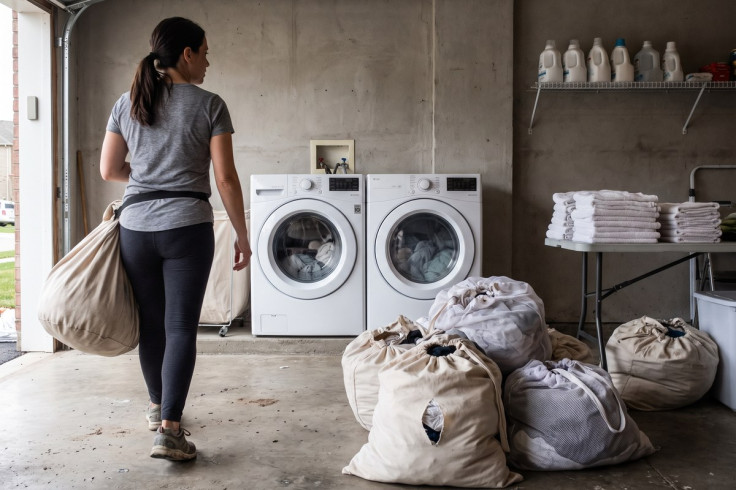
Monalisa Escobedo earns as much as $11,000 (about £8,100) a month washing other people's laundry from her home in Chula Vista, California. Escobedo, 38, is a personnel specialist in the US Navy and gets her laundry jobs through an app called Poplin. She has also tried driving for Uber but says doing laundry is preferable: 'It's better than Uber.'
The $11,000 figure is before her business expenses, so Escobedo does not keep all of it. Poplin takes a share of each order, while Escobedo has to cover costs such as detergent, water, electricity, and petrol, as well as running her washing machines. Her earnings after these expenses are not disclosed.
Poplin is a service that connects customers with people who wash, dry, and fold laundry. It works like a ride-hailing app: a customer leaves a bag of clothes outside, a local laundry worker collects it, cleans and folds everything, and returns it the next day. Poplin operates across hundreds of US cities and says it has more than 100,000 work-from-home Laundry Pros. Orders have a minimum charge of $30, or about £22.
What Escobedo Gets From Each Order
Escobedo explained how the money works in an as-told-to article for Entrepreneur published on 27 August. Escobedo said Poplin charges about $1.53 a pound in her area and pays her $1.16 per pound for each pound she washes. The difference between the customer price and Escobedo's stated pay is about 37 cents per pound, or about 24.2% of what the customer pays.

Her top monthly earnings also show just how much laundry she handles. At $1.16 per pound, earning $11,000 from laundry alone would equate to about 9,483 pounds of laundry in a month. That is roughly 4.3 tonnes. Even at the lower end of her reported $8,000 monthly earnings, the same calculation would equate to about 6,897 pounds, or 3.1 tonnes, of laundry. These estimates are based on her stated per-pound pay, assuming that rate applied to all the laundry, and do not account for tips.
The Slow Start and the Rhythm After It
Escobedo says her first month brought in very little money. She says new laundry workers are limited to fewer orders while they build up their ranking on the platform, and they initially receive just one order at a time. Many of the available jobs are farther away, which can mean spending more money on petrol than the work earns. She has completed about 1,200 orders since April 2025.
Her workload is much larger now. Escobedo handles between five and 12 orders a day and keeps a list of regular customers. She also plans her pickups so several customers are close together, helping reduce driving time and petrol costs. Most orders are completed the next day, with laundry normally returned by 8 p.m., while orders weighing more than 100 pounds may be given an additional 24 hours.
The Costs the Monthly Figure Hides
The headline monthly income does not show the full cost of running a business from home. Alexis Faber, a Poplin laundry worker in Henrico, Virginia, told Axios that her household utility bills increased when she worked full time. The extra costs can include water, electricity, detergent, and running two washing machines for much of the day.
Her reported earnings are above the level Poplin says its top Laundry Pros can earn. A Poplin worker interviewed by a Philadelphia broadcaster in 2023 said she was earning about $700 to $1,000 a week. That works out to considerably less over a full year than Escobedo's top reported figure. How much a worker makes can depend on where they live, how many hours they work, and how many regular customers they have.
Why British Readers Cannot Copy It Exactly
People in the UK cannot currently use Poplin's service because the platform does not operate in the UK. One UK alternative is Laundryheap, a London-founded laundry service that has operated since 2014. The Laundry Lady, an Australian laundry platform, is preparing to launch in the UK later in 2026, with Manchester named as its first UK city.
The difference in how much workers receive is also worth noting. The Laundry Lady says its contractors receive 80% of the money from each job, compared with the 75.8% that Escobedo receives from the stated Poplin customer price. A difference of about four percentage points may not sound large, but the gap could become significant at high volumes.
Escobedo's story is one example, not a typical picture of gig work. The Federal Reserve has found that 31% of people who did gig work said they would have trouble making ends meet without it. Escobedo plans to retire from active-duty military service in three years and says she wants to use her extra income to clear her debts first.
© Copyright IBTimes 2026. All rights reserved.