Scientists Say the Ozone Layer Is Healing, and This 1987 Treaty Is Why
The landmark treaty has driven the phase-out of harmful chemicals, while its Kigali Amendment now targets powerful greenhouse gases in cooling systems
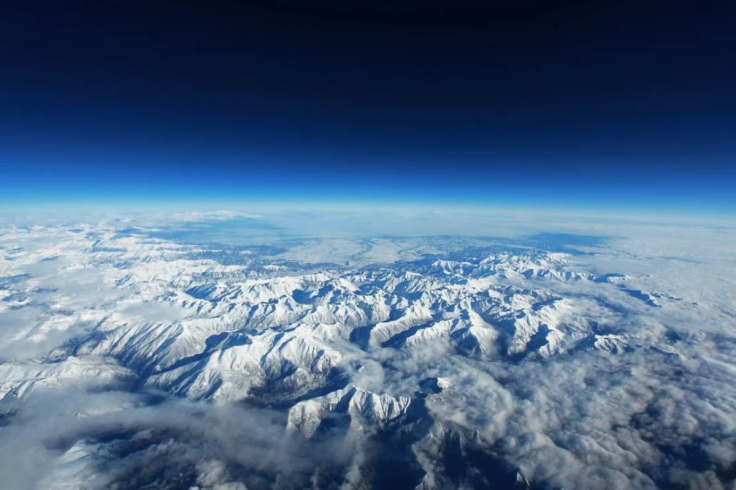
Today, 16 September, marks the International Day for the Preservation of the Ozone Layer, and scientists say the treaty behind it deserves real credit. The Montreal Protocol, signed on 16 September 1987, has driven the phase-out of nearly all banned ozone-depleting substances.
Nearly 99% of banned ozone-depleting substances have now been phased out worldwide, according to the UN Environment Programme's Scientific Assessment of Ozone Depletion.
If current policies remain in place, the ozone layer is expected to recover to 1980 levels by around 2040 across most of the world, with recovery taking longer over the Arctic and Antarctic.
Why 16 September Was Chosen
The date carries more than one layer of significance. It marks the anniversary of the Montreal Protocol's signing on 16 September 1987, following the earlier Vienna Convention of 1985, which was adopted and signed by 28 countries on 22 March that year, establishing international cooperation to protect the ozone layer.
In 1994, the UN General Assembly formally proclaimed 16 September as the International Day for the Preservation of the Ozone Layer, commemorating the date of the Montreal Protocol's signing. Fifteen years later, the same date took on another significance.
On 16 September 2009, the Vienna Convention and the Montreal Protocol achieved universal participation, a unique milestone among treaties deposited with the UN Secretary-General. That achievement means today's date marks the treaty's creation, its formal recognition by the UN and its eventual worldwide participation.
The ongoing healing of the ozone layer is an inspirational example of how the world can come together to address global challenges, such as the climate crisis.
— United Nations (@UN) September 16, 2026
More on Wednesday's #OzoneDay: https://t.co/mnz2Gl70BM pic.twitter.com/89HzmIloWQ
A Treaty Built on Global Cooperation
The Montreal Protocol controls nearly 100 man-made chemicals, including chlorofluorocarbons (CFCs) once common in aerosol sprays, refrigeration systems and other applications. These substances contribute to depletion of the stratospheric ozone layer, the shield that protects life on Earth from harmful ultraviolet radiation.
The recovery timeline is not uniform. Scientists expect ozone levels over the Arctic to return to 1980 values by around 2045, while recovery over Antarctica is not expected until around 2066. Across the rest of the world, recovery is projected for around 2040.
From Ozone Protection to Climate Action
The treaty's reach has expanded well beyond ozone. In 2016, parties to the Montreal Protocol adopted the Kigali Amendment in Kigali, Rwanda, committing to phase down hydrofluorocarbons, or HFCs, potent greenhouse gases used widely in air conditioning and refrigeration.
This year marks ten years since that amendment was adopted, and the 2026 World Ozone Day theme, 'Global action for a cooler planet', is built around its impact. The campaign highlights how phasing down HFCs can support the transition towards more efficient and sustainable cooling technology.
UN Secretary-General António Guterres tied the treaty directly to today's climate pressures, saying: 'As temperatures rise and extreme heat becomes more common, access to efficient cooling saves lives. We must meet that need fairly and sustainably.'
The repair to the hole in the ozone layer is touted as a major victory for climate scientists and activists. A new report highlights progress but also underscores some troubling signs of backsliding as extreme weather complicates that recovery.https://t.co/WbKHFyc7VH
— Scientific American (@sciam) September 16, 2026
What This Means Going Forward
The treaty's phase-out schedule includes specific exemptions and essential-use arrangements where a controlled substance remains necessary and no technically and economically feasible alternative exists.
These arrangements have included certain medical inhalers using controlled substances and critical fire-protection applications involving halons, subject to conditions established under the Protocol.
For most consumers, the practical impact has already happened quietly, in the shift away from ozone-damaging refrigerants in fridges and air-conditioning units over the past three decades.
The next phase, under the Kigali Amendment, focuses on reducing HFCs while supporting more energy-efficient cooling as demand for cooling grows worldwide.
The ozone layer's recovery provides measurable evidence of progress under the Montreal Protocol.
With extreme heat events becoming more common, the treaty's expansion into HFC reduction links decades of ozone protection with efforts to improve cooling efficiency and address climate change, making its progress relevant beyond the scientific community that monitors it.
© Copyright IBTimes 2026. All rights reserved.
- Recommended For You