

Dark Matter Hint or Fluke? Physicists Struggle To Explain This Odd Particle
LUX-ZEPLIN detector's unusual event sparks excitement and skepticism among physicists
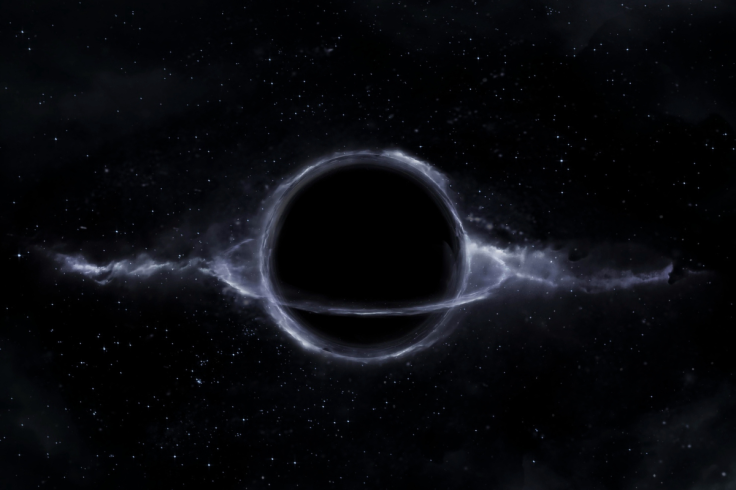
A single flash of light recorded nearly a mile beneath South Dakota has left physicists both excited and stumped. The event, caught by the LUX-ZEPLIN (LZ) dark matter detector, is being described by the collaboration as its most compelling hint of dark matter to date, yet researchers still cannot rule out a far more ordinary explanation.
The interaction was picked up by the LUX-ZEPLIN experiment on 16 June 2023. Physicists have spent months investigating possible background processes and potential detector effects, but so far they have been unable to identify a likely explanation for the event.
A Flash Beneath South Dakota
LZ uses 10 tonnes of ultrapure liquid xenon and operates nearly a mile underground at the Sanford Underground Research Facility, a former gold mine. It is managed by the US Department of Energy's Lawrence Berkeley National Laboratory and involves roughly 250 scientists across 39 institutions.
The detector searches for WIMPs (weakly interacting massive particles), one of the leading dark matter candidates; the event does not readily match known background processes, although the team stresses this alone is not proof of dark matter.
The event occurred at about 248 kiloelectronvolts, placing it in an extended energy range LZ had not previously used for this type of search. Researchers found a statistical significance of 2.6 sigma, corresponding to roughly a 0.5 per cent probability of observing such an event under the background-only hypothesis.
That figure does not mean a 99.5 per cent probability the event is dark matter. Rather, it indicates the event would be unusual if only known background processes were responsible; particle physics requires a much higher significance before a result is considered a discovery.

What Dark Matter Actually Is
Dark matter cannot be seen directly because it does not interact with light in the ordinary electromagnetic way. Scientists have inferred its presence from its gravitational effects on galaxies, galaxy clusters and the wider structure of the universe.
The theory dates to 1933, when Swiss astronomer Fritz Zwicky studied the Coma Cluster and found its galaxies moving too fast to be held together by visible matter alone. His calculations suggested the cluster contained far more mass than visible matter accounted for, with his original estimate putting the discrepancy at roughly 400 times.
The idea was not immediately accepted, and evidence accumulated over subsequent decades. In the 1970s, astronomer Vera Rubin and her collaborators observed galaxy rotation curves, finding stars moved in ways visible matter alone could not explain; the work became key evidence for dark matter.
Today, dark matter is thought to account for roughly 85 per cent of all matter in the universe, yet no dark matter particle has been directly detected. Instead, scientists observe its gravitational effects across the cosmos.
Don’t get too excited, but the world’s largest dark matter detector has spotted a single unusual particle.
— News from Science (@NewsfromScience) September 2, 2026
Announced at the TeV Particle Astrophysics conference in Japan, the event recorded by the LUX-ZEPLIN detector could mark the first detection of a particle of dark matter,…
Why the Signal Remains Unconfirmed
The LZ collaboration presented the result at the TeV Particle Astrophysics conference in Japan, where researchers tempered their excitement. Tom Shutt, a SLAC particle astrophysicist and LZ co-founder, said the team is still working out how to interpret the single event.
Analysis suggests roughly a 0.5 per cent probability of obtaining such an event if only known background processes are present.
That is striking, but one event, however unusual, is not enough to confirm a discovery.
Even more intriguing is that, if the event was caused by dark matter, it would not necessarily resemble the simplest WIMP scenarios many researchers had expected.
LZ began collecting data in 2021, but this analysis examines an extended energy window not part of its earlier standard search.
The unusual nature of the event partly explains why it has generated so much interest across the physics community, rather than being dismissed as detector noise or a known background.
What the Search Will Do Now
The LZ collaboration intends to keep running the detector to see whether further data strengthens or weakens the signal. The findings are now available on the arXiv preprint server and have been submitted to the journal Physical Review Letters; the paper has not yet been established as a peer-reviewed discovery.
Researchers are also hoping that other dark matter detectors around the world may be able to identify similar events in their own data, which would considerably strengthen the case.
If this single flash eventually holds up under further scrutiny and independent replication, it could represent the first direct evidence of a dark matter particle, nearly a century after Zwicky's pioneering work on the problem; such a discovery would reshape how scientists understand the makeup of the universe.
For now, though, the result remains what the researchers themselves are treating it as: a tantalising hint, not a confirmed detection.
© Copyright IBTimes 2026. All rights reserved.