

NASA Admin Announces Plans to Build US 'Moon Base' to Expand Space Presence
The moon base aims to establish a lasting American presence on the lunar surface
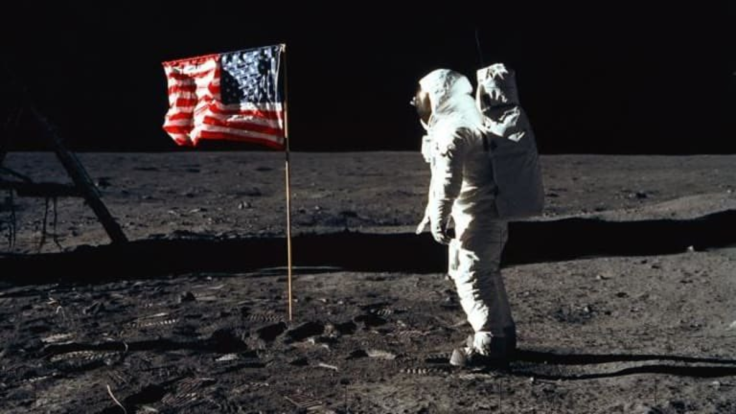
NASA Administrator Jared Isaacman has announced plans to construct a US moon base to strengthen America's presence in space.
In an X post, Isaacman clarified that the initiative aims to establish a permanent human outpost on the lunar surface. According to him, this should support scientific research, economic ventures, and national security. Isaacman outlined the plan on social media, emphasising alignment with President Trump's national space policy and investments in nuclear power and orbital infrastructure.
Our number one priority: American leadership in the high ground of space. 🇺🇸
— NASA Administrator Jared Isaacman (@NASAAdmin) December 27, 2025
- return to the Moon 🌕
- establish an enduring presence 🧑🚀
- realize scientific, economic, national security value 🧫
- make investments in nuclear power 🔋
- strengthen the orbital economy 💵
-… pic.twitter.com/efyd1K1KGM
While the announcement excites space enthusiasts, some critics have questioned the feasibility and clarity of the programme, particularly regarding what constitutes an 'enduring presence'.
A Moon Base for the US as the Next Frontier
According to Isaacman, the moon base will not be a temporary facility but a long-term hub supporting multiple objectives. He described it as central to American leadership in the 'high ground of space', including scientific discovery, economic development, and national security. The base will reportedly leverage nuclear power and orbital infrastructure to accelerate space research and commercial ventures.
Michael Mealling, an X commentator, asked for clarification, writing, 'Can you please describe what "an enduring presence" looks like? Most Americans don't understand what that means'. Isaacman responded directly, confirming plans for a moon base as the foundation of a sustainable presence in space.
We are going to build a Moon base
— NASA Administrator Jared Isaacman (@NASAAdmin) December 27, 2025
Space Enthusiasts 'Excited' for a US Moon Base
Space enthusiasts responded positively, praising the ambition of NASA's plans. Homer Hickam, a former NASA engineer and author, noted that historical studies of lunar modules, like his 1993 SS Freedom project, could inform logistics and funding today. Hickam described the moon as a 'human economic resource' and suggested permanent habitation with tens of thousands of people, some of whom may never return to Earth.
Prodigious! My 1993 NASA Study might be a starting point. SS Freedom module designs were essentially the same as ISS. Logistics (and perhaps funding in today's dollars) would be about the same. https://t.co/xayqbrT9g2
— Homer Hickam (@realhomerhickam) December 27, 2025
Others celebrated the announcement with excitement, noting the partnership with SpaceX as key to achieving rapid results. One commenter wrote, 'Awesome news Jared, and with SpaceX as the main partner, it will happen in record time!'
Another supporter expressed hope for a fully self-sufficient lunar base rather than a temporary habitat, envisioning permanent rotation crews similar to the International Space Station.
Questions About Feasibility
While reactions were mostly enthusiastic, some users raised practical concerns. Users pointed out that a single orbital flight of SpaceX's Starship has yet to be completed, cautioning that foundational milestones must be achieved first. Comparisons with Europe's technological ambitions, such as standardising charging cables globally, were also used to illustrate differing priorities.
Despite these concerns, supporters of the recently-announced plan argue that establishing a moon base is essential for long-term US competitiveness in space and that feasibility is not a concern for the US admin. Isaacman and others stress that a clearly stated, ambitious goal is critical to avoid losing focus.
The proposed moon base could provide the US with massive strategic and economic advantages, compared to other big leagues in space exploration, like China and Russia. Beyond research, the presence on the lunar surface may support industrial projects and orbital infrastructure, including satellite maintenance and potential resource extraction.
Isaacman shared that these goals are part of Trump's vision to position America as a leader in both scientific discovery and space commerce.
NASA has yet to reveal a detailed timeline or budget for the moon base.
© Copyright IBTimes 2026. All rights reserved.