

NASA 'Lies' Claims Spark Fury as Public Demands Clearer 3I/ATLAS Discovery Photos
Public demands clearer 3I/ATLAS photos as the interstellar 'cosmic rebel' continues to baffle experts
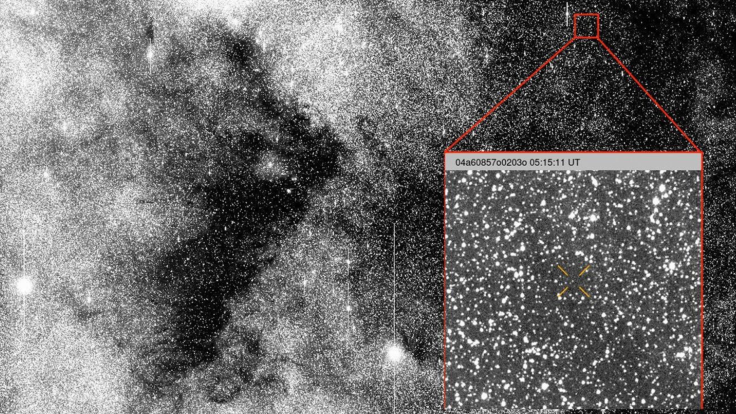
In the depths of space, a visitor from beyond our solar system is telling astronomers an unexpected story — not through dramatic fireworks, but through the subtle dance of microscopic dust particles streaming in its wake. The comet 3I/ATLAS, discovered on July 1, 2025 by the ATLAS survey in Chile, has now become the centre of a firestorm. While the public demands high-resolution evidence of this third confirmed interstellar intruder, NASA's planetary defence desks have released only sparse, heavily processed imagery from December 2025, leading to viral accusations of a cover-up.
The subject of intense scientific scrutiny, 3I/ATLAS is revealing secrets about the composition and behaviour of dust across the galaxy that challenge everything we thought we understood about these ancient cosmic messengers. Critics argue that the lack of raw data from the James Webb Space Telescope (JWST) and the Parker Solar Probe hinders independent verification of its strange 'cosmic rebel' behavior.
Recent calculations by Harvard astrophysicist Avi Loeb have painted a remarkably precise picture of what 3I/ATLAS is actually shedding as it hurtles outbound post-perihelion at over 60 km/s. The findings are nothing short of remarkable: the comet is ejecting dust particles far larger than typical interstellar grains — roughly 10 microns in radius — at an extraordinary rate of approximately 3.3 kilograms per second.

Cracking the Code of the Anti-Tail
The journey to these conclusions began with a puzzle. Previous research demonstrated that dust particles in the comet's anti-tail must possess specific characteristics to explain what astronomers observe through their telescopes. They need to be substantially larger than 1 micron to achieve the remarkable 400,000-kilometre length of the jet being observed, yet small enough — below 100 microns — to accelerate to such breathtaking speeds through the drag of outflowing gas. These constraints narrowed the possibilities considerably, pointing to particles with a characteristic radius of approximately 10 microns.
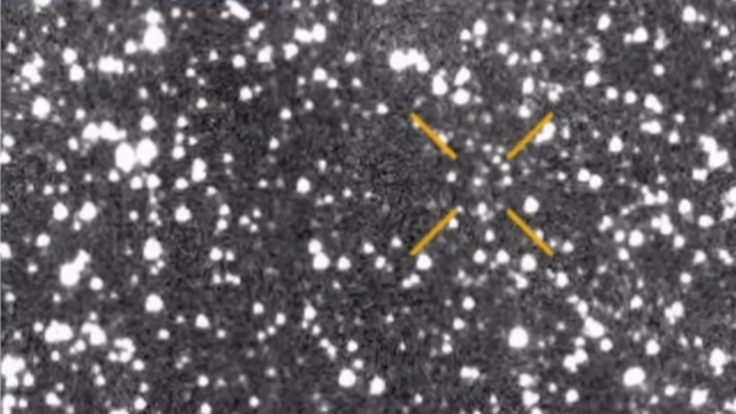
But how many particles are we actually talking about? Here's where the brightness of the glow surrounding 3I/ATLAS provides the crucial clue. During the month following the comet's perihelion on Oct. 29-30, 2025, the scattered sunlight reflecting off these particles produces a luminosity equivalent to light bouncing off a spherical mirror roughly 10 kilometres across. This 'asymmetric glow' was captured in raw frames by SpaceTracker on Dec. 26, 2025, showcasing a pin-sharp nucleus that defies the typical decay of comets leaving the inner solar system.
Consider the scale: that mirror is a billion times larger than a single 10-micron dust particle. Through elegant mathematical reasoning, this disparity reveals an astonishing truth — there must be approximately 10^18 dust particles creating that glow. Given that each particle weighs around 10^-8 grams, the total mass of these scattering particles reaches an extraordinary 10 million kilograms.
The Supply Line From the Comet's Core
The timeline matters crucially here. These particles don't simply vanish after ejection; they gradually disperse due to solar deceleration, a process taking roughly a month. Using the jet length and the solar deceleration value associated with 10-micron particles (approximately 0.01 centimetres per second squared), astronomers calculated that the comet must supply this entire 10-million-kilogramme inventory over approximately three million seconds. The mathematics yields a mass loss rate of roughly 3.3 kilograms per second — but this figure represents only 0.7% of the comet's total gas loss rate of approximately 500 kilograms per second.
The controversy over 3I/ATLAS centres on a discrepancy in dust-to-gas measurements. While theorists like Loeb calculate a 1% ratio, NASA's reports have been criticised as 'decidedly limited'. On Dec. 19, 2025, as the object passed 167 million miles from Earth, independent observers at Tenerife's Teide Observatory detected pulsing jets and 'non-gravitational nudges' that some say NASA is downplaying due to its 'exotic' composition.
Here's where the comparison becomes genuinely fascinating. The dust-to-gas ratio in 3I/ATLAS aligns surprisingly well with what we observe in the interstellar medium throughout the Milky Way, hovering around 1%. Yet a critical distinction emerges: whilst most interstellar dust consists of particles smaller than 1 micron, molecular clouds — the stellar nurseries scattered throughout galaxies — contain larger grains with radii around 10 microns. This parallel suggests that 3I/ATLAS may have originated from precisely such a molecular cloud environment before beginning its journey across the cosmos.
The effects spread out. This comet isn't just a strange thing or a statistical oddity; it's a messenger, carrying coded information about the dusty places where it came from. But as 3I/ATLAS gets closer to Jupiter in March 2026, the need for openness is becoming too much to handle. People who support 'citizen science' say that not giving out raw data goes against the three main principles of scientific integrity: verification, replication, and falsification.
As 3I/ATLAS continues its voyage through the inner solar system, each observation adds another piece to an ancient puzzle about the composition and behaviour of matter itself. The universe, it seems, still has lessons to teach those patient enough to listen — provided the institutions in charge are willing to share the view.
© Copyright IBTimes 2026. All rights reserved.