Your Investment Account Is Living in the Wrong Decade, Says New Market Trading CEO
As tokenized assets gain momentum, legacy account structures may be the next part of finance due for disruption.

Something strange has happened in finance over the last few years. The assets went onchain, but the accounts holding them did not.
Most investors still access markets through a familiar structure: an advisor, a custodian, a brokerage ledger. That structure was built for a world where the assets themselves lived offchain too. They no longer do, not entirely, and the gap between where the assets are and where the account sits is starting to matter.
Tokenized real-world assets, things like Treasuries, private credit, and money-market funds represented onchain, have gone from a niche experiment to a real asset class fast. On-chain value in the category roughly tripled in about a year, crossing $32 billion by mid-2026.
Standard Chartered's Geoff Kendrick, the bank's head of digital assets research, wrote in a research note that TVL in DeFi protocols could grow 37-fold to $2.7 trillion by the end of 2030, up from roughly $73 billion today.
And institutional players have noticed. The Depository Trust & Clearing Corporation, which clears and settles nearly all US stock trades, is piloting tokenized trading of Russell 1000 equities, major ETFs, and Treasuries with more than 50 firms, including BlackRock, JPMorgan, and Goldman Sachs.
Set that against the number that actually touches most people's money. Global wealth management assets under management sat near $139 trillion in 2024, on a path toward $200 trillion by 2030, according to PwC. Almost none of that pool connects directly to the onchain market.
Why the Account, Not the Assets, Is the Bottleneck
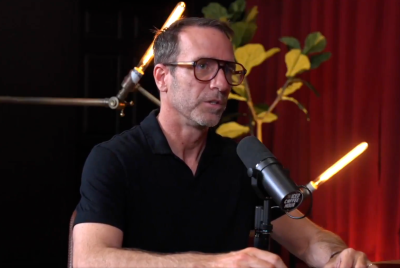
It's tempting to assume wealth managers are just being cautious, curating a small menu out of thousands of onchain products to protect clients from complexity. Frank Hepworth, who spent years as a lawyer advising crypto exchanges before founding onchain wealth manager New Market Trading (NMT), doesn't buy that explanation.
'In almost every case, that's an excuse, not the truth,' he said. 'Legacy players don't offer a small menu because they vetted the market down to four products. They offer a small menu because their systems can't handle more.'
The mechanical problem is reconciliation. A traditional account sits with a custodian, and any onchain exposure has to be bridged in through an intermediary, with offchain recordkeeping reconciled against onchain settlement in real time. That's slow and expensive to build well.
Hepworth doesn't dispute that curation has value. 'Curation is what advice is for,' he said. 'But if my manager could access the whole onchain market and just never walked me through my options, I'd fire him.' He compares it to choosing between two competent doctors, one working from a well-stocked hospital and one from four pill bottles on a shelf.
What Changed in 2023
The reason this gap has persisted traces back to a fairly obscure piece of Ethereum infrastructure. ERC-4337 is an account abstraction standard that reached the network in March of 2023.
The new standard lets someone hold custody of their own crypto assets in a smart contract wallet while delegating specific, revocable management permissions to a chosen team. Nobody has to hand over their keys.
Trackers cited by Alchemy, deployed smart accounts in the tens of millions already, with more than 100 million transactions processed as of early 2026, roughly ten times the prior year's volume.
'I didn't think much of it until ERC-4337 came to Ethereum in 2023,' Hepworth said, describing years spent watching institutions rebuild an entire offchain apparatus just to approximate a fraction of what was already available onchain. 'If all assets are going onchain, why coordinate ten offchain middlemen to deliver a watered-down version of the market?'
That's close to a direct description of NMT's model: clients open a self-custody smart account, keep full control of the underlying assets, and grant a management team limited, non-custodial permissions to execute strategy inside it. Whether that particular model wins out is a separate question. The shift underneath it looks real either way, based on the numbers above.
What Changes for Investors
Hepworth frames the shift as an inversion of how people relate to their accounts. 'Today, your investment account is an entry in someone else's database,' he said. 'Five years from now, you hold the account and everyone else operates by permission you can revoke tomorrow morning.'
This prediction stands in stark contradiction to current standards, where the vast majority of financial products require handing your money and assets to someone else. Regulatory clarity around self-custody still has distance to cover, and recovery tools need to match the safety investors expect from a legacy account before most will trust it with real money.
The asset side of that bet already looks like it's playing out, between the DTCC pilot and the steady march of firms like Fidelity and JPMorgan into tokenized products. But this still leaves the account side up in the air.
But something strange has happened in finance over the last few years. The assets went onchain. The accounts holding them did not.
Most investors still access markets through a familiar structure: an advisor, a custodian, a brokerage ledger. That structure was built for a world where the assets themselves lived offchain too. They no longer do, not entirely, and the gap between where the assets are and where the account sits is starting to matter.
© Copyright IBTimes 2026. All rights reserved.
- Recommended For You