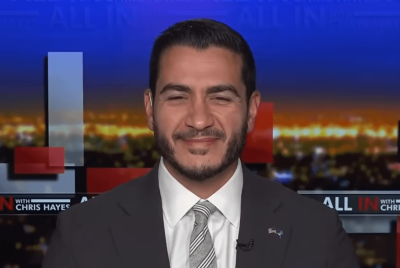
Make America Healthy Again? Tobacco Executive Stephen Sayle Appointed to a Senior Leadership Role at the CDC
Stephen Sayle's appointment raises concerns over tobacco industry influence in public health.
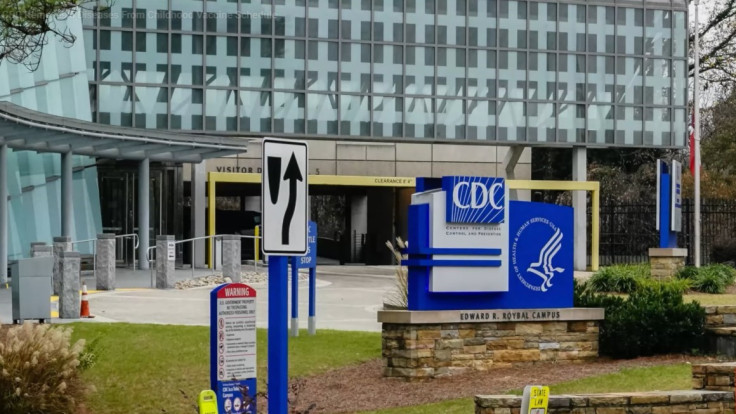
The Trump administration has placed a former tobacco executive at the helm of legislative affairs inside the very agency tasked with protecting Americans from the consequences of smoking.
Stephen Sayle, a government affairs strategist who served as U.S. vice president of corporate affairs at Fontem Ventures between 2017 and 2018, was quietly named CDC deputy director for legislative affairs in March 2026. Fontem Ventures is a subsidiary of Imperial Brands, the British multinational tobacco corporation behind the e-cigarette brand blu and the oral nicotine pouch brand Zone.
Public health experts, legal watchdogs, and Democratic lawmakers have since raised alarm, describing the appointment as an industry foothold inside a public health agency it has spent decades working against.
The Industry Insider Now Shaping the CDC's Congressional Agenda
Before entering Fontem's orbit, Sayle built his career at the intersection of lobbying and Capitol Hill. He served as legislative counsel to Congressman Joe Barton (R-TX) from 1989 to 1993 and later as majority counsel for the House Energy and Commerce Committee from 1995 to 1997.
He also spent two years from 2013 to 2015 as a subcommittee staff director on the House Science, Space, and Technology Committee, a role he took on after lobbying for Chevron, a tenure that drew its own conflict-of-interest scrutiny. The Hill newspaper recognised him as one of Washington's Top Hired Guns in 2010, 2011, and 2012.
Former tobacco industry executive Stephen Sayle has been appointed to a senior leadership role at the CDC.
— FactPost (@factpostnews) April 24, 2026
Sayle was a lobbyist for Chevron before working for Big Tobacco. pic.twitter.com/rjgmAseOrs
His CDC appointment, first reported by STAT News on 22 April 2026, was described by Dr. Timothy McAfee as 'unprecedented' in an editorial published in the journal Tobacco Control. McAfee headed the CDC's Office of Smoking and Health from 2010 to 2017 and is now a professor at the University of California, San Francisco. 'It should be 100% clear that we don't want former tobacco industry executives working inside the nation's public health agencies helping influence policy adoption,' he told STAT News in an email.
The Department of Health and Human Services defended the hire. Spokesperson Andrew Nixon told STAT that Sayle brings 'more than 25 years of experience working at senior levels of the federal government and will be a valuable asset at the CDC to ensure effective coordination with Congress.' Nixon added that, like all HHS officials, Sayle is required to comply with applicable ethics laws and regulations. HHS confirmed Sayle holds no shares in Imperial Brands or other tobacco companies, though critics argue financial ownership is only one dimension of the conflict.
The Revolving Door Robert F. Kennedy Jr. Promised to Close
Health Secretary Robert F. Kennedy Jr. has repeatedly pledged to 'shut the revolving door' between industry and government. McAfee said Sayle's appointment is 'completely inconsistent' with that commitment. Kennedy has also endorsed vaping as a harm-reduction strategy, and this spring Sayle's former employer, Fontem US, filed a lawsuit against the FDA, Kennedy, and FDA Commissioner Marty Makary, alleging the agency unlawfully stalled its application to market Zone nicotine pouches. The lawsuit places Kennedy at the centre of a dispute directly involving the company Sayle left to join the CDC.

Kelsey Romeo-Stuppy, managing attorney at the anti-tobacco group Action on Smoking and Health, connected the Sayle appointment to a broader pattern. 'The federal regulation of tobacco in the U.S. has been gutted under the Trump administration,' she told STAT. 'This is just another step further in that direction of failing to protect Americans from the harms of tobacco, and in fact going in the opposite direction.'
Jeff Hauser, executive director of the Revolving Door Project, wrote in an email that 'one can hardly imagine a more nihilistic and disturbing message to send than turning public health policy over, in part, to someone who has dedicated much of their career to maximising the consumption of inherently unhealthy products.'
Nothing says Make America Healthy Again like appointing a tobacco executive to be a leader at the CDC https://t.co/O7lOGHgf8T
— Ron Wyden (@RonWyden) April 27, 2026
Senator Ron Wyden, who flagged the appointment on X, has a documented record of challenging tobacco industry influence over federal health bodies. The hire also drew comparisons to a previous CDC controversy: in January 2018, then-CDC director Brenda Fitzgerald resigned after Politico reported she had purchased tobacco stocks following her appointment. She said the purchase was made without her knowledge through an investment manager.
Federal Tobacco Guardrails Stripped Back as Industry Money Flows to Trump
Sayle's arrival at the CDC follows a year of significant rollbacks to federal tobacco regulation. On 1 April 2025, HHS announced the effective closure of the CDC's Office of Smoking and Health, dismissing approximately 120 full-time staff members.
As STAT News reported, the move eliminated the body responsible for the National Youth Tobacco Survey, the Tips from Former Smokers public awareness campaign, and federal funding that supported state-level cessation programmes. Former CDC Director Dr. Tom Frieden called the closure a 'gift to Big Tobacco,' telling NBC News: 'The only winner here is the tobacco industry and cancer cells.'
The Campaign for Tobacco-Free Kids stated the same day that tobacco remains the leading cause of preventable death in the United States, killing nearly 480,000 Americans each year. The Trump administration separately withdrew plans to ban menthol cigarettes and took a more permissive stance on flavoured vapes.
Reynolds American donated £7.9 million ($10 million) to Trump's super PAC during the 2024 presidential cycle, according to Reuters reporting. Altria Group and Reynolds both contributed to the White House ballroom renovation fund. Susie Wiles, Trump's chief of staff, is a former lobbyist for tobacco company Swisher International.
When Make America Healthy Again became the rallying cry, few anticipated that it would mean staffing the CDC with the tobacco industry's own.
© Copyright IBTimes 2026. All rights reserved.
- Recommended For You