

Nine 'Mysterious' 3I/ATLAS Signals Identified As Human Noise
Nine 'mysterious' 3I/ATLAS signals turned out to be human radio noise, but the search sharpened our tools for the next interstellar visitor.
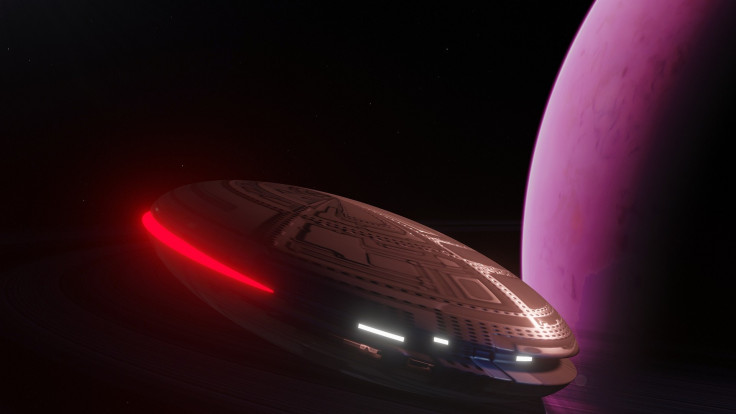
3I/ATLAS, the third known interstellar object to cross our Solar System, was first spotted on 1 July 2025 and immediately became a magnet for speculation. It was discovered by the Asteroid Terrestrial-impact Last Alert System (ATLAS) survey in Hawaii and was quickly confirmed to be unbound to the Sun, meaning it had arrived from outside our planetary neighbourhood.
Some researchers, including Harvard astrophysicist Avi Loeb, argued that scientists should at least consider whether such visitors might be technological probes rather than ordinary chunks of rock and ice. Others pushed back, warning that talk of 'alien spacecraft' risked overshadowing the hard‑won data and that the priority should be careful measurement rather than sensational claims. That debate helped propel 3I/ATLAS to the top of the observing agenda as it sped towards the inner Solar System.
During its flyby, the comet never came closer than about 270 million kilometres from Earth, a distance that kept it far beyond any physical danger but well within range of powerful radio dishes. At that distance, 3I/ATLAS was still bright enough in radio and optical wavelengths for large observatories to track its motion and activity in real time.
The Breakthrough Listen initiative, an ambitious project dedicated to hunting for signs of intelligent extraterrestrial communications, used the opportunity to mount a focused search for so‑called 'technosignatures'—radio signals that might betray an artificial origin.
On 18 December, less than 24 hours before closest approach, the team pointed the 100‑metre Green Bank Telescope in West Virginia at 3I/ATLAS, sweeping frequencies between 1 and 12 gigahertz with extreme sensitivity. Those bands include the so‑called 'water hole,' a relatively quiet patch of the radio spectrum that many researchers regard as a logical place for an intelligent civilisation to broadcast.
At the same time, the Allen Telescope Array in California and other collaborating facilities collected complementary data, building one of the most detailed technosignature surveys ever carried out for an interstellar object.

What Breakthrough Listen Learned From 3I/ATLAS
The observing campaign did turn up signals—but not the kind that would make history. Researchers flagged nine radio 'events' that initially looked interesting enough to merit closer inspection. Each candidate appeared as a sharp spike in a narrow slice of the spectrum, matching the kind of pattern the team is trained to look for when screening for potential technosignatures.
When they checked those blips against the telescope's pointing and other diagnostics, the pattern was clear: the signals appeared when the instruments were not actually trained on 3I/ATLAS, a classic sign of interference from human technology on or near Earth.
After further analysis, the team concluded that all nine candidates were simply human‑made radio noise. Likely culprits included passing satellites, aircraft transmitters and ground‑based communications systems that routinely contaminate deep‑space observations.
In a paper that is still awaiting peer review, they summarised their verdict bluntly: 'Like those searches, we find no credible detections of narrowband radio technosignatures originating from 3I/ATLAS.' They also noted that similar surveys in 2025 by other teams—using different telescopes, frequency ranges and sensitivities—had likewise come up empty.
The researchers stressed that this is not the same as proving the comet is definitely natural in origin. With only three interstellar objects known so far, there is too little data to rule out exotic possibilities in every case.
They argue instead that each non‑detection helps narrow down where and how any future probes might try to communicate, shaping the design of subsequent surveys. However, they argued that if a non‑human probe were trying to communicate efficiently across interstellar space, narrowband radio would be a likely choice, mirroring how probes such as Voyager 1 and Voyager 2 send data back to Earth.
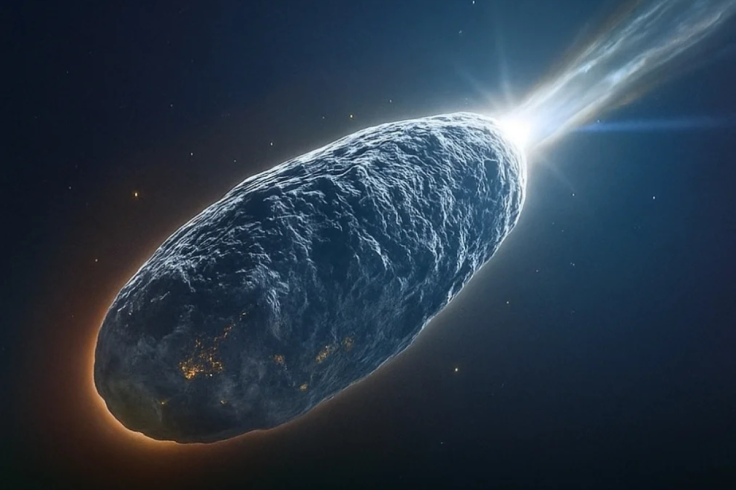
3I/ATLAS Looks Like A Normal Comet After All
While the technosignature search played out, another group of scientists focused on how 3I/ATLAS moved under the Sun's influence. They examined its so‑called non‑gravitational acceleration—the slight extra shove that comets experience when sunlight warms them, turning ice into gas and creating jets that act like natural thrusters. By combining this with estimates of how much material the comet was losing, they were able to infer the size of its solid nucleus.
Using data from observatories on and around Earth, as well as spacecraft elsewhere in the Solar System, the team found that the nucleus of 3I/ATLAS is roughly a kilometre across, comfortably within the range seen in familiar Solar System comets. They saw no evidence of unusual reflectivity, strange tumbling or abrupt changes in brightness that might hint at artificial structures or manoeuvres.
That result, together with its visible coma and elongated nucleus, led them to conclude that '3I/ATLAS exhibits mostly typical cometary characteristics'. In their words, 'There is currently no evidence to suggest that ISOs are anything other than natural astrophysical objects.'
For now, then, 3I/ATLAS joins its predecessors as a reminder that nature can produce plenty of intriguing phenomena without help from alien engineers. Yet the effort poured into this fleeting visitor underscores how seriously astronomers now treat even the slimmest chance of detecting another civilisation—and how every quiet result still helps refine the search for a signal that truly stands out from the noise.
For the teams involved, the nine 'mysterious' signals were less a disappointment than a dress rehearsal, sharpening their tools for the next interstellar object that strays close enough for Earth to listen.
As 3I/ATLAS fades back into the dark, it leaves behind no evidence of alien engineering—only a sharper set of tools and tougher questions for the scientists who listened so intently. If we want the next interstellar visitor to yield clearer answers, continued support for ambitious projects like Breakthrough Listen, better protection of the radio spectrum from interference and sustained public interest in careful, data‑driven astronomy will be essential.
© Copyright IBTimes 2026. All rights reserved.