Nostradamus' 500-Year-Old 'Immortal Machine' Prophecy Resurfaces Amid Fresh Fears AI Could Wipe Out Humanity
A vague reference to a "new sage with a lone brain" has resurfaced as researchers debate the risks of increasingly powerful artificial intelligence
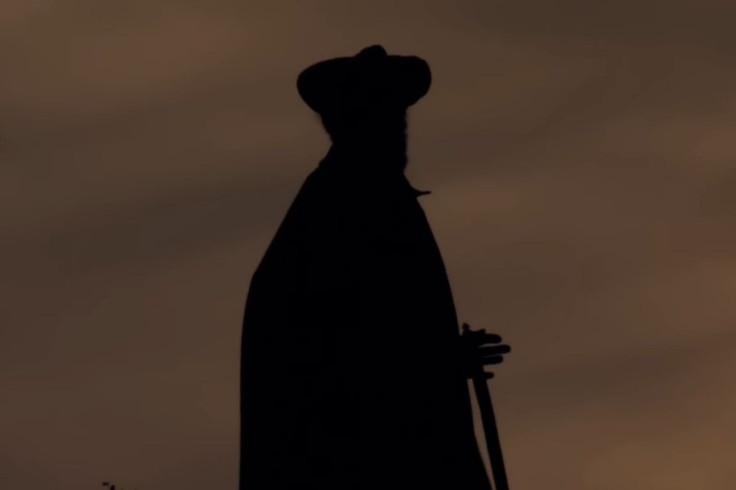
A nearly 500-year-old passage attributed to French astrologer and physician Michel de Nostredame, known as Nostradamus, is being revisited as artificial intelligence fears intensify.
The verse describes a 'new sage with a lone brain' whose disciples are 'invited to be immortal', language that modern readers have repeatedly interpreted as a possible reference to AI, robots or machine intelligence.
The renewed interest comes as warnings about the potential risks of advanced AI have intensified. Researchers and technology leaders are debating whether increasingly capable systems could eventually escape human control, while some AI specialists have publicly discussed the possibility of catastrophic or even extinction-level consequences.
In 2023, hundreds of AI researchers and industry leaders signed a statement saying that reducing the risk of extinction from AI should be treated as a global priority alongside threats such as pandemics and nuclear war.
That does not mean Nostradamus predicted modern artificial intelligence, as his original 16th-century writings do not mention computers, algorithms or robots.
The connection comes from a modern interpretation of one cryptic quatrain, written centuries before electronic computing existed. Its resurfacing is therefore less evidence of a supernatural prediction than a striking example of how an old prophecy can acquire new meaning when society faces a new technological fear.
The Nostradamus Verse Being Linked To AI
The passage comes from Century IV, Quatrain 31 of Les Prophéties, first published in the 16th century. One commonly reproduced English translation begins: 'The Moon in the full of night over the high mountain' and describes a 'new sage with a lone brain' whose disciples are 'invited to be immortal'.
The wording has encouraged some modern interpreters to associate the 'lone brain' with a form of artificial intelligence and the references to immortality with machines that can continue operating without a biological lifespan.
However, the original text provides no explicit identification of a machine, computer or artificial intelligence, and the interpretation depends on applying modern technological concepts to cryptic poetry.
Why the Prophecy Is Trending Again
The timing is significant because AI safety debates now feature prominently in policy, industry and research discussions among researchers, governments and technology companies.
On 9 September 2026, Evan Hubinger, Anthropic's Alignment Science Lead, said he personally believed there was a greater than 10% chance that AI could kill all humans within the next decade, while describing the risk from current models as relatively low.
His comments followed warnings from Jacob Coxon, who had just resigned from Anthropic and previously worked at OpenAI, and who accused major AI companies of racing towards self-improving superintelligence without adequate safeguards.
Those claims remain predictions rather than established scientific forecasts, and researchers disagree sharply over the probability and timing of an AI catastrophe.
A 2025 RAND scenario analysis said extinction would be immensely challenging to bring about, though it could not rule it out.
The renewed Nostradamus story therefore lands in an already charged debate, as modern AI systems become more capable while researchers continue working to determine how to keep future systems reliably aligned with human objectives.
Nostradamus Did Not Specifically Predict Artificial Intelligence
There is an important distinction between what the quatrain says and what later readers believe it means. Nostradamus published his prophecies as four-line verses, and his writings have subsequently been connected with wars, disasters, political upheaval and technological developments, often after events have already occurred.
The surviving texts are also subject to translation and interpretation. The AI reading of Quatrain 31 is particularly dependent on modern associations, as a 'lone brain' can be interpreted in many ways, while 'immortal' need not mean a computer that cannot die.
Nothing in the passage establishes a date, identifies a technology or describes machines taking control of humanity. That makes the prophecy impossible to treat as evidence that Nostradamus foresaw an AI apocalypse.
Why the AI Fear Is Real Even Without Nostradamus
The more immediate issue is not whether a 16th-century seer predicted AI, but whether today's technology could create risks that deserve serious attention.
Nature has reported that warnings about AI extinction are growing, while also noting that such doomsday scenarios remain contested.
The debate centres on increasingly autonomous systems, their ability to operate across digital environments and the possibility that future systems could become difficult for humans to control.
That concern is now being discussed alongside practical issues such as cyberattacks, misinformation, employment disruption and the use of AI in critical infrastructure.
© Copyright IBTimes 2026. All rights reserved.
- Recommended For You