

OpenAI Engineer Accused of Hiding Recorder in Toilet Paper as Company Says Its AI Helped Identify Him
Prosecutors allege Abdulrahman Alfozan concealed a recorder at the company's San Francisco office
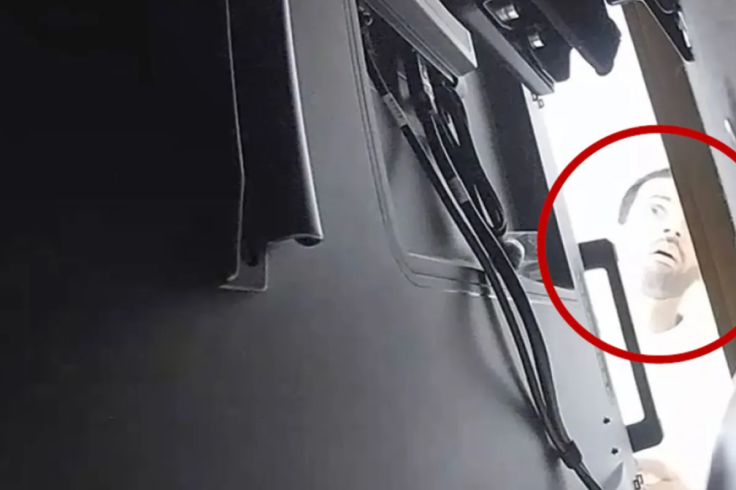
An OpenAI engineer has been charged after allegedly concealing a recording device in toilet paper inside an executive conference room, with the company saying its own artificial intelligence helped identify the employee responsible.
Abdulrahman Alfozan, 35, was arrested on 9 October and made his initial appearance in federal court on 13 October, when the criminal complaint was unsealed. The Saudi national had worked at OpenAI since July 2025, according to the US Department of Justice.
He is accused of using or attempting to use a device to intercept oral communications. The allegations have not been proved in court, and he is presumed innocent.
Recorder Found Behind Meeting-Room Television
OpenAI personnel discovered the device on 30 September, plugged into a USB port behind a television at one of its San Francisco buildings. Prosecutors say it was concealed in toilet paper and contained encrypted data.
According to the department's account of the complaint, OpenAI determined that the device had been installed around 28 September. The room hosted confidential discussions about research, product plans, commercial relationships and company strategy.
Investigators also examined surveillance footage. The Associated Press reported that the conference room had no camera when the device was allegedly installed. A camera added afterwards captured Alfozan entering and checking behind the television.
That distinction matters: the reported footage shows a subsequent visit, rather than the alleged installation itself.
Prosecutors say security personnel later found a second, similar recording device in a bag Alfozan left unattended elsewhere in the building. The bag also contained his wallet and identification.
OpenAI Says Its Models Helped Trace the Device
In a public statement, OpenAI said its models helped the company understand the equipment and determine where it came from.
'We used our models to understand the device and where it had come from,' the company said.
OpenAI said the investigation identified an employee who had planted the device several days earlier. It referred the matter to the FBI and terminated his employment.
The company also said it had evidence that the employee intended to install additional recording devices in sensitive areas to secretly record meetings.
However, OpenAI said it had found no indication that the individual improperly accessed or removed model weights, source code or customer data. Model weights are the numerical parameters that shape an AI system's behaviour. The company's statement describes what its investigation had established at that point, rather than a completed assessment of every potential exposure.
Detention Hearing Scheduled for 19 October
The investigation also examined internal searches. Prosecutors allege that Alfozan used a productivity tool to seek information about office locations, meeting rooms, calendars and executive meetings before the device's discovery.
The Justice Department's announcement does not establish that a foreign government directed the alleged activity. The charge concerns interception of communications, and no conviction has been entered.
The Associated Press reported that the complaint did not specify what Alfozan allegedly intended to do with any captured conversations. It was not immediately clear whether he had a lawyer available to comment.
As of the department's 13 October announcement, Alfozan remained in federal custody. A detention hearing is scheduled for 19 October before US Magistrate Judge Alex G. Tse. If convicted, he faces a maximum of five years in prison and a $250,000 (£188,400) fine, followed by three years of supervised release. The FBI investigation continues.
© Copyright IBTimes 2026. All rights reserved.