

'Impending Recession Bullish for Gold': Peter Schiff Warns of Stock Crash Before Midterms and 7% Inflation in 2027
Schiff says a US recession and sticky inflation could lift gold prices and mining stocks despite rising yields

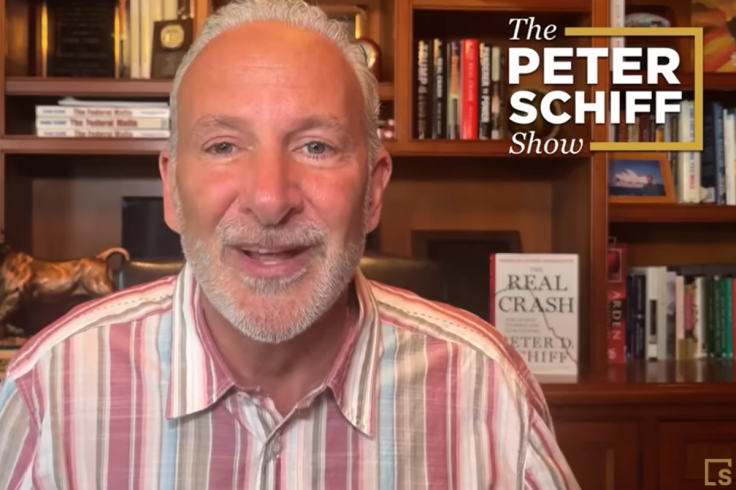
Veteran gold bull Peter Schiff did not rule out a US stock market crash before the 2026 midterm elections, arguing that rising inflation, higher borrowing costs, mounting pressure on AI spending, elevated stock valuations, a weakening labour market, and rising Treasury yields could push the economy towards recession.
Schiff is of the view that a potential downturn could benefit gold and mining stocks, while warning that inflation could reach 7% or higher in 2027 and that housing and banking risks could trigger a wider financial crisis.
'A stock market crash before the midterms is not outside the realm of possibility,' Schiff wrote in a Thursday X post.
A stock market crash before the midterms is not outside the realm of possibility. Remember, this is October. Plus, we have the most expensive stock market in history, bond yields have risen sharply, inflation is rising rapidly, the job market is soft, and the economy is weak.
— Peter Schiff (@PeterSchiff) October 22, 2026
Any Pullback in AI Spending Poses Threat to US Economy
Schiff's warning comes as investors weigh if the huge spending commitments underpinning the AI boom can be sustained amid higher financing costs and uncertainty about the economic outlook.
In a separate post on X, Schiff argued that investment in AI infrastructure was playing a crucial role in supporting US economic growth, making any slowdown in spending a potential threat to the broader economy.
'AI capex is all that's keeping GDP positive, the impending recession is very bullish for gold and the miners,' he wrote.
His comments suggest that a pullback in technology investment could hurt equities while strengthening the case for precious metals as a potential hedge against economic instability.
Investors are concerned about a slowdown in AI capex as borrowing to finance the buildout becomes more expensive and scarce. Gold and gold miners are down too, but since AI capex is all that's keeping GDP positive, the impending recession is very bullish for gold and the miners.
— Peter Schiff (@PeterSchiff) October 22, 2026
Schiff Forecasts Inflation Hitting 7% in 2027
Schiff also warned that US inflation could accelerate substantially over the next year, potentially reaching 7% or higher in 2027 and remaining elevated into 2028.
The warning comes as consumer prices continue to put pressure on households and complicate the Federal Reserve's policy path. US consumer prices rose 3.7% in September from a year earlier, while the monthly increase was 0.6% on a seasonally adjusted basis.
Schiff believes investors may be focusing too heavily on whether the Fed will cut or raise rates, while underestimating the possibility that persistent inflation could coincide with financial instability.
Treasury yields have added to those concerns. The yield on the 10-year US Treasury note was around 4.96% on 22nd October, after recently moving above 5%. Higher yields can increase borrowing costs for households, businesses, and companies financing capital-intensive projects.
Housing and Banks Could Face a Bigger Crisis
Beyond equities and inflation, Schiff has warned that the combination of higher interest rates and falling property values could expose vulnerabilities in the housing market and the overall financial system.
In a podcast cited by Stocktwits, he argued that millions of mortgages were originated when interest rates were substantially lower than they are today. If borrowing costs rise further, housing affordability could deteriorate, and property prices could come under additional pressure.
Schiff forecast that mortgage rates could eventually approach 9%, a scenario that could make financing more expensive and put downward pressure on home values. Higher rates and falling property prices could also increase financial-sector losses if more borrowers struggle to meet their repayments. In all, he believes the resulting downturn could ultimately be worse than the 2008 financial crisis.
'Gold Is the Last Safe Haven Standing'
Schiff argued that gold could become more attractive if a recession develops alongside persistent inflation and concerns about government debt.
In his view, higher bond yields do not automatically undermine gold's appeal. If yields rise because investors demand greater compensation for inflation and fiscal risks, precious metals could benefit from concerns about the purchasing power of currencies and the real returns available on bonds.
'Gold is the last safe haven standing,' Schiff had reportedly said. His argument centres on the possibility that inflation could erode the real value of fixed-income investments even when their nominal yields are rising.
However, investors should note that gold and mining stocks can nevertheless remain volatile during market sell-offs. Investors may sell precious metals to raise cash, while mining companies face operating costs and risks that differ from those associated with bullion itself.
Disclaimer: Our digital media content is for informational purposes only and does not constitute investment advice. Please conduct your own analysis or seek professional advice before investing. Remember, investments are subject to market risks, and past performance does not guarantee future returns.
© Copyright IBTimes 2026. All rights reserved.